News Broadcasting
Zee TV readies to do battle with Star; and it is better armed now


War is about to erupt on the small screen. Close on the heels of Star India announcing a clutch of new shows, the Zee Network has said that it is revamping its programming line-up. The intention: to win back its rightful place in the channel sweepstakes and to help Zee TV connect with the consumer.
“Zee has always been a leader, then we meandered for sometime, now we are working around to regain that position,” expresses Sandeep Goyal, group broadcasting CEO, Zee Telefilms. “The Indian housewife would tune into to Zee for it storytelling skills, and now that’s what we want to get back.”
“When Zee TV started out it came as a breath of fresh air, as an alternative to Doordarshan. Somewhere along the way it lost its focus, now we are bringing that back into the picture,” adds marketing head Partha Sinha. “We want to give back to Zee TV its brand personality as a youthful channel, vivacious, yet very deeply rooted in traditional Indian values.”

The new Zee drive is evident in the clutch of new programmes it has announced and the increased marketing spend being put behind them. Among the programmes which are expected to air: Sudha Murty’s Dollar Bahu, Sansar a new family soap shot in five continents, (produced by Tracinema), a musical soap Diwane to Diwane Hain (Tracinema), Sarhadein, Koi Apna Sa (Balaji Telefilms), Hip Hip Hooray (a new series of the old show produced by UTV), Choti Maa (a north Indian version of the southern success Chiththi produced by Radaan Entertainment & UTV), and Shree 420 based on real crime stories. Other programmes on the anvil include Zee Nostalgia, Zee Gym, and Ardhangini. While Zee Nostalgia, a one hour daily block, will showcase the best of Zee’s programmes like Hasaratein and Sailaab, Zee Gym will focus on fitness and Ardhangini is based on the lives and careers of successful women.
Sinha is excited about the interactive television show Aap Jo bole Haan to Haan, Aap Jo Bole Naa to Naa. “We believe this will be our driver,” he says. “It has drama, emotion and is gripping with alternative endings. Viewers will call up our call centres and we will constantly monitor the calls. Based on the response and final count we will air the requisite ending from our uplinking centre in Singapore.”
According to Goyal, there has been no real hike in programming costs. “Some shows have been retired, new ones have replaced them,” says Goyal. “In the new shows, the creative product is very strong.”
He reveals that the new line up will make its debut by the third week of August. “By the time the festival season comes, some of them will have emerged as winners,” he adds.
He points out that the network is already at an advanced stage of preselling all its advertising inventory. “There is a lot of excitement amongst media buyers and planners about our new shows.”
According to Sinha, no stone will be left unturned while promoting the new lineup. “Outdoors, print, radio, the internet, cross promotion on our TV channels – we will resort to everything to ensure that the shows get top of mind awareness with viewers.”
Goyal highlights the fact that Zee TV is keen to strengthen its programming department. “We will be strengthening the programming team and take it up to 18 very soon,” he says.
“When I came in, I said I would restage the channel in 100 days, a deadline which I will meet,” he exclaims. “My goal is to take Zee TV back to the No 1 spot and not just during prime time, but throughout the day. We will achieve this before year end.”






News Broadcasting
News18 India launches Command Centre war explainer with Arya
New show shifts from debates to decoding global conflicts and impacts
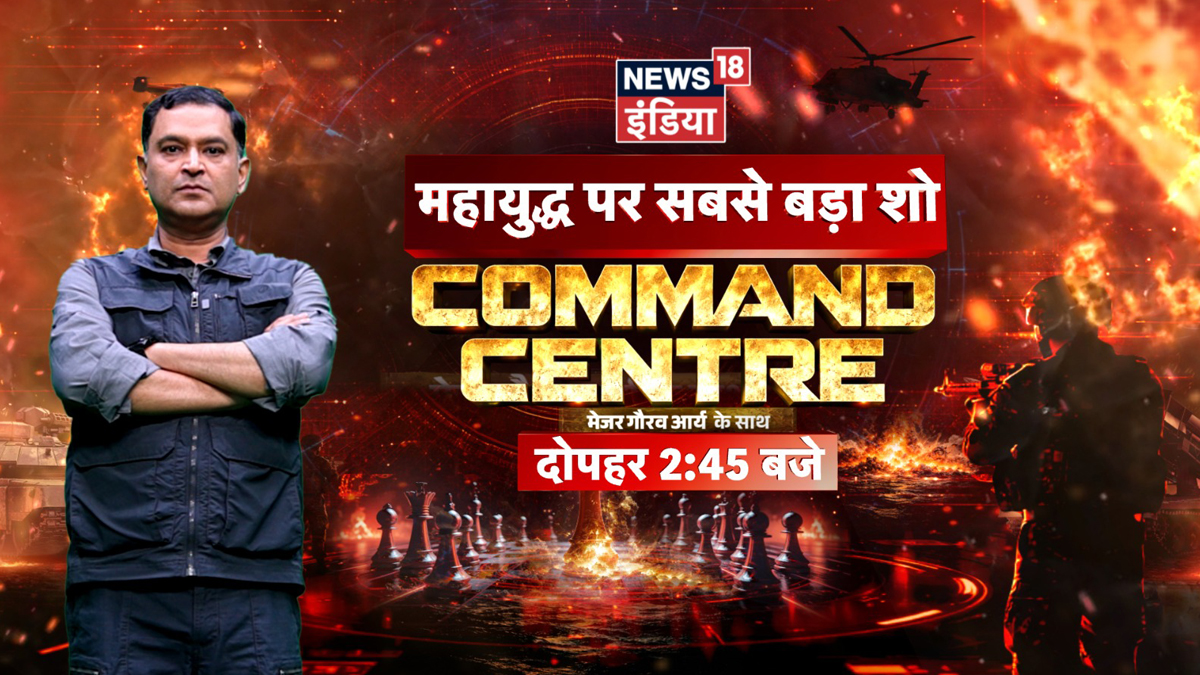
MUMBAI: News18 India has rolled out a new war-focused programme, Command Centre, featuring Gaurav Arya, as it looks to offer viewers a sharper, more grounded take on global conflicts amid rising tensions in West Asia.
Positioned as an “insider war room”, the show moves away from conventional panel debates and instead focuses on explaining military developments, decoding strategy and connecting global events to their everyday impact, from fuel prices to economic shifts.
The format leans heavily on visuals and data. The studio has been designed like a command hub, complete with large LED war maps, real-time graphics and an alert system to track developments as they unfold.
At the centre of it all is Arya, who brings his military background to simplify complex war strategies for viewers. His signature line, “Seedhi baat samjhiye”, anchors the show’s promise of clarity over noise.
News18 India managing editor Jyoti Kamal said, “Command Centre, featuring Major Gaurav Arya is designed to deliver accurate insights and a clear perspective on how evolving conflicts impact everyday life, from household budgets to national security. With expert voices analysing every development in real time, the show goes beyond headlines to decode what’s happening now, what it means, and what could come next.”
Echoing the intent, Gaurav Arya added, “In times of war, confusion is the biggest threat. With News18 India’s Command Centre, we are bringing viewers inside the war room, decoding strategies, tracking every escalation, and explaining, in the simplest terms, what it means for India and for every household. Seedhi baat samjhiye, this is where you understand not just what is happening, but what happens next.”
The weekday show will air in the afternoon slot and will also feature Gaurav Shukla, adding to its editorial depth.
With its mix of analysis, visuals and a clear focus on impact, the show reflects a broader shift in news consumption. Viewers are no longer just watching events unfold, they are looking to understand what those events mean for them.







