News Broadcasting
Zee takes on ‘Kahaani…’ with ‘Kittie Party’


Fortune favours the brave. That could well be the tack that Zee Telefilms is taking as it attempts to pick itself off the floor as far as the ratings are concerned.
With the full cast in tow and the show’s celebrity writer Shobhaa De present, Zee Telefilms director marketing Partha Pratim Sinha yesterday announced the launch of a daily soap Kittie Party slotted in the 10 to 10:30 pm band. Launching Monday, 19 August, Kittie Party is pitched directly against the Balaji blockbuster soap Kahaani Ghar Ghar Ki that airs on Star Plus.
From left Poonam Dhillon, Deepshikha, Kavita Kapoor, Maya Alagh, Preeti Dayal, Shweta Salve, Pyomori, Achint Kaur The serial revolves around the lives of eight women who meet every month fore their kittie party. The serial explores their individual lives through these meetings. And what is it that Zee hopes will connect with the viewer. According to the release issued, “Since the situations are from every day life, audiences will be able to identify the characters and the conflicts they deal with.”

“But if there is one key factor that Zee hopes will bring in the audiences it must be one of aspiration. For though De was at pains to point out that it was not only people of a “certain class” (the rich and upwardly mobile) that would relate to the show, the evidence of the AV that was screened did not indicate otherwise. De also took a swipe at the kind of fare that dominates prime time television, saying that the story was about issues relevant to today’s women and not the “saas-bahu sagas where the protagonists’ mindsets were 50 years behind the times.”
On the plus side, producer Manish Goswami’s Siddhant Cinevision has left no stone unturned to give the show top notch production values. The look as well as the background score is of a uniformly high quality and certainly seems to have done justice to the estimated Rs 450,000 per episode cost of the series. One cannot forget the high profile lead cast with the likes of Poonam Dhillon, Kavita Kapoor, Achint Kaur, Deepshikha and Maya Alagh, among others adding to the glam appeal.





News Broadcasting
Kamlesh Singh receives Haldi Ghati Award from MMCF
India Today Group editor honoured for three decades of journalism at Udaipur ceremony.
MUMBAI- Kamlesh Singh just turned a lifetime of sharp words into a shiny shield because when journalism wakes up a society, even the Maharana of Mewar wants to pin a medal on it.
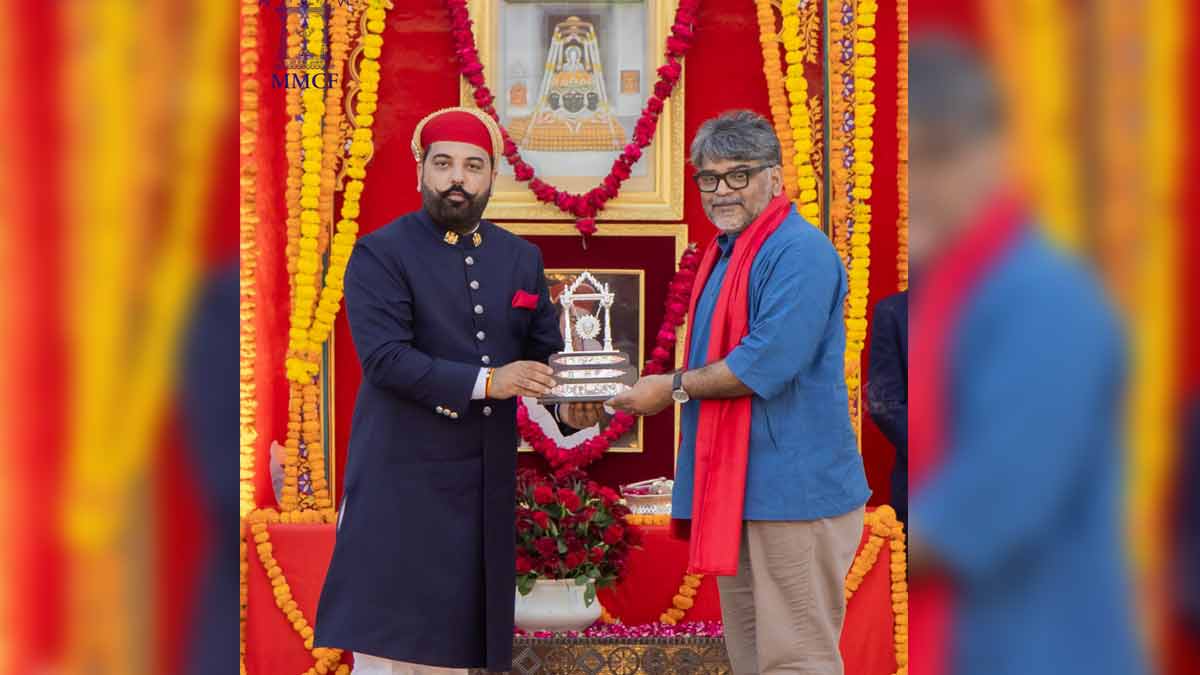
The Maharana of Mewar Charitable Foundation (MMCF) conferred its prestigious Haldi Ghati Award on Kamlesh Singh, a senior editor at the India Today Group, during a ceremony in Udaipur on 15 March 2026. The national award, instituted in 1981-82, recognises “work of permanent value that initiates an awakening in society through the medium of journalism.”
Singh, who leads several editorial initiatives including Aaj Tak Radio, the Teen Taal community and The Lallantop, was presented the honour by Lakshyaraj Singh Mewar, Managing Trustee of MMCF. The citation highlighted his three decades of contributions to Indian media, innovations in digital journalism, mentoring young reporters, and his popular podcast persona “Tau” on Teen Taal, which fosters thoughtful public discourse.
The Haldi Ghati Award, named after the historic Battle of Haldighati symbolising valour and resilience, is one of four national awards given annually by MMCF. Past recipients include Tavleen Singh, Piyush Pandey and Raj Chengappa.
Other honourees this year included Padma Vibhushan Pt Hari Prasad Chaurasia, Vedamurti Devvrat Rekhe, Treeman of India Marimuthu Yoganathan, Vir Chakra Capt Rizwan Malik, and US-based researcher Molly Emma Aitken, who received the Colonel James Tod Award for contributions to understanding Mewar’s spirit and values.
In an era where headlines often shout louder than substance, the MMCF quietly reminded everyone that real journalism isn’t about noise, it’s about the quiet, persistent work that stirs society awake, one thoughtful story at a time.







