GECs
Zee responds to stock exchange query on layoff media report

MUMBAI: In a regulatory filing with the BSE on 3 December, Zee’s company secretary Ashish Agarwal insisted that recent job cuts are merely part of an “omni-channel approach” to create a “more agile and collaborative organisation structure.” The clarification came after the Economic Times reported fresh layoffs hitting the company as its business suffers from the collapsed Sony deal.
But Zee’s corporate jargon can’t hide the timeline. Back in April 2024, managing director and chief executive Punit Goenka proposed a “lean organisation structure” that would axe 15 per cent of the workforce “over a period.” That’s corporate-speak for: brace yourselves.
The company is adamant this “optimisation” is an “ongoing exercise based on business dynamics” with “no impact on operation/performance.” Translation: we’re cutting staff but everything’s fine. Honest.

Zee reassured stock exchange officials that it has “always complied” with disclosure requirements and will continue doing so. Which is reassuring, given that’s literally the legal minimum.
For a company that once dreamed of becoming a media colossus through the Sony merger, Zee is now learning that sometimes less isn’t more—it’s just less.







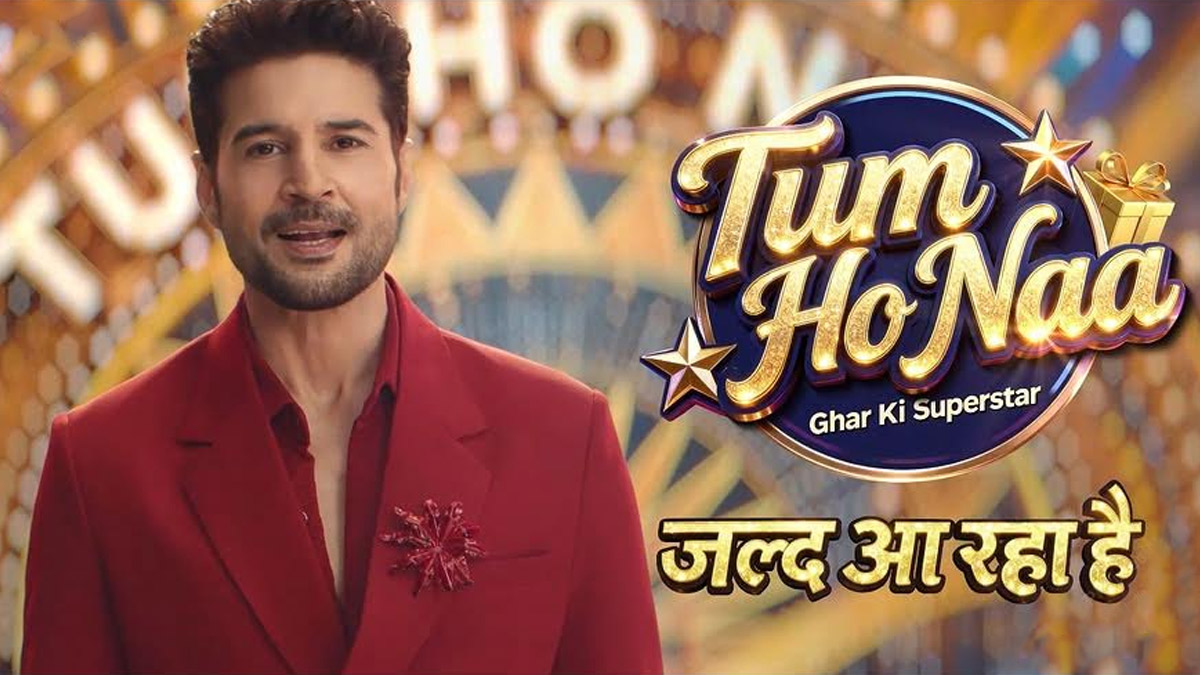
MUMBAI: Lights, camera… connection because this time, the game isn’t just about winning, it’s about who’s with you. Sony Pictures Networks India is gearing up to launch a new reality game show, Tum Ho Naa, expanding its unscripted slate with a format that promises both emotion and engagement.
The show will premiere soon on Sony Entertainment Television and stream on Sony LIV, with Rajeev Khandelwal stepping in as host. Known for his measured screen presence and selective choices, Khandelwal’s return to television adds a layer of familiarity and credibility to the upcoming format.
While specific details of the gameplay remain under wraps, the positioning suggests a reality format that leans as much on emotional resonance as it does on competition, an increasingly popular blend in Indian television, where audiences are gravitating towards content that offers both stakes and storytelling.
Khandelwal, reflecting on his return, noted that his choices have often been guided by instinct rather than convention, describing Tum Ho Naa as a project that feels “close to the heart”. His association also signals Sony’s continued focus on anchoring new formats with recognisable faces who bring both relatability and depth.
The launch comes at a time when broadcasters are doubling down on original non-fiction formats to drive appointment viewing, even as digital platforms expand parallel reach. By placing the show across both linear television and OTT, Sony appears to be aiming for a dual-audience strategy capturing traditional viewers while engaging digital-first consumers.
As the countdown to premiere begins, Tum Ho Naa positions itself not just as another game show, but as a reminder that sometimes, the biggest prize on screen isn’t the jackpot, it’s the journey shared along the way.






