News Headline
Zee failure to lure telecom ads a problem: SSB report

MUMBAI: Salomon Smith Barney (SSB), in a report just released, believes the failure of the channels in the Zee bouquet to rope in telecom ads is worrisome.
The SSB report sees telecom, financial services and the retail oil sectors driving 10-12 per cent growth in the estimated Rs 26 billion C&S advertising market. The report further adds that Zee’s ratings and thereby revenues would get affected if it fails to corner a major share of this pie.
The report cites a recent instance of Reliance Infocomm’s high-decibel television ad campaign conducted on 28 December as part of its CDMA mobile services launch. On 27 December, Reliance Infocomm launched its telecom service offerings for 18 telecom circles targeted at an estimated 90 per cent of the Indian population.
According to latest ad data available with SSB analysts: on 28 Dec alone, Reliance’s 80-second ad campaign (“Tribute to Dhirubhai Ambani”) was broadcast across 24 channels generating 189 spots or 15,120 seconds of advertising. Zee bouquet of channels got only 10 per cent share of this duration (possibly lower share of spend) with ad spots on its regional channels. Alpha Marathi and Alpha Gujarathi getting 720 seconds each out the entire burst.
The report claims that no spots were bought on flagship channel Zee TV, movie channel Zee Cinema or Zee News. While clearly one day’s ad spend for one brand is not representative of the overall media plan of the industry, yet the SSB analysts believe that Reliance Infocomm would have chosen channels so as to create the maximum possible impact. The commercial launch of Reliance Infocomm is in February or March 2003 and substantial spending is envisaged.
The SSB team also compared this spend with that of the other telecom brands’ (eg, Airtel Magic) entire prime time advertising duration for a quarter.
It also expressed concern that Zee’s bouquet of channels do not address the South Indian market (20-30 per cent of the total C&S advertising market, according to industry estimates).
Looking at other telecom brand advertising – Airtel and IDEA
The SSB team also considered the advertising duration on various channels for other telecom brands such as Airtel (cellular brands of Bharti Televenture across 15 circles covering 58 per cent of the Indian population) and IDEA for the period 1 October- 21 December 2002 (coinciding with Zee’s movie premiere strategy).
The takeaways were similar. Zee’s channels (Zee TV, Zee News and ETC) enjoyed only a 5.4 per cent duration share of the total advertising duration of these brands. In the key Hindi general entertainment category, Star Plus was the clear leader, enjoying a 77 per cent share of the advertising duration, while Sony (20 per cent) and Zee (3 per cent) accounted for the rest.
Also noteworthy is the fact that during the period under review (1 October – 21 December), Zee’s Thursday “Movie Premiere” was running. Clearly, none of the telecom advertisers from the above sample was drawn to advertise on the channel because of the movies.
SSB rationale
The SSB reasons that the data validates its earlier viewpoint that
* Advertisers (and media planners) prefer to advertise on programs about which they have some idea of the stickiness of the audience – movies have a more fickle audience than highly rated soaps
* Rating points of advertisements aired during movie breaks compared with ads aired during top-rated TV serials indicate that it continues to be more cost effective to advertise during regular shows than during movies. An earlier SSB report has stated that a cola advertisement on Star Plus generated a rating of 11.61, the same advertisement when aired during Zee TV’s Thursday movie slot generated a rating of only 3.57.
* A sustained improvement in ratings of the flagship channel remains the only fundamental trigger for the stock in SSB’s view and is all the more important given the marriage of subscription and ad revenue streams to content post-CAS.
Impact on Zee
The SSB report claims that the overall improvement in viewership ratings is a key element for Zee’s growth. The SSB analysts have however retained their in-line rating and Rs 115 price target, relative to their Sensex target of 3875.
Zee’s network of channels got only a 10 per cent share of the ad duration. It is likely that the share of spend could be lower as Star Plus, Sony Entertainment Television and some regional channels such as Sun TV enjoy premium ad rates.
The report mentions that some of the recent new programmes on Zee have been positively received but they have failed to make a sustainable impact on the overall viewership data.







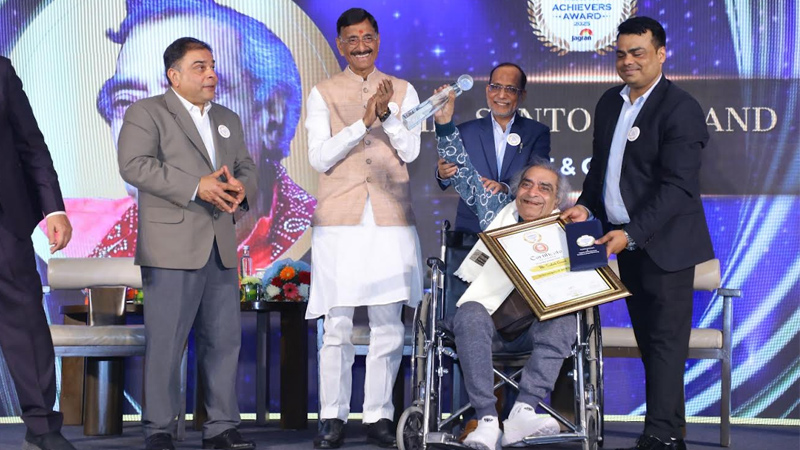
NEW DELHI: Hamdard Laboratories gathered a cross-section of India’s achievers in New Delhi on Friday, handing out the Hakeem Abdul Hameed Excellence Awards to figures who have left their mark across healthcare, education, sport, public service and the arts.
The ceremony, attended by minister of state for defence Sanjay Seth and senior officials from the ministry of Ayush, celebrated individuals whose work blends professional success with a sense of public purpose. It was as much a roll call of achievement as it was a reminder that influence is not measured only in profits or podiums, but in people reached and lives improved.
Among the headline awardees was Alakh Pandey, founder and chief executive of PhysicsWallah, recognised for turning affordable digital learning into a mass movement. On the sporting front, Arjuna Awardee and kabaddi player Sakshi Puniya was honoured for her contribution to the game and for pushing women’s participation onto bigger stages.

The cultural spotlight fell on veteran lyricist and poet Santosh Anand, whose songs have echoed across generations of Hindi cinema. At 97, Anand accepted the honour with characteristic humility, reflecting on a life shaped by perseverance and hope.
Healthcare honours spanned both modern and traditional systems. Manoj N. Nesari was recognised for strengthening Ayurveda’s place in national and global health frameworks. Padma shri Mohammed Abdul Waheed was honoured for his research-backed work in Unani medicine, while padma shri Mohsin Wali received recognition for his long-standing contribution to patient-centred care.
Education and social development also featured prominently. Padma shri Zahir Ishaq Kazi was honoured for decades of work in education, while former Meghalaya superintendent of Police T. C. Chacko was recognised for public service. Goonj founder Anshu Gupta received an award for his dignity-centred rural development initiatives, and the Hunar Shakti Foundation was honoured for empowering women and young girls through skill development.
The Lifetime Achievement Award went to former IAS officer Shailaja Chandra for her long career in public healthcare and governance, particularly in the traditional systems under Ayush.
Speaking at the event, Hamdard chairman Abdul Majeed said the awards were a tribute to those who combine excellence with empathy. “These awardees reflect Hakeem Sahib’s belief that healthcare, education and public service must ultimately serve humanity,” he said.
Minister Seth struck a forward-looking note, saying India’s young population gives the country a unique opportunity to become a global destination for learning, health and wellness by 2047.
The ceremony also featured the trailer launch of Unani Ki Kahaani, an upcoming documentary starring actor Jim Sarbh, set to premiere on Discovery on 11 February.
Instituted in memory of Unani scholar and educationist Hakeem Abdul Hameed, the awards have grown into a national platform that celebrates those building a more inclusive and resilient India. For one evening at least, the spotlight was not just on success, but on service with substance.






