News Broadcasting
Zee Business’ ‘Dabba Trading ka Mayajal’ episode decodes the mystery of Dabba Trading; alerts investors to not fall into the trap of quick returns at low costs


Mumbai: Many among us firmly believe in Investing as compared to Savings. Investing or trading in the stock market has gained popularity over the years. One of the major benefits of investing in the stock market is that investors get the chance to earn more money. However, with a large number of people investing in the Indian stock market, there has also been an increase in illegal activities such as Dabba trading or bucket trading.
As Dabba trading is an illegal stock market trading method, one such fraudulent case has come to light. Jatin Mehta, the businessman who was involved in dabba trading was arrested by the Mumbai Police. According to the police, between the timeline of March to 20 June 20 2023, his business turnover of about 4673 crores resulted in the government suffering a huge loss of Rs 1.95 crore. This highlights the fact that there could be a huge number of traders who might be trapped by luring huge returns and have to bear huge losses. Zee Business alerted investors to stay cautious from fraudulent dabba trading brokers and spread awareness on the risks involved in such kind of trading through its special episode on ‘Dabba Trading ka Mayajal’.
The channel also simplified the meaning of the jargon ‘Dabba Trading’ and ensured each and every investor understands why such type of trading is considered as illegal:

What is Dabba Trading?: Dabba trading is an illegal method of trading in stocks of companies in the stock market. Individuals undertaking such deals in the stock market are unauthorized, as they aren’t registered with the market regulator SEBI.
How does Dabba Trading operate?: In dabba trading, the trading ring operators get the equity traded in an illegal manner outside the stock exchange platform. They create an app and lure investors into the greed of receiving fixed returns. People think that they are investing money in the stock market but in reality, it is a fraud.
Why do some brokers do Dabba trading?: The sole purpose of Dabba trading brokers is to save themselves from the liability of income tax, GST and all kinds of taxes in the market. Fake brokers lure gullible traders into their trap by luring them. If traders suffer losses, they will get money, but if traders make profit, they will not give money to them. Zee Business managing editor Anil Singhvi, also tweeted alerting netizens and investors not to fall in the trap of quick returns at low cost.
Speaking on Zee Business’ successful campaign for protecting investors, Singhvi said, “The trend of investing money in the stock markets significantly increased in the recent past. It is our responsibility to help investors understand the dangers of getting involved in illegal activities. Zee Business has been the most reliable news source for investors to understand what will assure investors maximize profit and wealth. Zee Business provides in-depth research of every corner of the market’s ups & downs, which has allowed us to become one of the most revolutionized business news sources for investors, through informative content and programming that accentuates the business acumen.”
Zee Business chief business officer Madhu Soman further added, “Zee Business always strives to make citizens aware and avoid fraudulent practices that prevail in emerging markets. Dabba Trading ka Mayajal is one of the many initiatives we’ve rolled out along with interesting news stories through an investigative lens.”
Zee Media Corporation Ltd., one of India’s leading media companies, has a strong presence in the news and regional genres, with 16 news channels in seven different languages, reaching more than 528+ million viewers through its linear and digital properties

News Broadcasting
WITT Summit 2026 concludes in New Delhi
Babar Azam’s comical diving attempt goes viral as league introduces anti-dew measures.
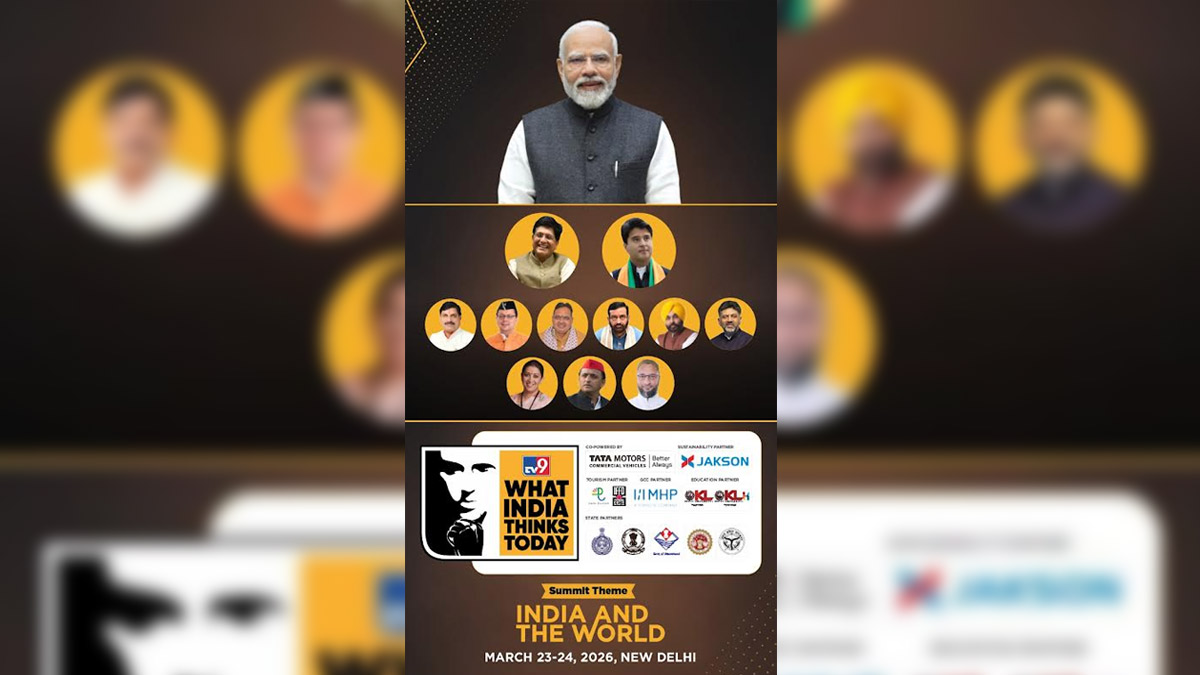
MUMBAI: The WITT Summit just wrapped up with enough big ideas to fill a policy playbook because when India’s leaders, thinkers and icons gather under one roof, even the conversations hit sixes. The eighth edition of TV9 Network’s flagship What India Thinks Today (WITT) Summit 2026 concluded on Saturday after two days of dynamic discussions at its New Delhi venue. India’s largest multi-domain public policy and culture summit brought together political leaders, policymakers, sports icons, artists and technology innovators to examine the forces shaping contemporary India and its global standing.
Prime minister Narendra Modi delivered the keynote address on the theme “India and the World” for the third consecutive year. In a wide-ranging speech, he addressed the ongoing conflict in West Asia, calling for restraint and compassion while highlighting India’s continued development trajectory despite global turmoil.
The summit featured candid conversations with state leaders. Telangana Chief Minister A. Revanth Reddy articulated a people-first governance model and contrasted it with other development approaches. Madhya Pradesh Chief Minister Mohan Yadav declared that Left-wing extremism had been effectively eliminated in his state and highlighted preparations for the upcoming Kumbh Mela. Punjab Chief Minister Bhagwant Mann defended his government’s record, citing the closure of 19 toll plazas and creation of the Sadak Suraksha Force. Karnataka Deputy Chief Minister D.K. Shivakumar expressed confidence in Congress prospects in Assam and addressed recent allegations against him.
On geopolitics and national security, Union Minister Jyotiraditya Scindia outlined India’s ambition to become a builder of trusted digital infrastructure for the world, citing the rapid 5G rollout and village-level 4G connectivity.
Cricket received significant attention. Former India captain Sourav Ganguly praised player freedom and trust as hallmarks of great leadership and named MS Dhoni as the greatest captain due to his World Cup successes. India women’s team bowling coach Aavishkar Salvi credited the BCCI and Women’s Premier League for building a pipeline of world-class talent behind the team’s recent ODI World Cup triumph.
The summit also hosted the inaugural AI² Awards 2026, celebrating the convergence of human creativity and machine intelligence in storytelling and content creation. Poet and kathavachak Kumar Vishwas delivered a nuanced take on India’s concept of Dharma and criticised the recent arrest of an 80-year-old Shankaracharya. Veteran lyricist Sameer Anjaan and storyteller Neelesh Misra reflected on changing music trends and artistic responsibility in the wake of a recent controversy involving Nora Fatehi.
In a country where conversations often run as deep as the Ganges, the WITT Summit proved once again that when leaders, thinkers and storytellers come together, the real winner is public discourse lively, layered and refreshingly unafraid to tackle the big questions shaping India’s tomorrow.








