News Broadcasting
Zee Bharat: Igniting news with vibrancy of India’s spirit

Mumbai : Zee Media Corporation Limited presents ‘ZEE Bharat,’ a ground-breaking fusion of news and culture officially unveiled on 22 January 2024, igniting news with the vibrancy of India’s spirit. This channel revolutionises news consumption by seamlessly blending impactful storytelling with a vibrant celebration of India’s cultural richness and diversity.
Going beyond the conventional realms of news delivery, ‘ZEE Bharat’ stands out as a dynamic platform that offers a fresh, distinctly Indian perspective. More than just a news source, ‘ZEE Bharat’ is commitment to amplifying the unheard voices of rural India, providing a platform for those who truly represent the diverse fabric of the nation. With an energetic line-up of anchors and a rejuvenated look, the channel embodies a dynamic approach to news delivery, investigative reporting and impactful stories that goes beyond information dissemination.
Interestingly, ‘ZEE Bharat’ unveils a striking visual identity marked by vibrant colors, sleek graphics, and contemporary set design. This carefully crafted atmosphere serves as a mirror reflecting India’s cultural heritage, seamlessly merging with the nation’s forward-thinking spirit. The channel’s celebration of cultural richness is vividly showcased through a diverse colour palette resonating with the nation’s energy. It doesn’t just deliver news; it encapsulates the pulsating vibrancy and essence of India, setting unprecedented standards in news presentation.

Zee Media Corporation Limited CEO Abhay Ojha expresses his excitement about the launch, stating, “In the dynamic realm of media, Zee Media Corporation Limited stands resolute as a beacon of reliability and dynamism, driven by a belief in the transformative power of news. Our unwavering mission is to continually elevate the standards of journalism, offering our audience a trustworthy source amid the abundance of information. With ‘ZEE Bharat,’ we transcend the conventional boundaries of news. It’s not merely a medium; it’s a vibrant platform beckoning audiences to embark on a refreshing, distinctly Indian news journey. Brace yourselves for an exhilarating exploration where news intertwines seamlessly with the celebration of our nation’s rich cultural tapestry and diversity.”
Zee Media Corporation Limited chief revenue officer Mona Jain further highlighted, “ZEE Bharat transcends conventional news channels; it’s an immersive experience that mirrors the cultural richness and pride of our country. Advertisers can now join us in this celebration, forging connections with audiences who seek more than just information – they seek an emotional connection with their heritage.”
The unique ‘Zee Bharat’channel can be accessed on various platforms with the following channel numbers: Dish TV (654), D2h (721), Tata Play (520), Airtel Digital TV (319), Sun Direct (587), Siti Cable (306), Siti Gujarati (403), Siti Bihar (181), Siti JHK WB (168), Den (311), Fastway (317), GTPL (246), Hathway (209), IN Digital Maharashtra (318), IN Digital Delhi (315), Radiant (312), NXT Digital (807), Digiana (316), dL GTPL (163), Take One Digital (173), Rajasthan Infotech (103), Signet Digital (561), Darsh Digital (514), UCN (105), Skynet (211), and more.
ZEE Bharat invites audiences to embark on this unique journey, where news becomes a celebration of the cultural pride that unites us as Indians.





News Broadcasting
CNN-News18 to host Fury in the Gulf conclave on West Asia crisis
Three-hour summit to unpack geopolitical fallout and impact on India
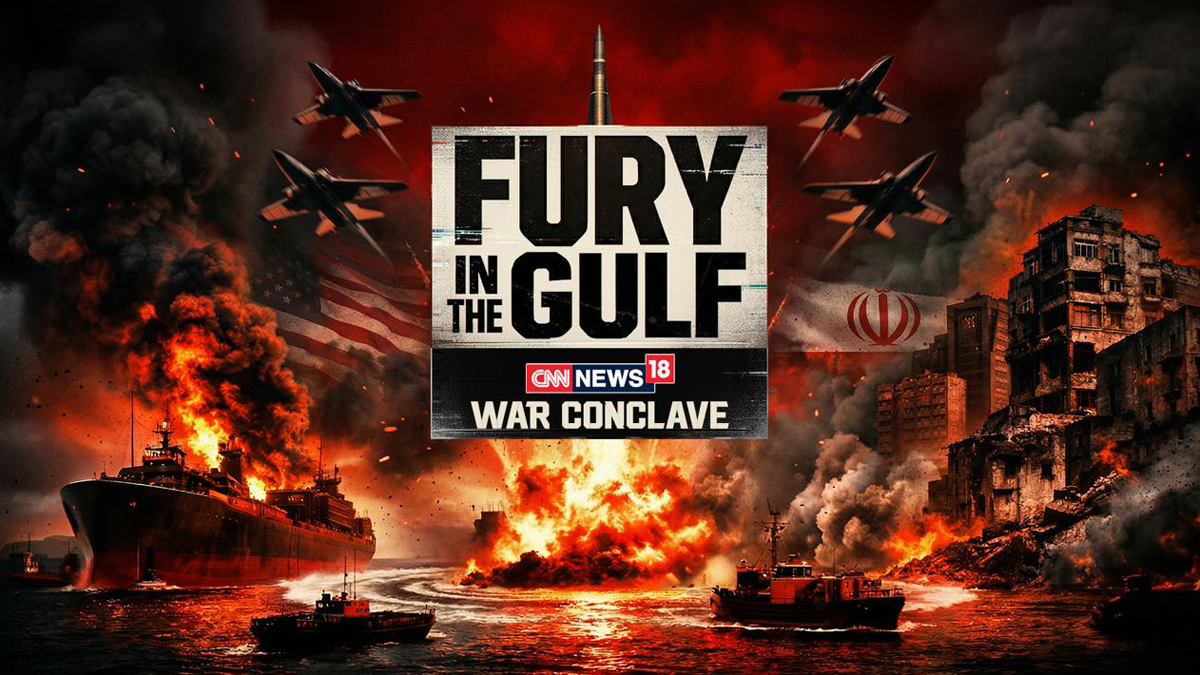
MUMBAI: CNN-News18 is set to host a special three-hour broadcast, Fury in the Gulf – War Conclave, on April 7, aiming to decode the escalating West Asia crisis and its far-reaching implications for India.
Scheduled from 4:00 PM to 7:00 PM, the conclave comes at a time when tensions between Iran and the United States are reshaping global geopolitics and triggering economic uncertainty. With India’s deep energy ties, trade links and large diaspora in the Gulf, the developments carry significant domestic relevance.
Built around the theme ‘Conflict, Consequences, and The Future,’ the programme will feature six curated sessions combining one-on-one interviews and panel discussions. The focus is to cut through the clutter and offer viewers a clearer understanding of the fast-evolving situation.
Key sessions include ‘Diplomacy in Times of War’ featuring Shashi Tharoor, and ‘World After the Iran Conflict’ with voices such as Ram Madhav, Reuven Azar, representatives from the European Union and the Iranian Deputy Envoy. Another session titled ‘Another Dunkirk?’ will bring together K. J. S. Dhillon and Jitin Prasada among others.
CNN-News18 editorial affairs director Rahul Shivshankar said, “In times of war, clarity becomes the most powerful tool. Fury in the Gulf – War Conclave brings together credible voices to address the questions and confusion that arise amid an overwhelming influx of information.”
He added that the initiative is aimed at delivering “facts, perspective, and insight” at a time when misinformation can easily cloud public understanding.
Echoing the sentiment, CNN-News18 CEO– English and business news Smriti Mehra said the conflict marks a defining global moment, with consequences that extend well beyond the region. She noted that the conclave seeks to present the crisis with “depth, nuance and responsibility” so audiences can better grasp its real-world impact.
As geopolitical tensions continue to dominate headlines, the conclave positions itself as an attempt to bring order to the noise, offering viewers a structured, insight-led look at a complex and rapidly shifting global situation.






