GECs
Yuvaa partners with Adobe to support underrepresented stories & storytellers

Mumbai: Yuvaa, India’s first Gen Z-driven youth media, insights and impact organisation, has partnered with international software giant Adobe, as well as the Adobe Foundation, to support and empower underrepresented stories and storytellers from India, as part of the first-ever Adobe Film & TV Fund of $6 million.
The only South Asian organisation in the cohort, Yuvaa joins some of the world’s most renowned nonprofit and impact organisations like NAACP, The Sundance Institute, Easterseals, Gold House and The Latinx House, to drive greater representation in the film industry by providing resources, community and support to underrepresented creators on-screen and behind the camera, with funding for short and feature films.
The Adobe Film & TV Fund aims to address the inequity in funding, career and training opportunities across multiple communities in the industry with grants, contributions, and fellowships. In the first year of the Fund, Adobe and the Adobe Foundation committed to $6 million in grants, contributions, and Adobe Creative Cloud product donations with the goal of tracking inclusion in the industry and directly accelerating the careers of thousands of global creators, and ultimately increasing inclusion in film and TV series, that reach millions worldwide.

The Film & TV Fund Adobe builds on its long-standing collaboration with the Sundance Institute and the continued support and momentum the company has achieved for inclusivity, access, opportunity and creativity for all. The announcement was made at the ongoing 2024 Sundance Film Festival.
Adobe VP marketing strategy and communications and member of the Adobe Foundation board Stacy Martinet said, “Diversity in front of and behind the camera is key to unlocking more diverse and more inclusive storytelling across TV and film. Through our new Film & TV Fund, Adobe is looking to leverage its leadership position in the creative industry to unlock new opportunities for underrepresented creators.”
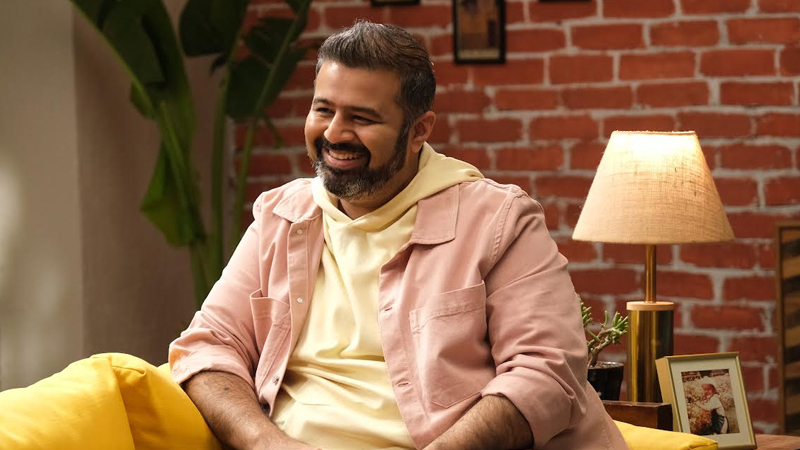
Yuvaa co-founder and chief Nikhil Taneja, “Over the last 5 years, Yuvaa has worked with several marginalized communities, including women and the LGBTQIA+ community in India, to leverage the power of storytelling and the internet, to co-create stories that must be heard and that must be told. With an incredible partner like Adobe, who are committed to creating meaningful opportunities for representation, we are looking to scale our impact with long-form storytelling, so we can, at once, collaborate with an eclectic mix of talent and creatives from diverse backgrounds, and work towards telling a story that deeply matters to us as individuals, and us as a society.”






GECs
Sahara One reports financial results, notes director exit and business realignment
Muted revenues, steady expenses and strategic adjustments shape company’s current phase
MUMBAI: In a tale where the sands seem to be slipping faster than they can be gathered, Sahara One Media and Entertainment Limited has reported another quarter of wafer-thin income and widening losses, even as a boardroom exit adds to the unease.
The company informed the Bombay Stock Exchange that its board, in a meeting held on April 4, approved its unaudited financial results for the quarter ended September 30, 2025. The numbers paint a stark picture. Total income for the quarter stood at just Rs 0.13 lakh, unchanged sequentially and sharply down from Rs 0.26 lakh a year earlier.
Losses, meanwhile, deepened. The company posted a net loss of Rs 24.16 lakh for the quarter, compared to Rs 18.81 lakh in the June quarter and Rs 39.69 lakh in the same period last year. For the six months ended September 2025, the cumulative loss stood at Rs 39.69 lakh, while the full-year loss for FY25 was reported at Rs 60.72 lakh.
Expenses continued to outweigh income by a wide margin. Total expenses for the quarter came in at Rs 24.30 lakh, led by employee benefit costs of Rs 6.51 lakh and other expenses of Rs 17.78 lakh. Earnings per share remained in the red at Rs (0.11) for the quarter.
The balance sheet reflects a company with significant assets on paper but limited operational momentum. Total assets stood at Rs 23,065.57 lakh as of September 30, 2025, broadly unchanged from March 2025. Equity share capital remained steady at Rs 2,152.50 lakh, while total equity was reported at Rs 18,004.85 lakh.
Cash and cash equivalents saw a modest uptick to Rs 6.75 lakh from Rs 4.68 lakh earlier, supported by a positive operating cash flow of Rs 180.01 lakh for the period.
Yet, beneath these numbers lies a more complex narrative. The company’s auditors flagged their inability to obtain sufficient evidence to form a conclusion on the financial statements, citing lack of access to records. They also raised concerns over the company’s ability to continue as a going concern, pointing to insufficient funds, delayed recoveries, and stalled content investments.
Adding to the governance overhang, the company disclosed that Rana Zia has resigned as whole-time director, effective October 16, 2025, citing other professional commitments. The resignation, noted and accepted by the board, also brings an end to her role across company committees.
Regulatory pressures continue to loom large. The Securities and Exchange Board of India has already initiated penal actions for non-compliance with listing norms, with trading in the company’s shares remaining suspended. There is also a risk of promoter demat accounts being frozen.
Legacy legal issues remain unresolved. A substantial deposit of Rs 694,027.88 thousand linked to the long-running OFCD dispute involving Sahara group entities is still under the purview of the Supreme Court of India. Restrictions on asset disposal continue to weigh on the company’s financial flexibility.
Operationally, challenges persist across multiple fronts. Advances worth Rs 1,92,916 thousand given for film content remain stuck, with delays in project completion and uncertain recoverability. The company’s YouTube channel, despite being operational, has generated no revenue for over three years due to compliance lapses. In a further twist, management has indicated that revenues may have been fraudulently diverted through unauthorised changes to its AdSense account, with a police complaint in the works.
There are also missed revenue opportunities. Television content rights continue to be used by a related party despite the expiry of the licence agreement, with fresh negotiations still underway.
For now, Sahara One Media and Entertainment Limited appears caught between legacy disputes and present-day operational hurdles. As losses linger and governance questions mount, the road to recovery looks less like a sprint and more like a slow trudge through shifting sands.






