Hindi
YRF partners with Posham Pa Pictures for theatrical releases

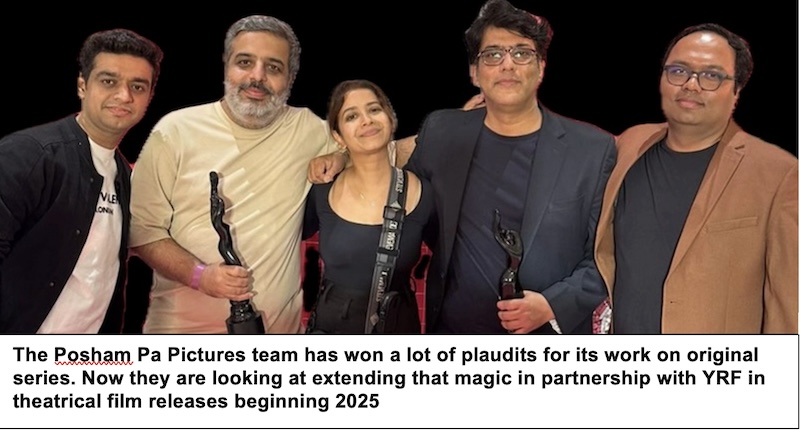
MUMBAI: It’s the coming together of a successful legacy studio and a new age creative production banner. Yash Raj Films (YRF) today announced that it is partnering with series producer Posham Pa Pictures to jointly develop and produce theatrical films beginning 2025.
YRF is known for several iconic films like Chandni, Kaala Patthar, Lamhe, Darr, Dilwale Dulhania Le Jayenge, Chak De! India, Dhoom and others. Posham Pa Pictures has been behind streaming series such as Netflix’s Kaala Paani, Mamla Legal Hai and Jaadugar and Disney+ Hotstar’s Home Shanti.
The partnership marks Posham Pa’s foray into theatrical films releases. YRF will provide it with the studio infrastructure and its strong distribution capabilities, which is the vision of Aditya Chopra – the son of YRF founder, the late Yash Chopra. The transformation of YRF from being just a producer to a studio is being led by the firm’s CEO Akshaye Widhani.

Said Widhani: “It is truly the coming together of similar creative minds that are constantly striving for excellence by pushing the content envelope. Posham Pa Pictures have shown that they know the pulse of the audience by giving us unique and incredibly fresh stories that have won them unanimous acclaim. Our partnership will now aim to create ground-breaking theatrical experiences for today’s audiences who are seeking out new and novel storytelling to engage, endorse & celebrate.”
Posham Pa was founded by partners Sameer Saxena, Amit Golani, Biswapati Sarkar and Saurabh Khanna.
“The coming together of YRF and Posham Pa Pictures throws open a world of exciting, unchartered creative possibilities,” said Saxena. “We are thrilled at the opportunity to jointly create theatrical experiences like never before with YRF and entertain the audience with unique, fresh stories.”
(Picture courtesy: Biswapati Sarkar’s X account)







Hindi
Zee5 and Applause Entertainment team up for whodunnit ‘Everybody Loves Sohrab Handa’
Rajat Kapoor directs star-studded murder mystery streaming from 10 April.
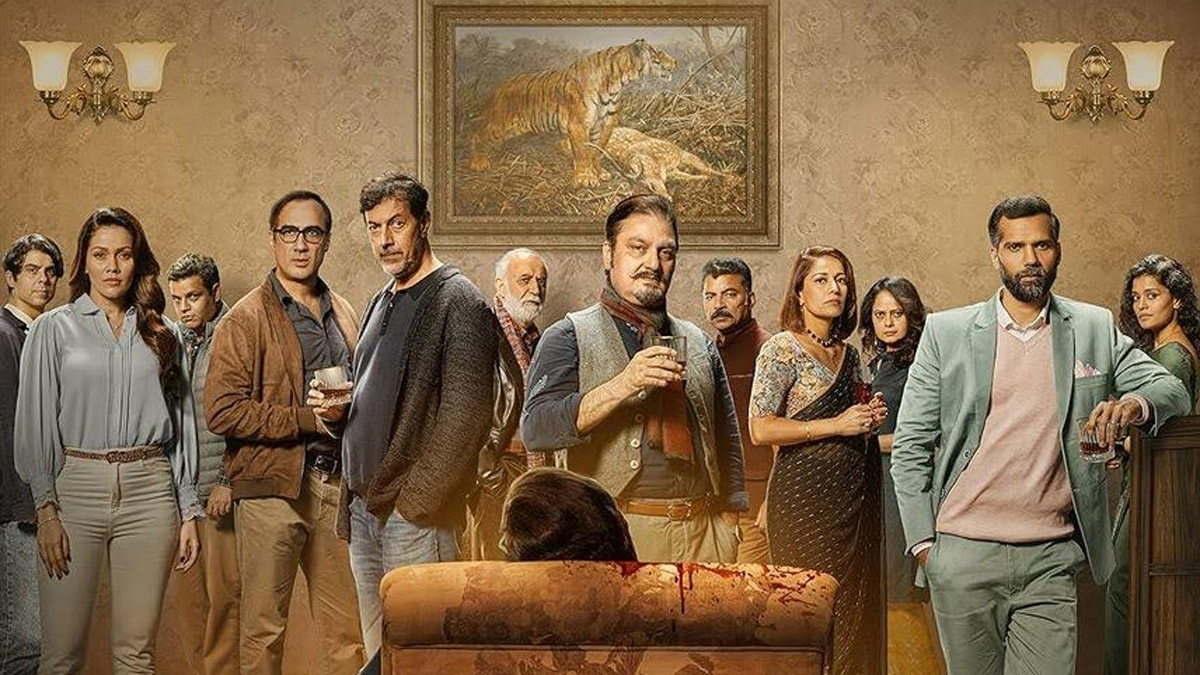
MUMBAI: Zee5 is serving up another killer collaboration and this time, the murder mystery comes with a generous side of dark humour and family dysfunction. The streaming platform has partnered with Applause Entertainment and Mithya Talkies to bring Everybody Loves Sohrab Handa, a fresh, twisted whodunnit written and directed by acclaimed filmmaker and actor Rajat Kapoor. The film will stream exclusively on Hindi Zee5 from 10 April.
The movie reimagines the classic murder mystery genre with a contemporary, darkly comic edge. It revolves around a group of friends and family who smile, drink, and celebrate together until the silence snaps and long-buried secrets spill out. The stellar ensemble cast includes Vinay Pathak, Ranvir Shorey, Waluscha De Sousa, Saurabh Shukla, Chandrachoor Rai, Neil Bhoopalam, Koel Purie, Palomi Ghosh, and Rajat Kapoor himself.
This latest offering continues the successful partnership between Zee5 and Applause Entertainment, which has previously delivered diverse hits such as Mithya, Bloody Brothers, and Jab Khuli Kitaab.
&TV Business Head of hindi Zee5 and chief channel officer Kaveri Das said, “Our collaboration with Applause Entertainment has consistently delivered distinct, high-impact storytelling. Everybody Loves Sohrab Handa is a natural progression, reinforcing our focus on genre-led content with a compelling whodunnit premise and a strong ensemble cast.”
Applause Entertainment business head for movies Sunil Chainani added, “This film adds yet another compelling layer to our slate with Rajat Kapoor’s unmistakable voice.”
Rajat Kapoor shared, “What interested me was not just the mechanics of a whodunnit, but the emotional violence that precedes physical violence. These are people who smile at each other, but there’s so much that is not said.”
The film promises razor-sharp writing, layered performances, and simmering tension, inviting viewers not just to solve the crime but to unravel the complex relationships at its heart.
If you love a good murder mystery served with wit and emotional depth, Everybody Loves Sohrab Handa looks set to be your next addictive watch. Mark your calendars, the whodunnit drops on Hindi Zee5 from 10 April.






