Hindi
YJHD set to break records at the BO, opens with Rs 61.25 crore


MUMBAI: Yeh Jawaani Hai Deewani (YJHD) has set the cash registers ringing at the box office with a record-breaking opening day as well as the opening weekend collections. The Ranbir Kapoor and Deepika Padukone starrer is on its way to join the illustrious Rs 100 crore club.
The youthful entertainer is certainly the biggest opener for 2013 thus far by a mile. The film released in over 3,000 screens in the country with an earth-shattering response and its occupancy ranging between 95 per cent and 100 per cent in both single screens and multiplexes on Friday. With its positive reviews and good word of mouth, the movie showed a very good jump in its business on Saturday and Sunday and has been received well by the critics and audiences alike.
The mammoth sized promotional events, guest appearances and performances on TV shows, brand associations and the works have done exceedingly well for it.

Kapoor has created a solid fan following among the youth and second time writer-director, Ayan Mukerji, helped keep his fans happy.
An extensive solo release backed by enhanced admission rates, has certainly accelerated the film‘s collection to rake in a handsome Rs 61.25 crore. The practice of reducing admission rates from Monday has been applied only at a select few outlets; this coupled with steady Monday, the film looks set to touch the 100 crore mark in real quick time.
Ishkq In Paris, Preity Zinta‘s debut production venture has passed generally unnoticed, collecting about Rs 2 crore in its first week.
Hum Hai Rahi Car Ke and Zindagi 50 50 found no takers and performed poorly.
The Arjun Kapoor starrer Aurangzeb has collected a total of Rs 23.85 crore at the end of its second week.
Go Goa Gone, the ‘zomcom‘ starring Saif Ali Khan, Kunal Khemu and Vir Das has collected Rs 1.8 crore in its third week to take its three week tally to Rs 24.95 crore.
Shootout At Wadala, the sequel to the 2007 hit Shootout At Lokhandwala has added Rs 1.1 crore for the fourth week to take its four week tally to Rs 49.1 crore.
Chhota Bheem And The Throne Of Bali in its fourth week has added Rs 40 lakh to take its four week total to Rs 4.65 crore.
Aashiqui 2 is going rock steady. The film collected Rs 5.5 crore in its fifth week thus taking its five week total to Rs 76.65 crore, certainly proving to be the sleeper hit of the year.






Hindi
Remembering Gyan Sahay, the lens behind film, television and advertising
From a puppet rabbit selling poppadums to Hindi cinema, he framed it all.
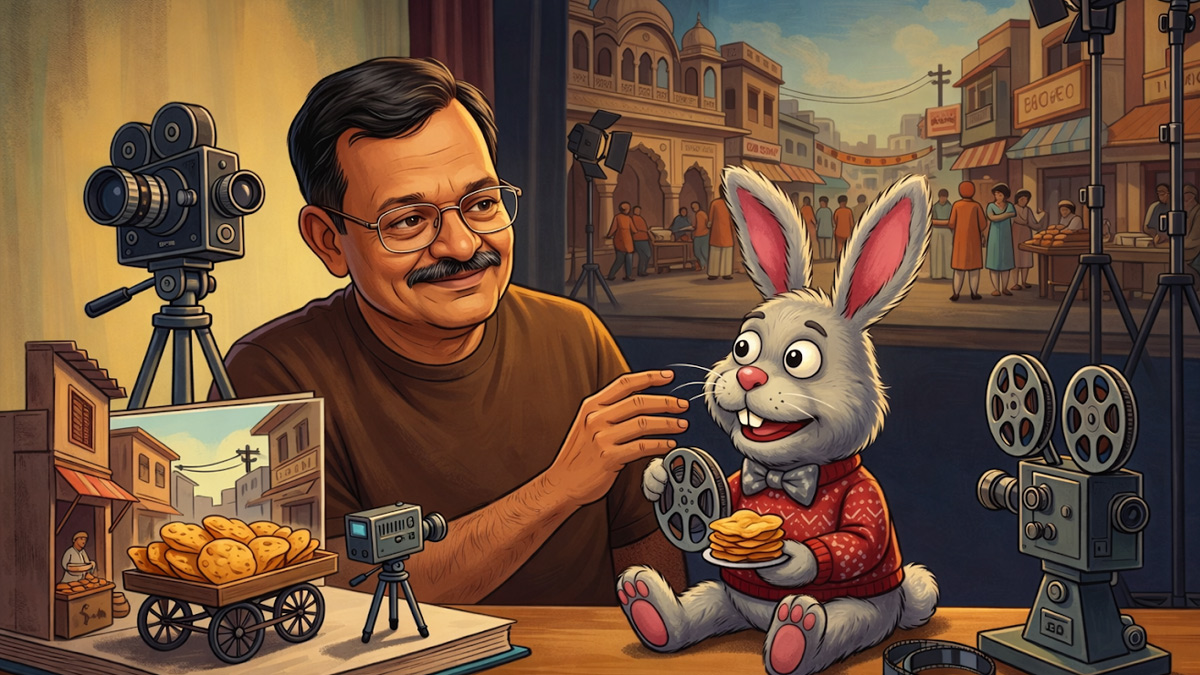
MUMBAI: There are careers, and then there are canvases. Gyan Sahay, the veteran cinematographer, director, and producer who passed away on 10 March 2026 in Mumbai, had one of the latter. Over several decades in the Indian film and television industry, he turned lenses, lights, and the occasional puppet rabbit into something approaching art.
A graduate of the Film and Television Institute of India (FTII) in Pune, Sahay built his reputation as a director of photography across a career that stretched from the early 1970s all the way to the digital age. He was the kind of craftsman who understood that a well-composed shot is not merely a technical achievement but a quiet act of storytelling.
For most Indians of a certain age, however, Sahay will forever be the man behind the rabbit. His direction of the iconic long-running television commercial for Lijjat Papad, featuring its now-legendary puppet bunny, gave the country one of its most cheerfully persistent advertising images. It was the sort of work that sneaks into the national subconscious and takes up permanent residence.
His big-screen credits as cinematographer include Anokhi Pehchan (1972), Pagli (1974), Pas de Deux (1981), and Hum Farishte Nahin (1988). In 1999, he stepped behind a different kind of camera altogether, making his directorial debut with Sar Ankhon Par, a drama that featured Vikas Bhalla and Shruti Ulfat, with a cameo by Shah Rukh Khan for good measure.
On television, Sahay was particularly prized for his command of multi-camera production setups, a skill that made him a go-to technician for large-scale shows and reality programmes. In an industry that has never been especially patient with complexity, he was the calm hand on the rig.
In later life, Sahay turned teacher. He participated regularly in masterclasses and Digi-Talks, often hosted by organisations such as Bharatiya Chitra Sadhna, sharing hard-won wisdom on cinematography, the comedy of timing in a shot, and the sweeping changes brought by the shift from celluloid to digital. He was also said to have been involved in a project concerning a biographical film on Infosys co-founder N.R. Narayana Murthy.
Tributes from the film industry poured in following the news of his passing, with colleagues remembering him as a senior cameraman who served as a rare bridge between two entirely different eras of Indian cinema. That is, perhaps, the finest thing one can say of any craftsman: he kept up, and he brought others along with him.







