News Headline
Will Union Budget boost catapult India to Olympic glory in Paris 2024 and beyond?

Mumbai: With the Paris Olympics on the horizon, the spotlight is blazing on India’s sports sector as we eagerly await the Union Budget 2024. In 2023, the industry witnessed a historic budget boost, soaring by over Rs 300 Crores to reach Rs 3397.32 Cr – a testament to the government’s commitment.
Khelo India emerged as the frontrunner with a whopping allocation of Rs 1045 Crores, playing a game-changing role. Now, with the global stage beckoning in Paris and future Olympic bids, the nation’s sports enthusiasts are on the edge of their seats, anticipating how the upcoming budget will script India’s sports narrative for the world.
Here are the quotes from the various industry experts on pre-Union Budget allocation for the sports sector

Punit Balan Group chairman & managing director Punit Balan expressed his optimism, stating, “Last year’s significant boost in the sports budget showcased the government’s commitment to supporting athletic talent. Considering the Paris Olympics 2024 this year, I hope to see a continued emphasis on encouraging and building future stars. The combination of grassroots initiatives like Khelo India and the professional leagues is essential for nurturing talent and ensuring a sustainable ecosystem for Indian sports.”
Ultimate Kho Kho CEO and league commissioner Tenzing Niyogi emphasised the need for strategic allocations, noting, “Aligning with the nation’s vision to host the 2036 Olympics under the leadership of our prime minister Shri Narendra Modi, we expect a strategic allocation for non-cricketing sports for infrastructure and talent development across diverse sporting disciplines. Furthermore, the allocation of funds from NSF is also of utmost importance as it will serve as a catalyst for nurturing grassroots programs and identifying as well as developing raw talent. An increase in the National Skill Development Fund is also imperative. This is not only in line with making India a multisport-playing nation but also with the creation of more opportunities through the PPP model to engage and entice additional corporate participation in the Sports Movement.”
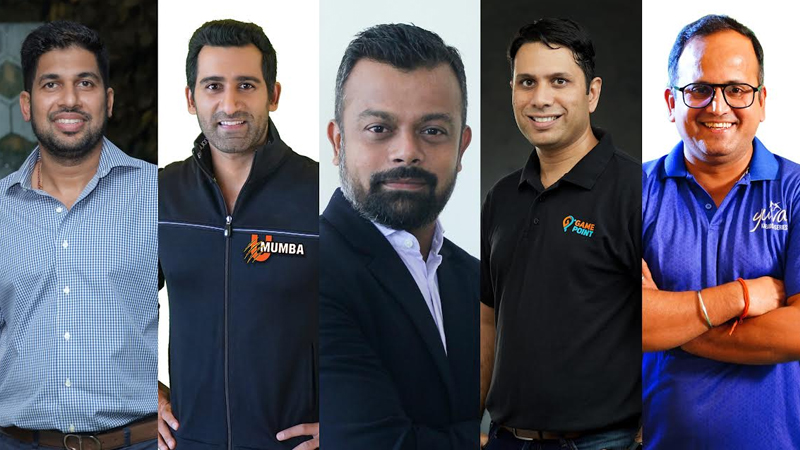
As the sporting landscape in India evolves, U Mumba CEO Suhail Chandhok emphasised the importance of channelling resources into the development of indigenous sports leagues, the identification of talent, and the nurturing of grassroots initiatives.
“With the rapid development of emerging homegrown sports leagues, we anticipate an allocation of funds to elevate their prominence in the country. We also hope for a strategic focus on talent identification and grassroots development which to me are crucial pillars for creating a vibrant sports ecosystem. Investing in these areas will not only promote but also contribute to the sustainable development of diverse sporting disciplines,” he said.
Addressing the crucial aspect of international-level coaching, facilities, and sports sciences, Yuva Kabaddi Series CEO Vikas K Gautam commented, “The allocation of funds towards the training of coaches is crucial, given the current lack of infrastructure and the absence of internationally standardized coaching facilities. It is imperative to recognize that only well-trained coaches can cultivate athletes to compete at the international level. Emphasis on holistic development programs, focusing on talent identification and nurturing, nutrition, and sports science, to create a well-rounded ecosystem for aspiring athletes.”
Gamepoint co-founder & CEO Aditya Reddy brought attention to the fiscal aspects of the sports sector, emphasizing that reducing GST could play a pivotal role in its transformation by remarking, “To transform the sports sector in India, it is imperative to encourage and incentivise private sports organisations. This can be made possible by reducing the GST on sports services from 18 per cent to 12 per cent, incentivising the establishment of sports goods manufacturing in India through a PLI scheme for sports equipment, and facilitating access to government, railways, and PSU sports facilities for the general public. If necessary, involving private organizations in managing these facilities under a PPP model can enhance both management and maintenance efficiency.”





NEW DELHI: Hamdard Laboratories gathered a cross-section of India’s achievers in New Delhi on Friday, handing out the Hakeem Abdul Hameed Excellence Awards to figures who have left their mark across healthcare, education, sport, public service and the arts.
The ceremony, attended by minister of state for defence Sanjay Seth and senior officials from the ministry of Ayush, celebrated individuals whose work blends professional success with a sense of public purpose. It was as much a roll call of achievement as it was a reminder that influence is not measured only in profits or podiums, but in people reached and lives improved.
Among the headline awardees was Alakh Pandey, founder and chief executive of PhysicsWallah, recognised for turning affordable digital learning into a mass movement. On the sporting front, Arjuna Awardee and kabaddi player Sakshi Puniya was honoured for her contribution to the game and for pushing women’s participation onto bigger stages.
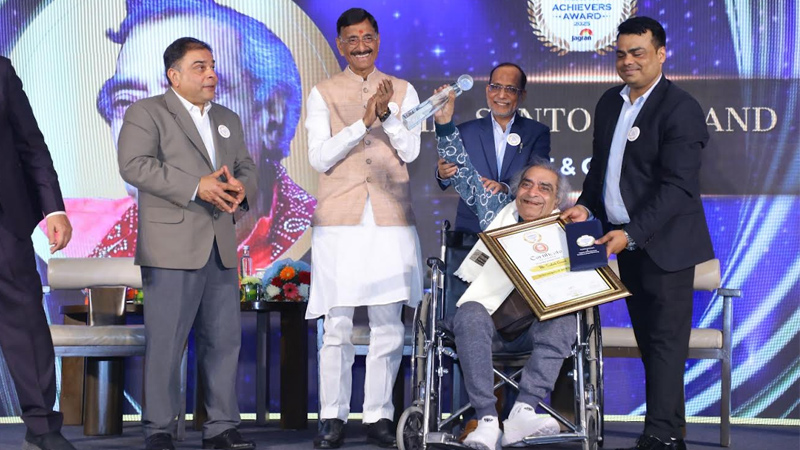
The cultural spotlight fell on veteran lyricist and poet Santosh Anand, whose songs have echoed across generations of Hindi cinema. At 97, Anand accepted the honour with characteristic humility, reflecting on a life shaped by perseverance and hope.
Healthcare honours spanned both modern and traditional systems. Manoj N. Nesari was recognised for strengthening Ayurveda’s place in national and global health frameworks. Padma shri Mohammed Abdul Waheed was honoured for his research-backed work in Unani medicine, while padma shri Mohsin Wali received recognition for his long-standing contribution to patient-centred care.
Education and social development also featured prominently. Padma shri Zahir Ishaq Kazi was honoured for decades of work in education, while former Meghalaya superintendent of Police T. C. Chacko was recognised for public service. Goonj founder Anshu Gupta received an award for his dignity-centred rural development initiatives, and the Hunar Shakti Foundation was honoured for empowering women and young girls through skill development.
The Lifetime Achievement Award went to former IAS officer Shailaja Chandra for her long career in public healthcare and governance, particularly in the traditional systems under Ayush.
Speaking at the event, Hamdard chairman Abdul Majeed said the awards were a tribute to those who combine excellence with empathy. “These awardees reflect Hakeem Sahib’s belief that healthcare, education and public service must ultimately serve humanity,” he said.
Minister Seth struck a forward-looking note, saying India’s young population gives the country a unique opportunity to become a global destination for learning, health and wellness by 2047.
The ceremony also featured the trailer launch of Unani Ki Kahaani, an upcoming documentary starring actor Jim Sarbh, set to premiere on Discovery on 11 February.
Instituted in memory of Unani scholar and educationist Hakeem Abdul Hameed, the awards have grown into a national platform that celebrates those building a more inclusive and resilient India. For one evening at least, the spotlight was not just on success, but on service with substance.






