News Headline
Wi-Fi: TRAI plans to set up ‘open’ WANI, seeks inter-operable, sachet-priced model

MUMBAI: The Telecom Regulatory Authority of India (TRAI) has issued a document inviting participation of entities to be part of a Pilot to establish Nation-wide Public Data Offices (PDOs). Any interested entity (company, proprietorship, societies, non-profits, etc.) registered in India can apply to TRAI latest by 25 July 2017.
The Internet is the single most self-empowering infrastructure available for a citizen in the 21st century. The World Bank observed that a 10% increase in Internet penetration leads to a 1.4% increase in GDP. Access to the Internet is considered a basic human right by many countries globally, including Estonia, Finland and France. In India, access to data is still limited due to poor coverage of fiber & telecom and prohibitive pricing of cellular data. Public Wi-Fi hotspots hold an important place in the last-mile delivery of broadband to users. It allows offloading telecom networks to ease congestion, and will be crucial when the next billion loT devices come online.
Based on the recommendation of TRAI on “Proliferation of Broadband through Public Wi-Fi Networks” issued on 9 March 2017, TRAI invites all interested entities to be a part of a Pilot to establish nation-wide, pay-as-you-go PDOs.

The vision of this initiative is to establish an Open Architecture based Wi-Fi Access Network Interface (WANI), such that;
• Any entity (company, proprietorship, societies, non-profits, etc.) should easily be able to setup a paid public Wi-Fi Access Point:
• Users should be able to easily discover WANI compliant SSIDs, do one click authentication and payment, and connect one or more devices in single session.
• The experience for a small entrepreneur to purchase, self-register, set-up and operate a PDO must be simple, low-touch and maintenance-free.
• The products available for consumption should begin from “sachet-sized”, i.e. low denominations ranging from Rs 2 to Rs 20, etc.
• Providers (PDO provider, Access Point hardware/software, user authentication and KYC provider, and payment provider) are unbundled to eliminate silos and closed systems. This allows multiple parties in the ecosystem to come together and enable large scale adoption.
Objectives of the pilot are:
• Demonstrate that unbundling of services reduces rework, speeds up development and hence is the most effective way to tackle this complex problem.
• Prove that Multi-provider, inter-operable, collaborative model increases the overall innovation in the system, dismantles monopolies and encourages passing of benefits to end user.
• Test the specifications in real life conditions, and suggest improvements.
• Jointly develop a business model that fairly allocates value to each provider.
• Fine tune the technology and finalize the specifications based on pilot.
• Test out integrated paymernt methods such as coupons (purchased usmg cash by user or gifted to user), credit/debit cards, net banking, e-wallets, and UPI.







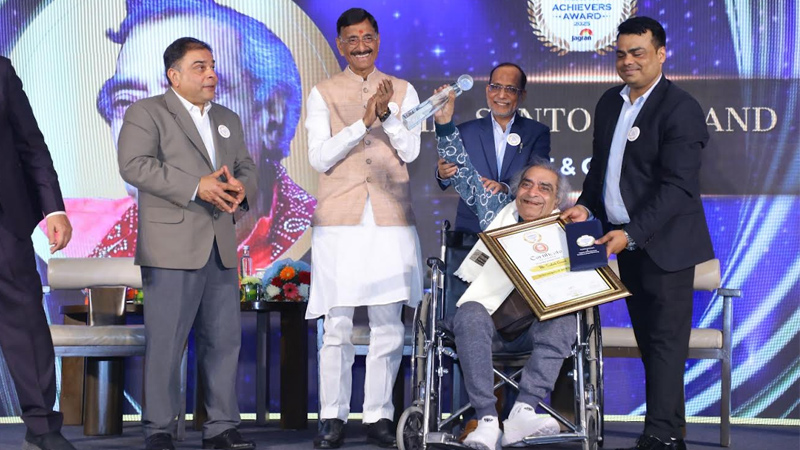
NEW DELHI: Hamdard Laboratories gathered a cross-section of India’s achievers in New Delhi on Friday, handing out the Hakeem Abdul Hameed Excellence Awards to figures who have left their mark across healthcare, education, sport, public service and the arts.
The ceremony, attended by minister of state for defence Sanjay Seth and senior officials from the ministry of Ayush, celebrated individuals whose work blends professional success with a sense of public purpose. It was as much a roll call of achievement as it was a reminder that influence is not measured only in profits or podiums, but in people reached and lives improved.
Among the headline awardees was Alakh Pandey, founder and chief executive of PhysicsWallah, recognised for turning affordable digital learning into a mass movement. On the sporting front, Arjuna Awardee and kabaddi player Sakshi Puniya was honoured for her contribution to the game and for pushing women’s participation onto bigger stages.
The cultural spotlight fell on veteran lyricist and poet Santosh Anand, whose songs have echoed across generations of Hindi cinema. At 97, Anand accepted the honour with characteristic humility, reflecting on a life shaped by perseverance and hope.
Healthcare honours spanned both modern and traditional systems. Manoj N. Nesari was recognised for strengthening Ayurveda’s place in national and global health frameworks. Padma shri Mohammed Abdul Waheed was honoured for his research-backed work in Unani medicine, while padma shri Mohsin Wali received recognition for his long-standing contribution to patient-centred care.
Education and social development also featured prominently. Padma shri Zahir Ishaq Kazi was honoured for decades of work in education, while former Meghalaya superintendent of Police T. C. Chacko was recognised for public service. Goonj founder Anshu Gupta received an award for his dignity-centred rural development initiatives, and the Hunar Shakti Foundation was honoured for empowering women and young girls through skill development.
The Lifetime Achievement Award went to former IAS officer Shailaja Chandra for her long career in public healthcare and governance, particularly in the traditional systems under Ayush.
Speaking at the event, Hamdard chairman Abdul Majeed said the awards were a tribute to those who combine excellence with empathy. “These awardees reflect Hakeem Sahib’s belief that healthcare, education and public service must ultimately serve humanity,” he said.
Minister Seth struck a forward-looking note, saying India’s young population gives the country a unique opportunity to become a global destination for learning, health and wellness by 2047.
The ceremony also featured the trailer launch of Unani Ki Kahaani, an upcoming documentary starring actor Jim Sarbh, set to premiere on Discovery on 11 February.
Instituted in memory of Unani scholar and educationist Hakeem Abdul Hameed, the awards have grown into a national platform that celebrates those building a more inclusive and resilient India. For one evening at least, the spotlight was not just on success, but on service with substance.






