Distribution
Why NetxGenTV is not the panacea for Indian TV broadcasting


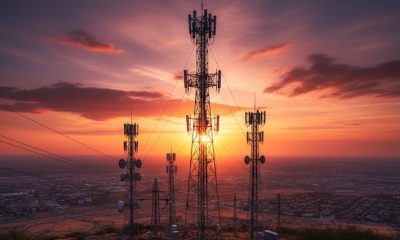
Mumbai: A new transmission technology, direct-to-mobile (D2M) broadcasting or NextGenTV, despite enjoying coverage in media platforms such as this one, is struggling to gain TV industry traction. D2M transmits audio-visual content on a terrestrial (earth-based) spectrum and any device with a receiver can access it, just like FM radio transmits audio content. Prasar Bharati and IIT-Kharagpur conducted limited trials of the technology last year, and reports suggest that the Telecommunications Engineering Centre may issue a technical report. It is worth exploring why D2M has almost no takers.
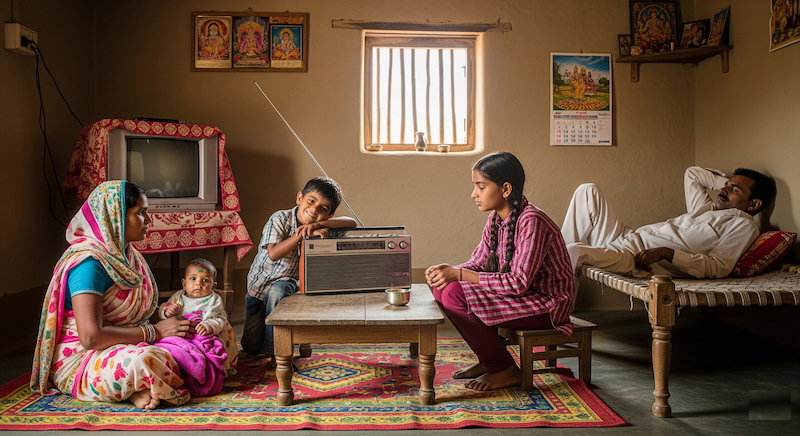
The first time Indians saw audio-visual content on TV, it was a science experiment to test the capabilities of satellite-based communications. The Satellite Instructional Television Experiment (Site), jointly designed by the National Aeronautics & Space Administration (Nasa) and India’s Department of Atomic Energy demonstrated the potential to disseminate audio-visual content via satellites in 1975. 2,400 villages spread across 20 districts received educational and instructional content that the All India Radio (AIR) had prepared.
Later in 1991, strong demand for coverage of the Gulf War pushed satellite and TV dish manufacturers and cable operators to work overtime to create infrastructure for TV distribution. Market-led shifts from analog to digital transmission and the evolution of newer transmission technologies like direct-to-home (DTH) and Headend in the Sky (Hits), led the way and created new value and supply chains. In the case of D2M, no supply chain participant – content services, device makers and infrastructure providers – wants a hard mandate for adoption. At least at the time of writing.

Content Services
First, it is unclear if D2M can offer better content to consumers. The shift to digital broadcasting enabled more content to flow through the same frequency channels and made more content available. D2M offers no such efficiency. Prasar Bharati, India’s public broadcaster transmits a few Doordarshan channels in 16 cities in India through digital terrestrial transmission technology. Presumably, content made available on D2M would be the public broadcaster’s content.
D2M is not lucrative for private broadcasters because they are likely to face monetisation challenges. For instance, D2M fragments the existing ad market for free-to-air TV channels, diminishing the value of TV advertising real estate. A TV channel would need to invest in packaging content for D2M distribution without any assurance of new eyeballs. PayTV providers are apprehensive of content protection standards as they may lose out on subscription revenues because of last-mile signal piracy. Anyone with a D2M receiver can view pay TV content and the transmission technology does not account for strong access controls.
There is also an apprehension that the ministry of information & broadcasting (MIB) may use anti-siphoning frameworks to source content for D2M. Prasar Bharati receives the live feed of expensive IP rights acquisitions like the Cricket World Cup for free as a result of the Sports Broadcasting Signals (Mandatory Sharing with Prasar Bharati) Act, 2007. If the public broadcaster makes this content available for free on D2M, rights holders cannot monetise their IP and recoup their investment. Consequently, the value proposition of investment in sports broadcasting diminishes and it will have an adverse impact on the sports ecosystem.
Device Makers
Second, the device ecosystem is neither prepared nor incentivised for D2M adoption. Like the shift to digital-required set-top-boxes (STBs) and DTH-required satellite dishes, D2M adoption requires transmission and receiver equipment. Saankhya Labs, the government’s partner in D2M trials, produces transmitters but India does not indigenously produce receiver equipment.
If the government mandates original equipment manufacturers (OEMs) to install D2M receiver equipment they will resist on account of cost concerns. OEMs highlighted a similar challenge when the ministry of electronics & information technology (MeitY) issued an advisory and asked mobile phone manufacturers to include FM radio receiver functions in April 2023.
Conversely, if consumers buy receiver equipment at their own cost, it is likely that cheaper products from jurisdictions like China will flood the market. This leads to privacy and security concerns and exacerbates underreporting and signal piracy. A D2M receiver in border areas can receive content and possibly communicate data on the mobile handset across the border.
Distribution
The Prasar Bharati-led trials proved the technology can work, but it does not speak to its feasibility and impact on the distribution ecosystem. D2M receivers received transmissions in a controlled environment in metro cities Delhi and Bengaluru. But, does that prove that it can work anywhere in the country? And can it coexist with other use cases?
Spectrum is a scarce resource and many communication technologies need the resource to operate. Allocation of a spectrum for new technology requires a comparison of deploying D2M in this frequency range with competing use cases or assessed potential interference with existing services. D2M broadcasting uses spectrum in UHF frequency bands 526 – 582 MHz. Eventually, the 470 – 698 MHz would be key for D2M adoption. Telecom operators require the same band for 5G deployment, and accommodating D2M will reduce bandwidth. Further, radio microphones, in-ear monitors, wireless cameras, talkback systems used during live events, content production, political rallies, news broadcasts, and press conferences also use the 526 – 582 MHz frequency range.
D2M will compete with audio-visual transmitted via data services of telecom and internet service providers. Airtel reported a 27 per cent increase in its revenue from mobile services in the first quarter of FY23, attributing it to growing consumption of mobile data. Reliance Jio also reported similar growth in June 2022, with total data traffic in the quarter growing by 27.2 per cent. D2M does not offer a value proposition for telcos to diversify their offerings and build infrastructure for D2M broadcasting.
Where and when to use D2M
D2M will not herald a new era of content dissemination or transform broadcast distribution as many claim it will for the reasons stated above. However, it can serve a public interest objective like the Site experiment did in 1975, that is, to disseminate educational and informative content. D2M also has the unique ability to disseminate locally which can be utilised for localised content dissemination, like community radio stations that broadcast audio content within a local range. In terms of content, D2M can provide an additional avenue to disseminate public interest content and spread awareness through localised transmissions in disaster situations. The government would still need to address device ecosystem and spectrum concerns before it can rollout and scale the technology.
D2M holds potential for a revamp of public broadcasting in India, but it is unlikely to find any takers in the private sector. D2M’s unique proposition is its ability to localise transmission which Prasar Bharati can utilise for dissemination of content on themes of national importance and emergency transmissions during disaster events.
Varun Ramdas is manager Koan Advisory Group. The views expressed in this article are entirely his own and Indiantelevision.com neither endorses nor supports them in any way.



New Delhi: Prasar Bharati has thrown open applications for fresh capacity on DD Free Dish, signalling a timely opportunity for broadcasters looking to expand reach without long-term lock-ins. The public service broadcaster has issued a dual notice for its 95th and 96th online e-auctions, aimed at filling vacant MPEG-2 and MPEG-4 slots on a pro-rata basis for February and March 2026.
The two auctions are tentatively scheduled to begin on January 27, with allotments valid from February 1, 2026. Applications for both auctions close on January 21 at 3 pm, giving channels a narrow window to get their bids in.
The 95th e-auction will cover vacant MPEG-2 slots, while the 96th will focus on MPEG-4 capacity. Participation is limited to satellite television channels holding valid downlinking and uplinking permissions from the ministry of information and broadcasting. International public broadcasters cleared by the ministry are also eligible.
As with previous rounds, channels have been grouped into buckets based on genre and language, with sharply differentiated reserve prices reflecting reach and demand.
For the MPEG-2 auction, Hindi and Urdu general entertainment channels sit at the top of the pile. The starting reserve price for bucket A+ in the first round is Rs 2,63,48,000. Movie, music and sports channels in Hindi and Urdu follow in bucket A at Rs 2,10,14,000. Bhojpuri channels and other Hindi and Urdu genres, excluding devotional content, fall under bucket B with a reserve of Rs 1,78,62,000. Hindi and Urdu news channels in bucket C start at Rs 1,33,27,000, while bucket D, which includes regional language channels, English news and devotional or spiritual channels, begins at Rs 1,13,96,000.
The MPEG-4 auction comes in at a far leaner price point. News and current affairs channels in Hindi, English or pan-India languages, grouped under bucket G1, start at Rs 13,41,000. Non-news genres under bucket G2 have a reserve of Rs 8,80,000. Regional languages such as Marathi, Punjabi and Gujarati in bucket R2 begin at Rs 4,84,000. Southern language channels in Tamil, Telugu, Kannada and Malayalam, grouped under bucket R1, start at Rs 81,000, the same reserve price set for other scheduled 8 regional languages in bucket R3.
Prasar Bharati has underlined that compliance will be closely watched. Broadcasters must ensure that at least 75 per cent of their monthly programming, excluding advertisements, aligns with the declared genre and language. Any deviation could trigger show-cause notices or even removal from the DD Free Dish platform.
For channels chasing reach in a crowded market, the message is clear. The window is brief, the prices are set and the audience is waiting. On DD Free Dish, visibility still comes cheap, but only for those ready to move fast.






