Film Production
Why 2000 episodes later Indian television still has families hooked

MUMBAI: At a time when attention spans are shrinking and screens are multiplying, Indian television continues to defy predictions of its decline. Long-form storytelling, once written off as a relic of appointment viewing, is still drawing families together night after night and nowhere is this more evident than in the rare milestone achieved by Kyunki Saas Bhi Kabhi Bahu Thi, which has completed 2,000 episodes over a remarkable 25-year run. The achievement is more than a number; it is a reminder of television’s enduring ability to mirror lives, anchor routines and create emotional continuity across generations.
Few executives have witnessed and shaped this evolution as closely as Balaji Telefilms EVP for digital and TV Tanusri Dasgupta. With over two decades at the studio, she has navigated shifting audience habits, platform fragmentation and the rise of digital viewing, while remaining rooted in the belief that strong storytelling remains television’s greatest currency. In this conversation, Dasgupta reflects on the legacy of long-running franchises, the changing economics of television, the role of marketing and digital distribution, and why, even in an OTT-first world, daily soaps continue to hold a uniquely powerful place in India’s entertainment ecosystem. More on this in this exclusive interview by Indian Television Dot Com.
On what 2,000 episodes of Kyunki Saas Bhi Kabhi Bahu Thi reveal about India’s love for long-form storytelling.

Television has been an integral part of the household for generations of families across India. Many viewers are emotionally bonded to the characters from long-running dramas or series than to characters from shorter-lived formats. As such, viewers have been following the journey of their favorite characters over a span of two decades, which is a testament to how a viewer’s life parallels a character’s existence. Not only does the country of India continue to support and value these storylines, but they also grow as society continues to change as the years pass. The ability for a viewer to have an emotional attachment to a television show and continue to support that show for so many years indicates how powerful emotionally based television is for audiences, particularly in India.
On how two decades at Balaji Telefilms reshaped your approach to building enduring TV IPs.
Balaji evolve and adapt with the ever-changing market. Television has changed time and again, riding the roller coaster of shifting trends, but what has never changed is the power of a good story. Audiences always find a connection with stories, something that resonates with them consistently works. We have tried to follow that pulse for the past two decades. In today’s time, audiences are far more involved through social media and other platforms, which gives us valuable insights. But eventually, it all comes down to the power of the story and the conviction of the creator.
On the creative and operational discipline needed to keep daily soaps relevant over hundreds of episodes.
The balance between nostalgic viewing compared to current viewing is also part of creating an environment for companies to operate within the guidelines of industry discipline; the need for continual creativity with each episode produced, while also incorporating the hook method in every episode and ensuring that each episode stays true to the characters. More importantly for creators, they must be agile in listening to their viewers’ real-time feedback on what is working and not in terms of plot points. The creative teams want to make their storylines simpler so the Gen Z audience will relate to them as real, so they are looking for more real and authentic content as well. At the same time, the creative teams have found a way to maintain the larger-than-life goals that are still the hallmark of the Balaji brand.
About how marketing legacy television shows has evolved in the age of social media and OTT.
The marketing timeline for television programming was previously based around a 9 p.m. time slot, but now focuses on creating trending topics on social media platforms like X and Instagram. Today, legacy television shows are treated as inter-generational brands, while OTT is viewed as the catch-up medium for busy urban consumers, and social media is the digital town square for dialogue on plot developments. The program is considered the star, while these digital channels are like planets orbiting around it.
On how broadcasters and advertisers now measure success for long-running television shows.
Television ratings continue to be the benchmark for linear broadcast television, but there has been a shift in how advertisers examine the episodic nature of television programming and monitor the consumer’s loyalty. In addition to the ratings, advertisers also view the stickiness of a program as a factor when deciding whether to invest in a new television program. Longstanding franchises have developed a level of trust that new programs do not necessarily experience at their inception. Advertisers gauge success through linear reach as well as digital impressions. When a brand integrates itself into a television program such as Kyunki Saas Bhi Kabhi Bahu Thi, it is not purchasing just an advertising space; it is purchasing the loyalty of the show, and by extension, it is gaining 25 years’ worth of audience loyalty and brand recall across three generations.
About whether established TV franchises are more attractive to marketers than new launches today.
Absolutely. In an era of content clutter, a franchise is a safe harbor. A new launch is a gamble; an established show is a habit. Marketers love predictability because it guarantees a baseline of eyeballs. However, the challenge for us is to keep that predictability from becoming predictable. As a brand, Balaji treats every new season or major leap in a franchise as a re-launch to ensure the brand remains fresh and the marketer’s ROI stays high.
On how digital distribution has extended the life cycle and monetisation of television content.
Television content is immortal because of technology. Previously, television episodes would only air once and then only be remembered; but now, television content has become part of the digital libraries, allowing consumers to binge-watch over 2000 episodes at their convenience. With the advent of this type of monetisation, content produced years ago continues to generate revenue through video-on-demand and subscription video-on-demand after being first aired. This shift has changed the way Balaji thinks about television shows, transforming them from perishable items into long-term assets.
About what television continues to offer that OTT platforms cannot fully replace.
OTT is about instant gratification and solitary bingeing, but television is about communal anticipation. TV builds a slow-burn connection. There is a unique magic in an entire country waiting for a specific wedding or a revelation at a specific hour. TV provides a sense of routine and a shared cultural experience that the watch-anywhere, anytime nature of digital-first formats sometimes dilutes. TV is the comfort food of entertainment.
On how platform strategy influences content creation and marketing across networks today.
At Balaji, we work with multiple networks on content strategy, with Ekta Kapoor continuing to lead the creative vision. While the creator’s conviction always comes first, the research and data shared by networks play an important role in shaping some of our decisions. Insights gathered through audience interactions, market visits, and performance data help us understand what is connecting with viewers and what may need fine-tuning.
Most networks follow a similar approach when it comes to research and data. This gives us a clearer sense of audience preferences and helps us judge which aspects of the story are working. Each network also brings its own perspective and strategy, which supports our overall content direction, along with feedback from ratings and performance.
On whether long-form television can still thrive, or if milestones like 2,000 episodes will become rare.
Although there may be fewer traditional forms of linear long-form storytelling, the craving for long-form storytelling is not going away. As long as families come together and humans look for emotional stories in their daily lives, long-form content will continue to be successful.






Film Production
Arka Mediaworks onboards 88 Pictures as animation studio partner on ‘The Eternal War – Part 1’
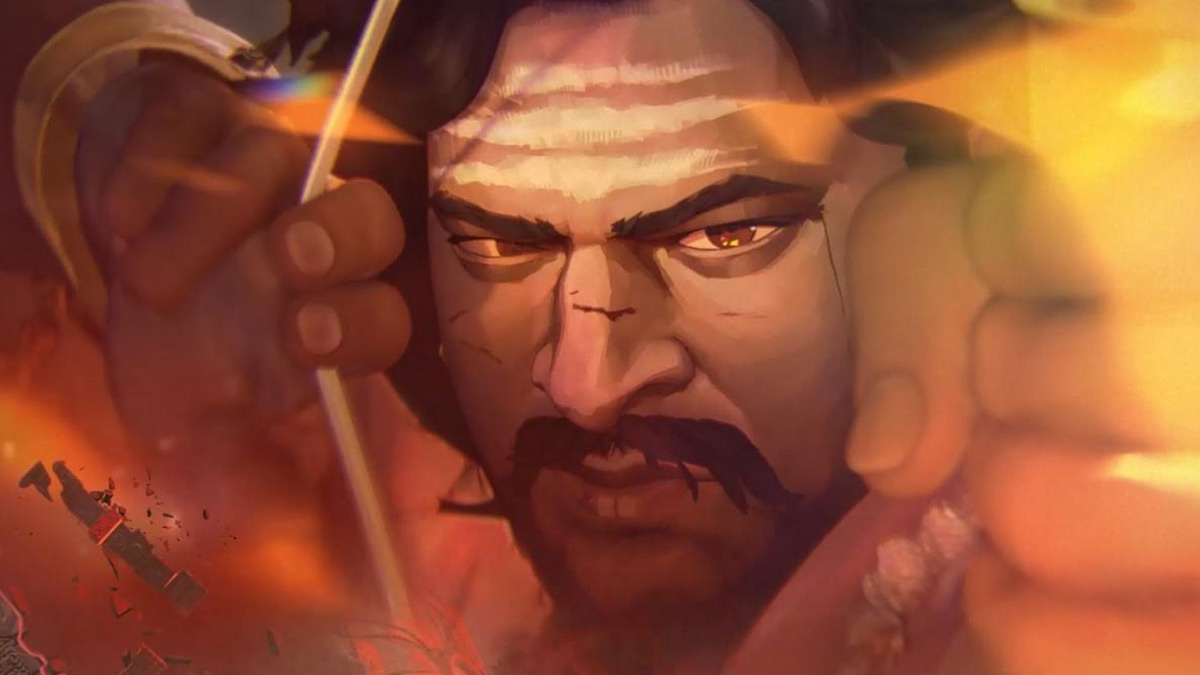
Arka Mediaworks announces that 88 Pictures, the acclaimed animation and visual storytelling studio known for its cutting-edge CGI and cinematic artistry, is on board as the animation partner for the highly anticipated Baahubali: The Eternal War, a groundbreaking two-part 3D animated feature film set in the globally beloved Baahubali universe.
Baahubali: The Eternal War represents a bold new chapter in the Baahubali saga envisioned for national and international audiences and crafted with the ambition of delivering one of India’s most ambitious and globally benchmarked animation projects to date.
88 Pictures will execute the animation production, bringing to life the film’s richly detailed worlds, epic battle sequences, and larger-than-life characters with its signature blend of artistic vision, performance-driven animation, and advanced production pipelines. Working closely with the film’s creative leadership and technical partners, the studio aims to set new benchmarks in animation quality, cinematic storytelling, and global scalability.
This animated epic follows the successful re-release of Baahubali: The Epic (the combined theatrical version of the original live-action films) on 31 October 2025 across India and the USA. During the film’s interval, legendary creator and director S.S. Rajamouli (Baahubali 1 & 2, RRR) stunned audiences with a surprise teaser for The Eternal War – Part 1. The video immediately went viral, garnering widespread national and international acclaim across LinkedIn, Instagram, and YouTube for its ambitious visual style and scale.
Produced by Arka Mediaworks and led by co-founder and CEO Shobu Yarlagadda – producer of the iconic Baahubali duology, The Eternal War brings together fantastic storytelling and cutting-edge animation.. The film is directed and written by acclaimed animation filmmaker Ishan Shukla (Schirkoa: In Lies We Trust, Star Wars: Visions – “The Bandits of Golak”) and screenplay by Scott Mosier (The Grinch). Mihira Visual Labs, the studio co-founded by Yarlagadda anchors the film’s animation, visual development, and execution.
The partnership with 88 Pictures brings significant pedigree to the project; the studio is well-regarded for its work on high-profile international titles including DreamWorks’ series Trollhunters, the HBO Max original series Gremlins: Secrets of the Mogwai, Disney’s animated short An Almost Christmas Story to name a few.
Yarlagadda shared, “We are happy to onboard 88 Pictures as the animation studio partner for our prestigious and most expensive animated film from India. We believe that their expertise and capabilities will allow us to produce a first-of-its-kind, world-class animated feature film from India.”
88 Pictures founder & CEO Milind D. Shinde said, “Baahubali changed the way cinema is perceived and became a defining milestone that turned the tide for Indian live-action filmmaking. Expanding the franchise into an entirely new universe—at a never-seen, never-done scale—through an animated feature created in India for a global audience is set to redefine how the world views Indian animation. We are truly thrilled to be part of this landmark project and to bring it to life under the visionary direction of Ishan Shukla, guided by the experience and leadership of acclaimed producer Shobu Yarlagadda.”
Shukla expressed, “Eternal War requires a level of visual and emotional precision that can only come from teams who truly understand both craft and intent. Working with 88 Pictures, alongside Mihira Visual Labs, has been a deeply collaborative experience. This association brings together technical excellence and creative sensitivity, enabling us to translate an ambitious vision into a compelling cinematic reality.”
Baahubali: The Eternal War – Part 1 is scheduled for release in 2027






