Applications
When AI Gets Real Mphasis adds meaning to machine intelligence

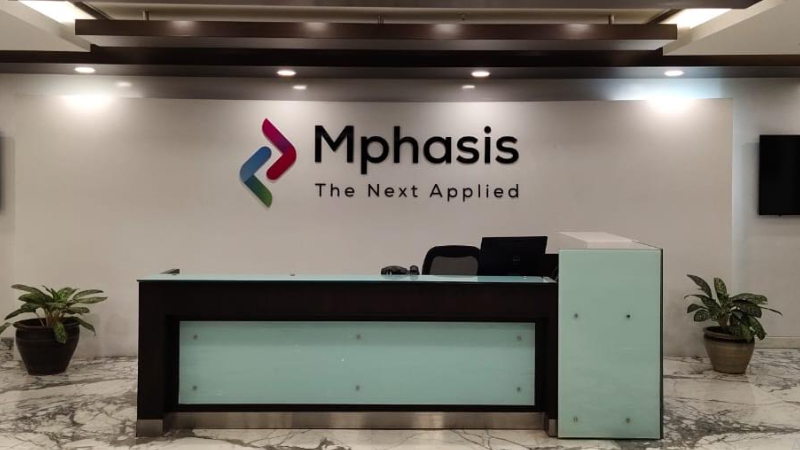
MUMBAI: Artificial Intelligence may be the buzzword of the decade but Mphasis wants to remind the world that without intelligence, it’s just artificial. With its new global campaign, AI Without Intelligence Is Artificial, the Bengaluru-headquartered technology firm is calling out the hype and bringing focus back to context-driven, human-centred innovation.
The campaign, which marks the global launch of Mphasis NeoIP, redefines what it means to make AI “real” for business. NeoIP is a next-generation platform that combines enterprise knowledge, contextual data, and automation into a continuous, intelligent process helping companies evolve instead of endlessly reinventing themselves.
The global AI industry may be booming McKinsey estimates that generative AI could add up to 4.4 trillion dollars in annual global productivity yet many companies are still struggling to translate that promise into profit. “In a market flooded with AI-centric solutions, Mphasis asks a critical question, what happens when intelligence is missing from AI?” said Mphasis global chief marketing officer and head of hyperscalers & strategic partnerships Veda Iyer. “True AI must evolve with business needs. AI without context is simply not enough.”

At the heart of the new campaign is a challenge to stop viewing AI as a shiny new tool and start treating it as a thinking partner. NeoIP does just that, fusing Mphasis’ proprietary solutions with third-party technologies and client systems to create an AI ecosystem that is intelligent by design, secure by default, and scalable by nature. The approach reduces the constant reinvestment typical of traditional digital transformation efforts.
Set to roll out across digital, social, and experiential platforms, the campaign targets decision-makers across banking, healthcare, insurance, and hi-tech industries. The tone is provocative yet purposeful showing how contextual intelligence, not just code, drives measurable transformation.
Iyer explained that Mphasis’ approach is rooted in intelligent engineering, where AI doesn’t just automate, it adapts, optimises, and learns. “Our goal is to help businesses build AI systems that think ahead systems that are not static, but evolve continuously to drive long-term success,” she added.
Through NeoIP, Mphasis is already working with leading financial institutions to modernise infrastructure, enhance security, and future-proof operations. The results echo the core philosophy behind the campaign that AI must be intelligent by design to create real, lasting impact.
As the world races to embrace automation, Mphasis’ message lands with timely precision: intelligence is the soul of AI without it, all that’s left is an empty buzz.







Applications
With 57 per cent single new users, Ashley Madison rebrands as discreet dating platform
Platform says majority of new members now identify as single

INDIA: Ashley Madison is shedding the “married-dating” label that defined it for two decades, repositioning itself as a platform for discreet dating in what it calls the post-social media age.
The rebrand, unveiled in India on 27 February, 2026, marks a structural shift in business model and identity. Once synonymous with married dating, the company now describes itself as the “premier destination for discreet dating” under a new tagline: Where Desire Meets Discretion.
The pivot is data-driven. Internal figures show that 57 per cent of global sign-ups between 1 January and 31 December, 2025 identified as single: a notable departure from the platform’s married core. The company argues that its community has already evolved beyond its original positioning.
“In an age where our lives have been constantly put on public display, privacy has become the new luxury,” said Ashley Madison chief strategy officer Paul Keable. He framed the platform’s offering as “ethical discretion” for singles, separated, divorced and non-monogamous users seeking private connections.
The shift also taps into wider digital fatigue. A global survey conducted by YouGov for Ashley Madison, covering 13,071 adults across Australia, Brazil, Canada, Germany, India, Italy, Mexico, Spain, Switzerland, the UK and the US, found mounting discomfort with hyper-public online lives.
Among dating app users, 30 per cent cited constant swiping and messaging as a source of fatigue, while 24 per cent pointed to pressure to curate public-facing profiles and early personal disclosure. Some 27 per cent said fears of screenshots or information being shared contributed to exhaustion; an equal share cited unwanted attention.
The retreat from oversharing appears broader. According to the survey, 46 per cent of adults actively try to keep most aspects of their life private online. Only 8 per cent feel comfortable sharing most aspects publicly, while 35 per cent say they are becoming more selective about what they disclose.
Ashley Madison is betting that this cultural recalibration towards controlled visibility can be monetised. By doubling down on privacy infrastructure and reframing itself around discretion rather than infidelity, the company is attempting to convert reputational baggage into a premium proposition.






