News Broadcasting
What built Arnab Goswami’s Republic empire?

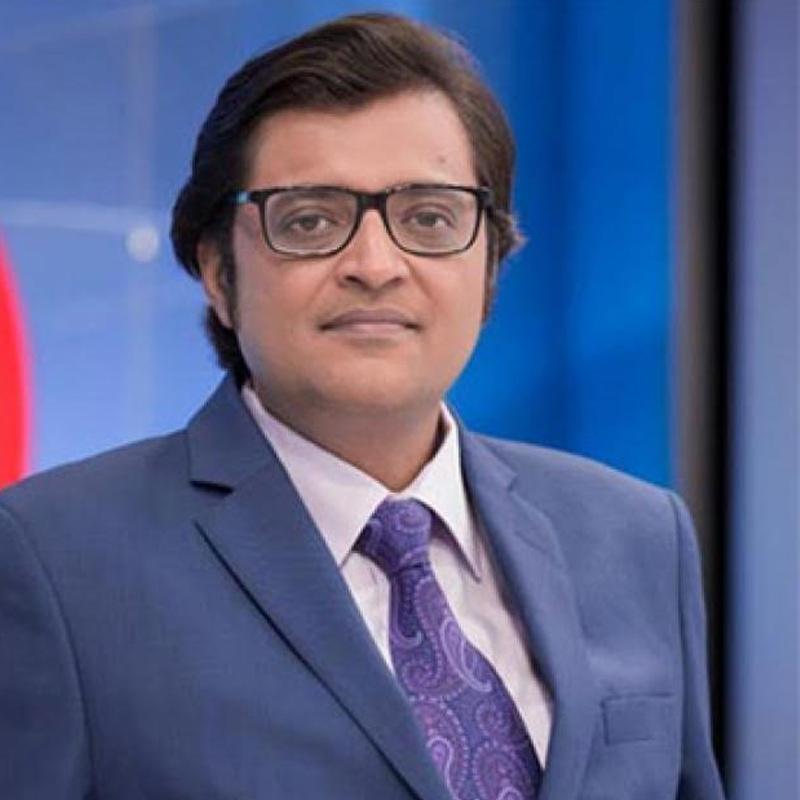
NEW DELHI: It was on a bright sunny morning in May 2017 that the TV screens across the country were blazed with the signature tune of a new news channel on the block, marking the comeback of fiery, thunderous, and outspoken journalists Arnab Goswami after less than six months of his controversial departure from Times Now, a place where he gained prominence as the topmost news presenter during the prime time slot, his catchphrase “The Nation Wants To Know” becoming an inseparable, almost indomitable part of the pop culture. The audience, as expected, instantly hooked on to the channel; Arnab’s style of reporting and managing the business gaining as much as praises as criticism. But certainly, none could ignore the blaring debates, the raging reportage, and Goswami’s own pursuit of truth, which he has many a time himself admitted to being biased but true to his convictions.
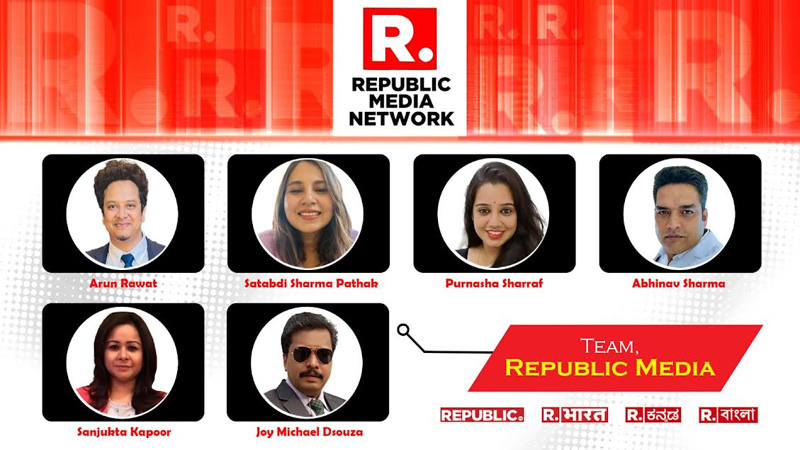
Today, the news channel, along with its Hindi-language counterpart, Republic Bharat, which was launched a little less than two years later in 2019, enjoys the maximum market share under the aegis of the Republic Media Network. As per statistics shared by the network last month, Republic TV claims 52 per cent, and Republic Bharat takes 14.38 per cent of the overall market share in their respective categories, becoming number one news channels in English and Hindi language, respectively. The network currently hires more than 1100 people and boasts of an infrastructure that could be the source of envy for many competitors. Republic TV’s digital websites are enjoying amazing traffic, with 500 million uniques visiting it each and every day.
But what all does it take for a senior journalist to leave his job and turn an entrepreneur in the highly competitive media landscape and take it to number one position in almost no time?

Goswami told Indiantelevision.com founder, CEO, and editor-in-chief Anil Wanvari in an exclusive virtual fireside chat, “When I had left Times Now many people said that he is ‘but a journalist.’ What does it mean when someone says that? And if I am ‘but a journalist’, why do I have to work for anyone else?”
He added, “It was within my first years into journalism when I was working for Bennett and Coleman that I realised it is very important for a journalist to be free. He must not be seeking a regular dose of money from external sources. Because one must remember that if someone else is holding your instruments, they can use it at any point in time. And until what I have done can only be done by an entrepreneur who believes in building an organization and not making money.”
Read our coverage on Arnab Goswami
Therefore, when Goswami laid the foundation of his own media company, he was sure from day one that he needs to have the complete ownership of his business. He started by holding around 82 per cent of the shares in the company, and rest were with a few investors, including Rajeev Chandrashekhar of Asianet. Over the course of the next few years, Goswami bought out most of the shares back, and he admits that only a mere 3-4 per cent are with other investors.
“When I had started, many people could not accept the fact that a professional could be the sole owner of his business since the beginning. But why would I start a company if I could not say that I am the sole owner, since day one? I, indeed, was the sole owner but I did not have time to address people questioning me,” he elaborated.
As per him, his earlier challenge was to manage finances because as much as he wanted the full ownership of his properties, he also wanted to remain debt-free. “I was not in great shape financially. I was starting the channel with, probably, one-fourth of the funds that others might have had when launching their channels. And I wanted to break-even in the first year itself,” he said.
Many people suggested to him that he should consider going ahead with a subscription-based model but he had a journalistic argument against it, “I said, I have left my last job and I am out in the ocean now. I want to know whether people will accept me or not. And they did accept me, which was remarkable. They accepted us even before the channel was launched; when there was literally no product or distribution.”
Not just the viewers, but advertisers too showed immense faith in Republic TV, “Good advertisers, about 10 or 12 of them, came in and and and placed advertising bets on me 1.5 months before the launch of Republic English. Where in the world does that happen? I went to some of these advertisers and I said, you know me; I have been in the business for a long time. If you trust me and believe in me, then advertise. Some of the biggest agencies in the country placed their bets on me, and I am forever grateful for that,” Goswami proudly boasted.
And the faith in his capabilities and channels still continue, as they continue sitting on top positions in rating charts. Even during the Covid2019 lockdown, Goswami noted, the advertisers maintained their belief in him.
Read our coverage on Republic Media
“Yes, we lost some advertisers and they are coming back on the road. I don’t even have to make much of an effort. It's natural they are coming here because we are offering them a better market share. Also, we are the only ones in the market who are offering both Hindi and English channels as a package, and that also helps.”
But what retains the advertiser interest on Goswami’s properties the most, is the type of campaign-based and activist journalism they are doing, which remains undefeated when it comes to holding viewer interest. “Many of them (advertisers) tell me that we advertise on your channels because we watch them. How many categories are there for which it is possible?”
Even though his business model and property, both are performing exceptionally well, Goswami believes that he doesn’t have any great business sense. “I am an editorial person, and that’s what I do the best. There is no great business sense in what I am doing. My principle is simple, that you first make your ends meet, and beyond that, if you make any profit, use that into the business, simple. Put that money on the beauty and grandness of your content. Let your product be as sharp as possible. First invest in good people, good equipment and then think beyond.”
And he is doing exactly that. While he first used the profits from Republic TV to invest in and launch Republic Bharat, now his focus is on strengthening his teams and studio capabilities.
“I have built great things to scale my product up. I have invested in high-quality cameras and 20,000 sq feet of studio space. Which news channel does that? The ceiling of my studio is Noida is about 80 feet high, so when we take the top shot during shoots, it looks grand. This is the scale that I am building for my properties. I don’t do anything for vanity, but to make sure that I am providing the best resources to my team and the best content to my audience,” he shared.
Going ahead, Goswami has grand expansion plans for his business. He wants Republic to reach every nook and corner of the country. Soon, his website will be operating in six languages and soon he will invest in expanding his broadcast capabilities too.
For him, the only way is ahead and he is not bothered about the controversies surrounding him or his business. He is unequivocally focussed on doing what he does the best; being his unabashed self on screens, bringing out stories that he has conviction in, and asking as many questions as the nation wants to know the answers to.


News Broadcasting
CNN-News18 to host Fury in the Gulf conclave on West Asia crisis
Three-hour summit to unpack geopolitical fallout and impact on India
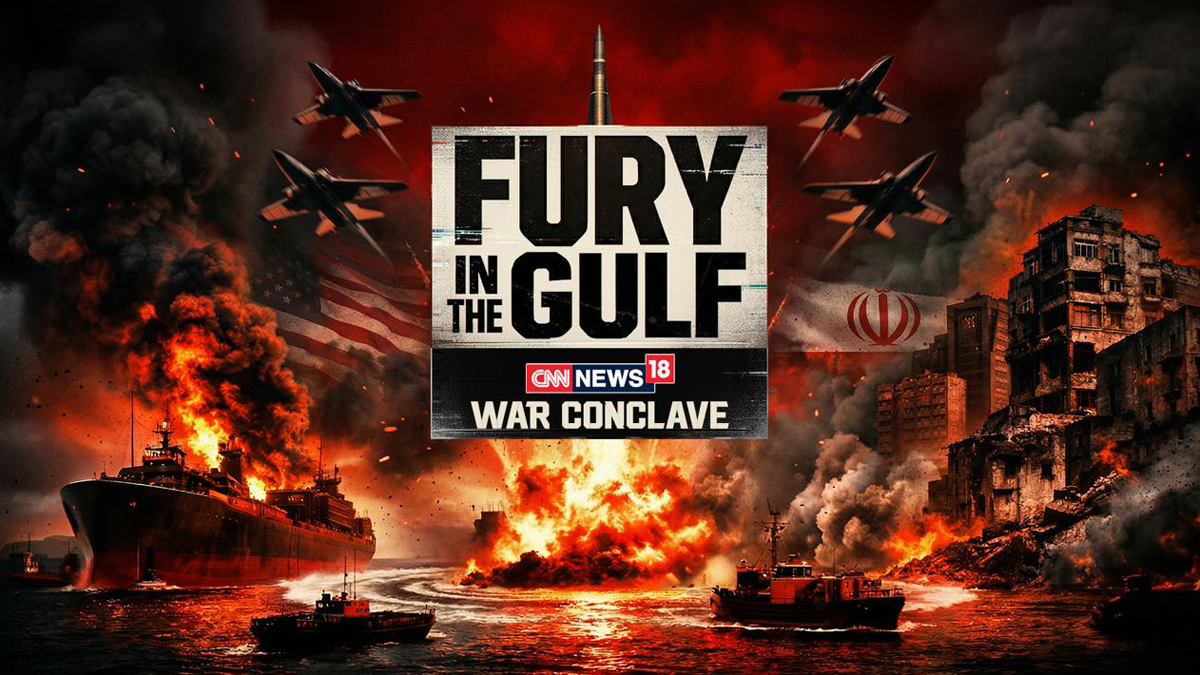
MUMBAI: CNN-News18 is set to host a special three-hour broadcast, Fury in the Gulf – War Conclave, on April 7, aiming to decode the escalating West Asia crisis and its far-reaching implications for India.
Scheduled from 4:00 PM to 7:00 PM, the conclave comes at a time when tensions between Iran and the United States are reshaping global geopolitics and triggering economic uncertainty. With India’s deep energy ties, trade links and large diaspora in the Gulf, the developments carry significant domestic relevance.
Built around the theme ‘Conflict, Consequences, and The Future,’ the programme will feature six curated sessions combining one-on-one interviews and panel discussions. The focus is to cut through the clutter and offer viewers a clearer understanding of the fast-evolving situation.
Key sessions include ‘Diplomacy in Times of War’ featuring Shashi Tharoor, and ‘World After the Iran Conflict’ with voices such as Ram Madhav, Reuven Azar, representatives from the European Union and the Iranian Deputy Envoy. Another session titled ‘Another Dunkirk?’ will bring together K. J. S. Dhillon and Jitin Prasada among others.
CNN-News18 editorial affairs director Rahul Shivshankar said, “In times of war, clarity becomes the most powerful tool. Fury in the Gulf – War Conclave brings together credible voices to address the questions and confusion that arise amid an overwhelming influx of information.”
He added that the initiative is aimed at delivering “facts, perspective, and insight” at a time when misinformation can easily cloud public understanding.
Echoing the sentiment, CNN-News18 CEO– English and business news Smriti Mehra said the conflict marks a defining global moment, with consequences that extend well beyond the region. She noted that the conclave seeks to present the crisis with “depth, nuance and responsibility” so audiences can better grasp its real-world impact.
As geopolitical tensions continue to dominate headlines, the conclave positions itself as an attempt to bring order to the noise, offering viewers a structured, insight-led look at a complex and rapidly shifting global situation.






