International
Weinstein acquires US distribution rights to political docu on Gaddafi

MUMBAI: The Weinstein Company (TWC) has acquired the US rights to political documentary ‘The Oath Of Tobruk‘, the company announced at the on-going Cannes Film Festival.
The film, directed by French philosopher, journalist and filmmaker Bernard-Henri Levy, was made over the eight-month period of conflict that put an end to Muammar Gaddafi‘s reign in Libya. Levy documented the unfolding of the war and the spontaneous popular revolt that became a revolution through the efforts of the Libyan people in their country and in major cities including Paris, London and New York.
The course of action taken by the Libyan people that was revealed in the documentary exemplifies how ideas and convictions can change the course of history in the form of a political and humanitarian intervention that had otherwise seemed impossible.
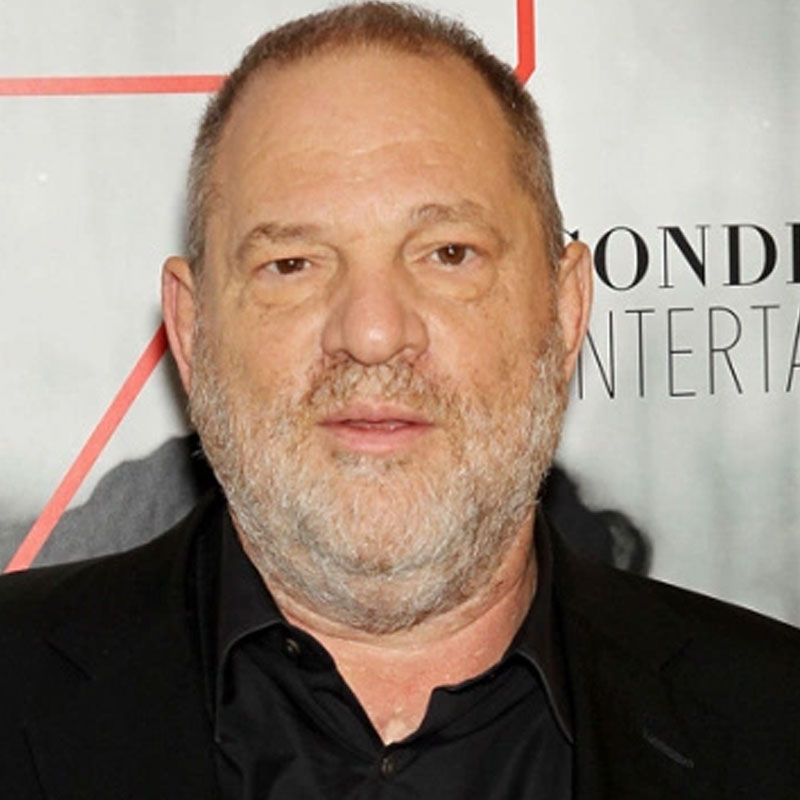
The announcement was made by TWC co-chairman Harvey Weinstein, who fully supports the film and sees this acquisition as a political action that could provide hope for other countries in a similar state of peril including Syria.
On 25 May, the Cannes Film Festival will present a special showing of the film, which is an Official Selection of the festival. Four key figures of the Libyan revolution, who have been invited by Levy, will attend the screening to dedicate their achievement in Libya to their Syrian friends.
Levy said, “For me, Harvey Weinstein is not simply THE ARTIST. He is the producer who helped launch Amnesty International in the United States; the man who fought capital punishment with the weapon of cinema; and the one who defended Roman Polanski in the face of those who wished to lynch him. This Weinstein, I am happy to learn, is joining Studio 37 in the adventure of ‘The Oath Of Tobruk‘.”
Weinstein said, “This wonderful movie shows BHL‘s incredible courage and the strength of former French president Nicolas Sarkozy, and also highlights the invaluable leadership from President Barack Obama and Secretary of State Hillary Clinton. American audiences will get a behind-the-scenes glimpse of how our government and the French government worked together to stop the slaughter of innocent civilians and brilliantly handled the overthrow of a government.”




International
Russia-India cinematic spectacle Persimmon of My Love set for grand Moscow debut
Hindi cinema style musical revives Indo-Soviet cinema ties for today

MUMBAI: A new chapter in cross-border storytelling is set to unfold as Persimmon of My Love gears up for its premiere in Moscow on 1 April 2026, marking the first large-scale cinematic collaboration between Russia and India in decades.
Positioned as a modern nod to the cultural exchange that once brought Indian classics to Soviet audiences, the film blends Hindi cinema flair with Russian storytelling, aiming to rekindle a long-standing cinematic friendship.
Directed by Marius Weisberg, the musical comedy follows two brothers navigating a lively world of music, family and romance. The lead roles are played by Demis Karibidis and Mikhail Galustyan, with Karibidis also contributing as a screenwriter.

Shot entirely in India, the production leans heavily into Hindi cinema style spectacle. Filming took place across Mumbai studios and the cities of Udaipur and Jodhpur, whose architecture was used to create the fictional setting of Khurmada. A crew of over 350 worked on the project, with large-scale sequences featuring up to 1,000 extras.
The film also brings Indian creative talent into the mix. Dance sequences are choreographed by Jay Kumar, while music by Zurab Matua features songs in both Hindi and Russian, adding to its cross-cultural appeal.
Backed by TNT channel, MyWayStudio and the Russian Cinema Fund, the project reflects a broader push to strengthen cultural ties between the two countries.
With its mix of colour, comedy and cross-border collaboration, Persimmon of My Love is not just a film release but a reminder that cinema, much like music, travels well across borders.







