News Headline
We will tell Indian stories; we will not copy & retell the stories from other parts of the world: StudioNEXT’s Indranil Chakraborty

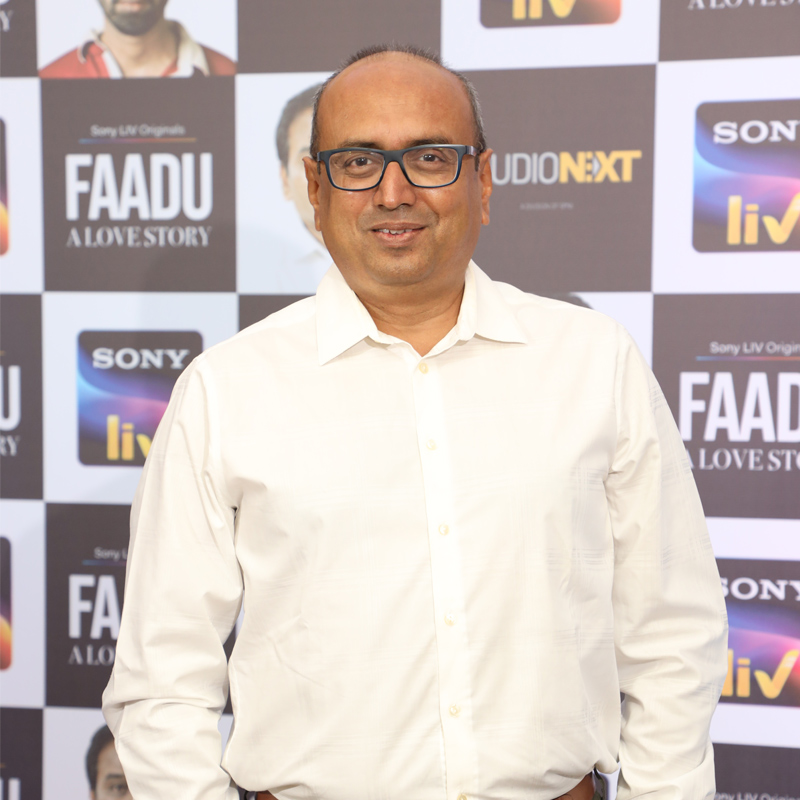
Mumbai: If you want to describe the journey of StudioNEXT, the content creation arm of Sony Pictures Networks (SPN), then faadu would be the best word for it. In Hindi, faadu means outstanding and extraordinary, and StudioNEXT’s content is exactly on the same line!
StudioNEXT head Indranil Chakraborty is busy with the promotion of SonyLIV’s new show faadu, which is an Indian web series directed by Ashwiny Iyer Tiwari and written by Saumya Joshi. It stars Pavail Gulati and Saiyami Kher in lead roles.
Chakraborty’s faadu professional moment occurs when he wants to create some content and audiences express their affection for it.

For him personally, it will be a faadu moment when his children succeed in their respective fields.
As a content producer for SPN’s media business as well as for other channels, networks, and over-the-top video streaming players in India and throughout the world, StudioNEXT, an autonomous business unit of SPN, executes content with responsibility. Kaun Banega Crorepati, Superstar Singer, The Scam 1992,ˀ and Shark Tank on Sony, were all created by the new company, which was founded in August 2018.
In a conversation with Indiantelevision.com, Chakraborty shared his vision for StudioNEXT in the coming years. He spoke about the journey of StudioNEXT, content creation, regulations, new shows, TV and OTT.
Edited excerpts
On the journey
When I joined Sony with the vision of StudioNEXT, we didn’t start out with grand plans of achieving this or that milestone, so everything has evolved organically over time.
When things evolve organically, you know that every step is a pleasure and a pleasant surprise, and when we started the journey, we were very clear about why or what we wanted to do.
Our goal was to tell actual stories. Make shows with a purpose for a discerning, intelligent audience, because there are a lot of them. And who wants this? And who follows global stories and platforms?
Why not start in India and build an ecosystem? Create a studio that caters to that type of storytelling.
We’re always very privileged to be associated with certain things. To begin with, we are the producers of KBC, and no other show can embody the concept of entertainment with a purpose.
Our biggest success came from being associated with and producing the Scam 1992. And we are all aware of what happened with Scam 1992. Many people have praised the show, and it was a success. When we started making Scam, it turned out exactly how we wanted; we had no idea it would be so well received and become a phenomenon.
Then came Shark Tank, a business show that had previously been on news channels globally but that was moved to prime time on a general entertainment channel that supports both television and digital, since its creators had faith in it.
According to me, the Indian internet has experienced some milestones in certain things, and we believe that Shark Tank is another milestone for entertainment that truly serves modern India.
Our stories will be great insights from the world, especially India, and will serve as entertainment with a purpose. We have great insights from the world present today, and we focus on Indian stories; we do not want to copy and retell the stories from other parts of the world.
On the new show
I don’t think the Indian digital world has seen a show focused solely on relationships, love, romance, poetry, and literature. We believe we have been bold in telling the story, and we have a lot of talent and more on the way. The majority of them are quite daring. I’m not claiming that everything will be a success. Nobody knows, so we can only hope. But it’s been exciting so far. It’s been difficult. And the good news is that our beliefs have all been strengthened in order to tell us even more stories. So we’re hoping that faadu will amplify that.
faadu comes from his and her attitudes, and there is a line that says “Zindagi faadu hona chahiye,” which means live life king size. That’s what it is: an attitude. It’s not so much about the word as it is about the context. It is the attitude that life should not be lived to its full potential and should instead be put into things.
On the content creation
In my opinion, there has never been a better time for a storyteller than now, and I have been in the media industry for over 25 years. When the world or universe gives you this opportunity, you have to grab it and be the most important thing. You must be truthful about it.
The viewers today want us to tell them good stories. They say, “We are here to watch it.” They have put their faith in us. I think it is our responsibility to give back to the viewers.
Now that we have given them the opportunity, they spend money, but they give time more than money. They devote so much time to watching what we produce. At the very least, we should not disappoint them. We must not undervalue it now. So our entire endeavour is that we are all about this quality, so that at least nobody can see that you people are short on budget.
It is our collective responsibility to take action. And once we’ve been honest with ourselves about our storytelling, we open up the Indian stories. That is our most important thing. We will tell Indian stories; we will not copy and paste; instead, we will bring in a story from a specific culture and land and try to make a mishmash of it. It will not happen to us.
We will tell stories from all over the country. And because we are language agnostic, people will be here, dress, and speak in that culture when we tell them about the various parts.
In faadu, 20 to 25 per cent of the dialogues are in Marathi. When the protagonist travels to Gujarat, he prefers to speak Gujarati, so we are very clear that we want to be immersed in that culture and place. I cannot believe a female protagonist, Manjiri, is talking in Hindi instead of Konkani to her parents.
On the TV vs OTT debate
Everything has an audience. I no longer work on a channel or platform. So I won’t be able to give you viewers’ behavioural insight into what this is, but the way television functions is known as engagement viewing.
People sitting in front of the television at a specific time is part of everyday life. Communication is very one-sided on TV. Both work and will work in the future. The audience has more power thanks to digital.
There is such a thing as individual and group escapism. Television remains a form of family entertainment. People sit together and watch digital most of the time, especially if it’s not TV. But in a mobile situation, it’s all about the individual.
Faadu is a show that the entire family can watch together because that is its genre on television.
We believe that the key members of the family will sit down and watch because it’s clean. It’s relatable, and there is nothing that makes one another uncomfortable in that situation.
The audience has become fragmented. It’s not a different audience. However, the expectations of each viewer are vastly different.
So as storytellers, we have to be aware of that because certain things work better on a large screen or in a specific environment.
On the OTT regulations
We must obey the law of the land. There is no getting around obeying the law of the land. As a result, we must comply. We wish that people would not limit storytellers, creative instincts, and other such things.
But, as of now, I believe that television has a very self-censored atmosphere. OTT is still self-censored. If it is self-censored, we bear far more responsibility and onus.
We have to be a little more sensitive to people and the law of the land. We must follow the law; there are no two ways about it; we are not here to question the law.
We all believe in our greater flexibility and power as storytellers.
On the vision of StudioNEXT
We’d like to tell you a story. Our entertainment mission and vision have come to fruition. We believe we can delve into a variety of stories. Many relationships, worlds, and customs, as if we were about to open up the entire world of Orissa.
So we’ll continue to tell stories in different languages, but we won’t say whether or not it’s a vernacular regional show. Yes, there will be various languages and activities. And I think we’re just getting started. And, as we embark on our digital journey, the world expects us to tell Indian stories.
We are not going to make stories for the entire world. We are creating stories for ourselves (India), but we will be very happy to hear that some of the stories have been seen in various parts of the world, as well as the recommendations that are taking place, which I believe is becoming one world in terms of distribution.
In the next two years, we want StudioNEXT to be something like our stated philosophy. Every other month, you will have a show from our table; it is a promise made.
On the new slate
After this in January or February, we’ll have Jahanbad, which is held by Sudhir Mishra; the second season of Scam, held by Hansal Mehta; and then we’ll have a show based on Orissa, which is titled Jengaburu, which is being written and directed by Nila Madhab Panda.
We have a very ambitious show set in Calcutta in the 1970s against Park Street, and there is music in the backdrop of the Bangladesh liberation. After that, there is a story that is being done by Sudhir Mishra, set in the 1970s. It’s a youth story of the 1970s, and then there is another show by Rahul Dholakia, which is based on our first election, An Untold Story.
We are also looking at unscripted shows, which is the nonfiction genre on digital. So we are exploring one or two shows that will be given the success of Shark Tank in digital. We believe that there are certain unscripted shows that can be developed and produced. I think we have enough on our plate.

NEW DELHI: Hamdard Laboratories gathered a cross-section of India’s achievers in New Delhi on Friday, handing out the Hakeem Abdul Hameed Excellence Awards to figures who have left their mark across healthcare, education, sport, public service and the arts.
The ceremony, attended by minister of state for defence Sanjay Seth and senior officials from the ministry of Ayush, celebrated individuals whose work blends professional success with a sense of public purpose. It was as much a roll call of achievement as it was a reminder that influence is not measured only in profits or podiums, but in people reached and lives improved.
Among the headline awardees was Alakh Pandey, founder and chief executive of PhysicsWallah, recognised for turning affordable digital learning into a mass movement. On the sporting front, Arjuna Awardee and kabaddi player Sakshi Puniya was honoured for her contribution to the game and for pushing women’s participation onto bigger stages.
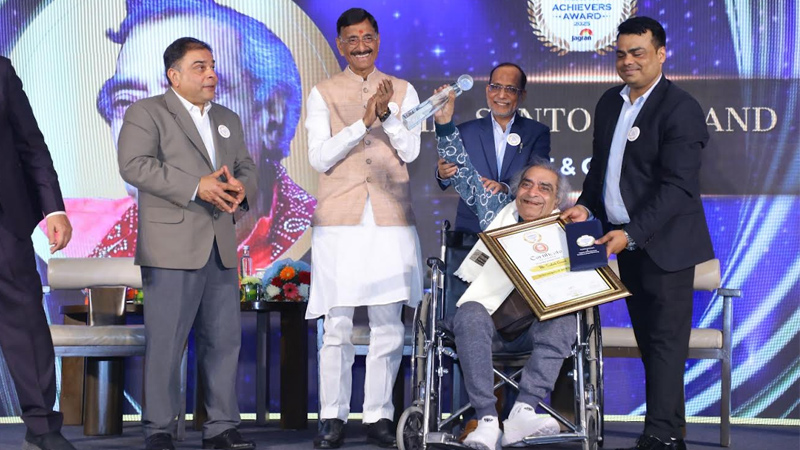
The cultural spotlight fell on veteran lyricist and poet Santosh Anand, whose songs have echoed across generations of Hindi cinema. At 97, Anand accepted the honour with characteristic humility, reflecting on a life shaped by perseverance and hope.
Healthcare honours spanned both modern and traditional systems. Manoj N. Nesari was recognised for strengthening Ayurveda’s place in national and global health frameworks. Padma shri Mohammed Abdul Waheed was honoured for his research-backed work in Unani medicine, while padma shri Mohsin Wali received recognition for his long-standing contribution to patient-centred care.
Education and social development also featured prominently. Padma shri Zahir Ishaq Kazi was honoured for decades of work in education, while former Meghalaya superintendent of Police T. C. Chacko was recognised for public service. Goonj founder Anshu Gupta received an award for his dignity-centred rural development initiatives, and the Hunar Shakti Foundation was honoured for empowering women and young girls through skill development.
The Lifetime Achievement Award went to former IAS officer Shailaja Chandra for her long career in public healthcare and governance, particularly in the traditional systems under Ayush.
Speaking at the event, Hamdard chairman Abdul Majeed said the awards were a tribute to those who combine excellence with empathy. “These awardees reflect Hakeem Sahib’s belief that healthcare, education and public service must ultimately serve humanity,” he said.
Minister Seth struck a forward-looking note, saying India’s young population gives the country a unique opportunity to become a global destination for learning, health and wellness by 2047.
The ceremony also featured the trailer launch of Unani Ki Kahaani, an upcoming documentary starring actor Jim Sarbh, set to premiere on Discovery on 11 February.
Instituted in memory of Unani scholar and educationist Hakeem Abdul Hameed, the awards have grown into a national platform that celebrates those building a more inclusive and resilient India. For one evening at least, the spotlight was not just on success, but on service with substance.






