News Headline
“We are willing to work with anybody who has the requirement and space for kids content”

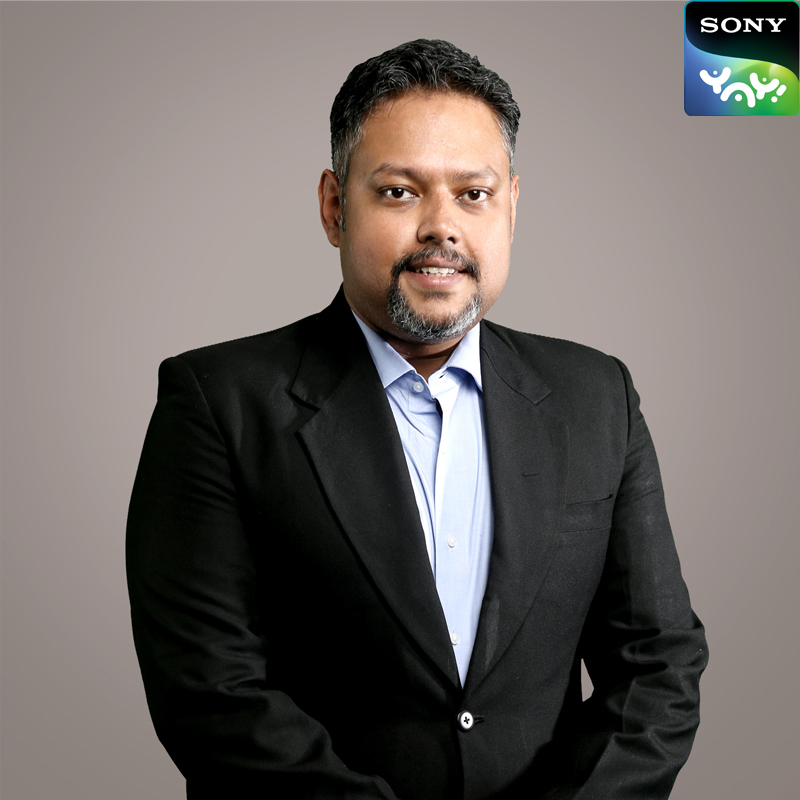
Mumbai: 2022 was a busy year for Sony YAY!, the kids’ entertainment channel from Culver Max Entertainment Pvt. Ltd. (formerly known as Sony Pictures Networks). The channel celebrated five years of existence and launched its three-pronged approach of “Entertain, Experience, and Explore” with the aim of making it the most preferred destination for kids.
The channel aims to become the destination for unlimited entertainment. Experience means going beyond television and reaching out to kids wherever they are. The channel explored actionable initiatives drawn from key kids’ insights that are derived from its listening mechanism. Realising that the ad revenue pie is stagnant, it is actively looking at other areas. It is, among other things, working on creating content for other OTT platforms like Netflix.
In an exclusive conversation with Indiantelevision.com, Sony YAY! VP of marketing & head of on–air promotions and licensing Sujoy Roy Bardhan noted that licensing will play an important role going forward. It will also produce kids’ content for other digital platforms, and several ideas are currently on the table. Since ad revenue is limited, players in the category need to venture beyond that, he stresses. He is spearheading the marketing, OAP, and licencing for Sony YAY!, right from brand strategies to digital, advertising, communications, and on-air promotions. He is entrusted with driving the brand’s visibility and creating relatability amongst the target audience. A seasoned professional in the broadcast industry, he brings with him a diverse range of experience spanning close to 15 years.

Prior to joining Sony YAY!, he was the Viacom18 marketing director for close to a decade. In his role at Viacom18, he was responsible for creating the brand marketing strategy for the network’s kids channels-Sonic and Nickelodeon. Although a major chunk of his career has been on the brand side, he kicked off his career in an agency, where he handled several brands and assisted them in crafting their brand strategies. He holds a master’s degree in marketing and is an avid traveller with love for dogs that is unparalleled.
Edited Excerpt:
On how 2022 was for Sony YAY!
2022 has been a fantastic year with respect to the Barc ratings. With a consistent number one position in the Hindi-speaking markets, we are among the top three players in urban India. We have also hit the nail on the head when it comes to the right mix of content that we currently have on the channel. It is not just that we have shows that are doing well; it is also about having a solid library. This is how one sustains a position for a longer period of time. Over the years, we have figured out what is right for the category and what is not. Of course, the pandemic changed the nature of content consumption for kids, as they had so much more time to devote to content watching.
In the past, we created a lot of IP. Now, over the past 1.5–2 years, what we have also done is look at acquired content that we can translate to make it palatable for Indian kids. So we found the Oggy property. We have also brought in Japanese content like Obocchama-kun which did extremely well. We have the right mix of homegrown Indian content and acquired content, which a kid will not be able to distinguish. It has to fit in seamlessly.
On how the amendments by Trai will help the kids genre
We will have to wait and see how the uptake is with respect to the consumer. In this category, the child is not the actual purchaser of the plan. Thankfully, we are in a leadership position, so that nagging power can come into play. I think that today’s kids know what they want and will make enough effort to get their channels. There will be a propensity for players to value their channels more than they currently do. Our current price is Rs 2.
On viewership trends seen in the kids genre in 2022
Consumption has remained fairly stable post-pandemic. The pandemic has grown consumption drastically, and now it has settled down to a reasonable level where our spikes are fairly under control in most markets. It still remains a time-consuming led market. Co-viewing has become a very big thing in the category. There is now a lot more content that we are delivering that is helping kids and parents watch the content together. Taarak Mehta Kka Chhota Chashmah is one such example where kids and parents like to watch it together.
Content consumption has become more snacky. So we diversified in terms of content this year. Our strategy was to ensure that kids consumed a lot more variety on the channel that they used. The category is dominated by humour and is animation-based. Down South, people consume it more. They tend to be a little more flirtatious with the kids’ genre. In comparison to the North, they give more content a chance.
On the strategy of local IPs
A lot of them are giving us good numbers but are not finding space on the channel. But they are doing well on digital platforms like YouTube. So, for instance, Kicko and Super Speedo do well on YouTube, and this translates into numbers for the mobile game. This game got a crazy number of downloads. This is how we create an ecosystem for characters.
On the impact of media consolidation have on the genre
More than the mergers, it is about how people are looking at content development in the category. Content needs investment, and this category is fairly underinvested in terms of the kind of revenues that it gets. Now I think that most of it has to be looked at in terms of whether we keep circling around broadcasting as being the core business for kids. We need to look at expanding the kids’ genre into other things outside of television. Then you can look at building newer IPs. Otherwise, the situation in the category does not change, and it is fairly myopic in that sense.
On extensions being looked at beyond broadcast
What we have already done is break the strategy into three pieces: entertainment, experience, and exploration. So entertainment is what we do on the channel, which is about the acquisition of new characters, building a show library, etc. Experience is what we do with characters to make them a touch-and-feel experience. We tied up with Kidzania through a pet rescue mission with animal-based characters. We take our characters beyond television. We have done a tonne of mall activations, and this feeds into creating the connection that we want to build with our characters.
Then we went into licensing. We realised that owning IPs is a great thing, but it does not matter unless you do something with them. We work with many partners, like the furniture category for Oggy and the Cockroaches. Rather than simply delivering content on television, it is about becoming involved in and collaborating with the lives of children. So that is the current scope that we work with.
The third piece is exploration. We are trying to say that animation is for everyone. It is not just for kids. So, who is the kids’ plus audience that we can look at? As a result, we created Sudha Murthy’s Stories of Wit and Magic for Netflix. If we understand kids very well and our strength is to create content, then it does not matter where the content is sitting for kids to consume. It just has to make business sense for us. Any platform that is interested in getting content that resonates with kids will get it from us. It could be SonyLIV, Netflix, Prime Video, etc. We are willing to collaborate with anyone who has a need for and space for children’s content.
On the growth plans for creating content for other OTT platforms
We’re working on a concept centred on Karna that combines sci-fi with swashbuckling Bollywood animation. This is for an older audience. We are currently in the development phase of it. The aim is to make it a series that attracts a much older audience. That is definitely not being made for our channel. We are working on the pilot. We also have several other ideas on the table. We can build a lot of concepts, and it depends on how many are greenlit by people who want that content.
We can build content around a lot of themes. We are not doing the last mile of animation. What we do is design stories, characters, story arcs, etc. Each platform has content gaps in terms of the TG to which it caters. We focus on justifying telling a story to that TG in the animation space.
On holding kids’ attention given the choice of media
It is extremely difficult. Our thumb rule is to simply be present where kids are engaging. If it is on an OTT platform, we need to create content for that platform. It could be Kidzania, where kids visit on the weekends. We want to be a part of kids’ lives wherever they are. The partnership with Kidzania is working great. Kids can experience what our brand stands for. We believe in creating a happy world, which is why we came up with the concept of ‘Happyverse’ this year. This is what we believe in. This is what the brand stands for. We are creating a world where kids can experience pure happiness. Happyverse is at a very early stage. I hope that this builds as a concept or a philosophy over a period of time. You can introduce a philosophy, but for that to be actually ingrained into everything that you do and to be able to reflect that into a kid’s mind, it’s going to take a while. We changed our logo this year, too.
We delve into both the longer form of content and the shorter “snippet” kind of content. If you want to watch a 45-minute movie, we have 71 films about characters we created who are settled with children and have a large fan base. We also have snacky content around characters that we are trying to build so that kids get a sense of those characters. This leads to our channel.
On TV ad revenue growth being a challenge
With respect to viewership, the genre delivers extremely well, but it does not translate to ERs. Even with co-viewing, the genre is under indexed with respect to revenue. This has been the standard. The current estimate is still Rs 500 crore, and a drastic change is needed in terms of perception. People have to believe that this category is good enough.
On Barc
Between the cuts that we get, it is limiting. We get 2–14. We need to segregate the cut and get teens involved as well. Teen is a cut that we do not have. This could help the category monetise better.
On growing licencing revenue
It will steadily increase its contribution percentage to double digits. Creating content for other people is at an exploratory stage. You have to judge the market’s appetite.
On live action versus animation
Live action has been tried. Kids come to this category to have that leap of imagination. Animation allows them to have this. Kids organically believe that animation is a curated space for them. Unless there is a very hard concept for us to refuse, we will stay in animation.
On the importance of having aspirational characters
Is it even important to have aspirational characters? I would flip it and ask if we have an aspirational world? The characters can be simply silly, but if the story takes the characters and kids to a world that they want to explore, that will really work. For instance, Honey Bunny is silly, but the world is about how friends come together, the adventures that they can go on, etc. That is the story that we sell. The importance of building the world cannot be overstated. The story and story appeal will have an overlay of the character. That is the method used to create content.
On the studios that Sony YAY! works with for content creation
We work with many studios. Sometimes we work with more than one studio on one character. Because we own most of our IP, we can move from one studio to another. That is how we created a library. You must have a certain number of episodes to build visibility of the character, and thus to create a connection and endearing characters.
On digital monetisation of kids’ content
Currently, advertising-based video on demand (AVoD) is an extremely limiting space. Thanks to regulation, there is a lot more screening of ads that kids are exposed to. Whether subscription video on demand (SVoD) is a great way to go depends on what the platform is offering. What is the strength-building proposition of the SVoD? Monetisation will mostly be led by SVoD. You have to build a strong proposition. There is no SVoD monetisation for kids. It is a bundled piece.
On whether Sony Zee and other players will consider adding more kids channels
I see space for more content. I think we need to build IPs that can have a solid licensing and merchandising program. That is how it works abroad. Kids’ content creation is not just about the broadcast piece. Licensing and content have to come together. This exploration has not happened yet in India in a big way.
In a country of 1.4 billion people, with one third of the population being kids, we have a lot to explore. It is regarded as a collaborative business effort in other countries. You need to have a viewpoint on the ecosystem that can be built around characters.
On piracy being a problem for licencing and merchandising
More than piracy I believe that educating people on licensing is a big problem. Kids are one of the few categories where there is huge scope for licensing. You need to have licensing rights for an image to use it for your product. People need to be educated on this. It is also confused with “merchandising.”
Licensing is a one-of-a-kind kids category proposition. Otherwise it is just celebrities beyond this. People are not seeing the kind of licensing possibilities that can happen in the kids’ genre. But slowly, this is changing. People are taking cognizance of this.
On the expectations for 2023
I expect that a lot of the work that we started in 2022 will start to bear fruit in 2023. The licensing deals will fructify. The products will be on the market in a very big way. Content explorations will see the light of day in 2023. The Netflix deal is already there, and that show was one of Netflix’s top shows. We have seven to eight other concepts being developed, and the TG is very different for each. For instance, we are exploring the junior TG on the digital front. We are doing a girl-oriented animated teen show on digital. Anything that TV limits us from doing, we are doing on digital. These are two very big pieces of our business.

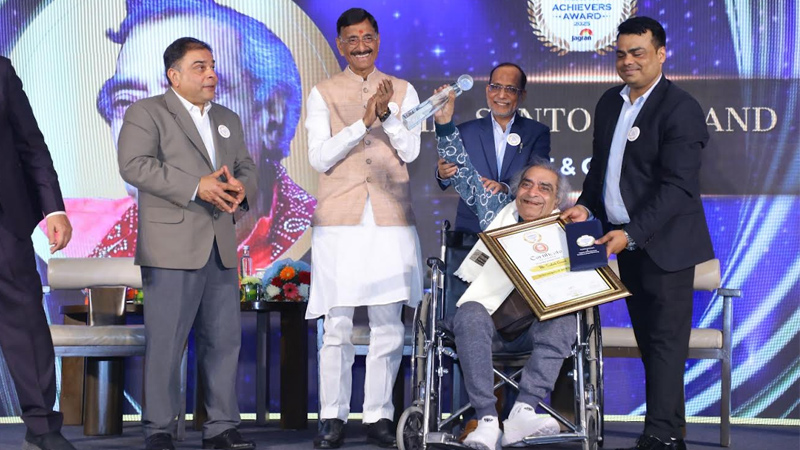
NEW DELHI: Hamdard Laboratories gathered a cross-section of India’s achievers in New Delhi on Friday, handing out the Hakeem Abdul Hameed Excellence Awards to figures who have left their mark across healthcare, education, sport, public service and the arts.
The ceremony, attended by minister of state for defence Sanjay Seth and senior officials from the ministry of Ayush, celebrated individuals whose work blends professional success with a sense of public purpose. It was as much a roll call of achievement as it was a reminder that influence is not measured only in profits or podiums, but in people reached and lives improved.
Among the headline awardees was Alakh Pandey, founder and chief executive of PhysicsWallah, recognised for turning affordable digital learning into a mass movement. On the sporting front, Arjuna Awardee and kabaddi player Sakshi Puniya was honoured for her contribution to the game and for pushing women’s participation onto bigger stages.
The cultural spotlight fell on veteran lyricist and poet Santosh Anand, whose songs have echoed across generations of Hindi cinema. At 97, Anand accepted the honour with characteristic humility, reflecting on a life shaped by perseverance and hope.
Healthcare honours spanned both modern and traditional systems. Manoj N. Nesari was recognised for strengthening Ayurveda’s place in national and global health frameworks. Padma shri Mohammed Abdul Waheed was honoured for his research-backed work in Unani medicine, while padma shri Mohsin Wali received recognition for his long-standing contribution to patient-centred care.
Education and social development also featured prominently. Padma shri Zahir Ishaq Kazi was honoured for decades of work in education, while former Meghalaya superintendent of Police T. C. Chacko was recognised for public service. Goonj founder Anshu Gupta received an award for his dignity-centred rural development initiatives, and the Hunar Shakti Foundation was honoured for empowering women and young girls through skill development.
The Lifetime Achievement Award went to former IAS officer Shailaja Chandra for her long career in public healthcare and governance, particularly in the traditional systems under Ayush.
Speaking at the event, Hamdard chairman Abdul Majeed said the awards were a tribute to those who combine excellence with empathy. “These awardees reflect Hakeem Sahib’s belief that healthcare, education and public service must ultimately serve humanity,” he said.
Minister Seth struck a forward-looking note, saying India’s young population gives the country a unique opportunity to become a global destination for learning, health and wellness by 2047.
The ceremony also featured the trailer launch of Unani Ki Kahaani, an upcoming documentary starring actor Jim Sarbh, set to premiere on Discovery on 11 February.
Instituted in memory of Unani scholar and educationist Hakeem Abdul Hameed, the awards have grown into a national platform that celebrates those building a more inclusive and resilient India. For one evening at least, the spotlight was not just on success, but on service with substance.







