Hollywood
Warner Bros. Pictures’ ‘Gravity’ returning to wide release on 17 January


MUMBAI: Following months of overwhelming critical and audience acclaim and numerous year-end awards, Warner Bros Pictures is bringing Alfonso Cuarón’s cinematic achievement Gravity back to big screens in the US. The film, which stars Sandra Bullock and George Clooney, will be re-released on more than 900 screens on 17 January 2014, it was announced today by Warner Bros Pictures Domestic Distribution President Dan Fellman.
Originally released on 4 October 2013, Gravity instantly became a favourite of both critics and audiences. It has since become one of the most honoured films of the year, most recently bringing a Golden Globe Award for Best Director to Alfonso Cuarón. The film has also received 11 BAFTA Award nominations and 10 Critics’ Choice Award nominations, both including Best Picture, Best Director and Best Actress (Bullock). It has also won Best Picture awards from several prestigious critics organisations, including the Los Angeles Film Critics Association, and has been included on 395 critics’ and critics groups’ top ten lists, as well as being named one of the AFI’s ten best films of the year. It was also announced as the year’s best reviewed film by the website Rotten Tomatoes.

In addition, the talents behind the film have been recognised by their peers, with a Directors Guild of America Award nomination for Cuarón; a Producers Guild of America Award nomination for David Heyman and Cuarón; a Screen Actors Guild Award nomination for Bullock; a American Society of Cinematographers Award nomination for Emmanuel Lubezki; an Art Directors Guild Award nomination for Andy Nicholson; and an American Cinema Editors’ Eddie Award nomination for Cuarón and Mark Sanger.
Gravity has also been a smash hit at the box office, earning more than $670 million worldwide and counting, with most moviegoers opting to view it in 3D. In making the announcement, Fellman stated, “We are thrilled by the many accolades for Gravity, which has generated renewed word-of-mouth and interest in seeing the film, whether for the first time or to experience it again. We wanted to give audiences everywhere another opportunity to see it the way it was meant to be seen—on the big screen.”
Academy Award winners Sandra Bullock (The Blind Side) and George Clooney (Syriana) star in Gravity, a heart-pounding thriller that pulls one into the infinite and unforgiving realm of deep space. The film is directed by Oscar nominee Alfonso Cuarón (Children of Men).





Hollywood
Paramount Skydance secures financing for Warner Bros Discovery deal
Debt syndication and new loans push $111 billion merger closer to close
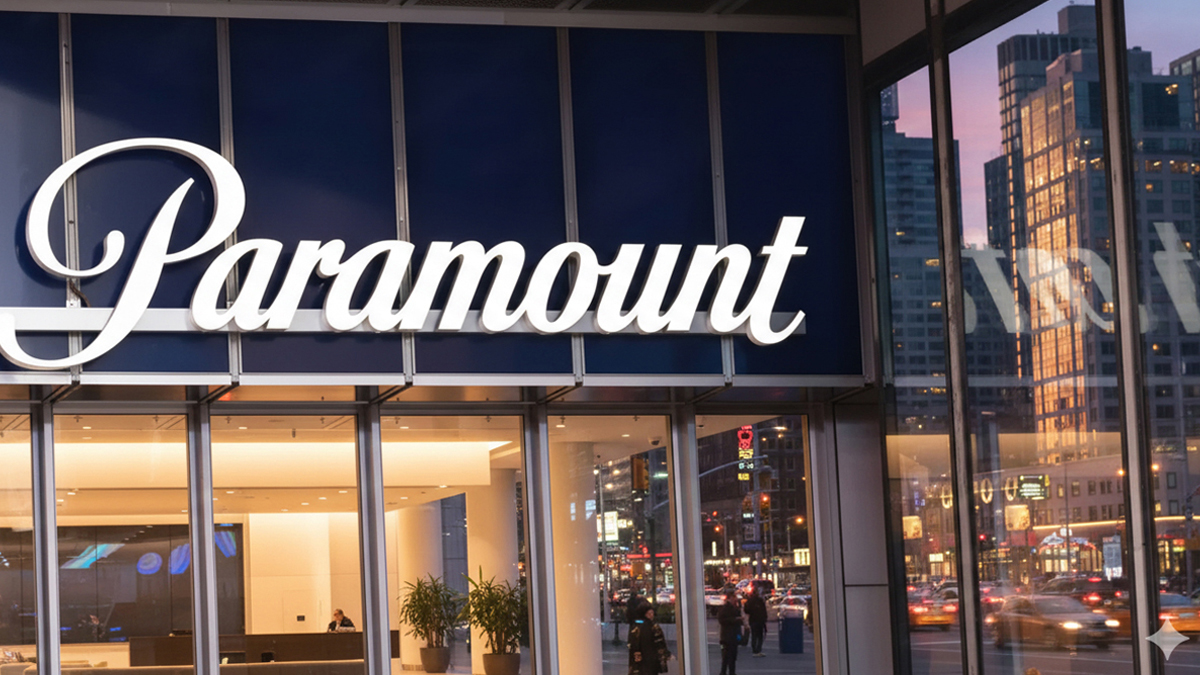
WASHINGTON: Paramount Skydance has taken a major step towards its planned acquisition of Warner Bros Discovery, securing fresh financing and completing the syndication of its bridge loan facility.
In a filing with the Securities and Exchange Commission, the company confirmed that the bridge facility has now been distributed among a group of 18 banks, reducing total commitments to $49 billion from an earlier $54 billion. The move spreads risk across lenders and signals growing confidence in one of the year’s largest media deals.
Alongside this, the company has finalised permanent financing arrangements, including $5 billion in senior term loans and a $5 billion revolving credit facility. A previously planned $3.5 billion credit line has been dropped as part of the restructuring.
The loans are secured against key assets, including Paramount Global, Skydance Media and Warner Bros post-merger, underlining the scale and complexity of the transaction.
The financing push follows a competitive bidding process earlier this year, which saw interest from players such as Netflix before Paramount Skydance emerged as the frontrunner. The deal, valued at $111 billion, is expected to close in the third quarter, subject to regulatory approvals.
Adding to the momentum, the company has also secured significant equity backing, including investments from Middle Eastern funds, with support from billionaire Larry Ellison, who has guaranteed the equity portion of the transaction.
Commenting on the development, Paramount Skydance chief strategy officer Andy Gordon said, “Our successful debt syndication and new debt facilities represent another important milestone towards the completion of our acquisition of Warner Bros Discovery.”
Once completed, the combined entity is expected to carry net debt of just under $80 billion, reflecting the sheer scale of the merger.
As Hollywood continues to consolidate in the streaming era, this deal could reshape the competitive landscape, with Paramount Skydance betting big on scale, content and financial muscle to take on global rivals.







