English Entertainment
Warner Bros. Discovery unveils new ‘Tom and Jerry’ Series

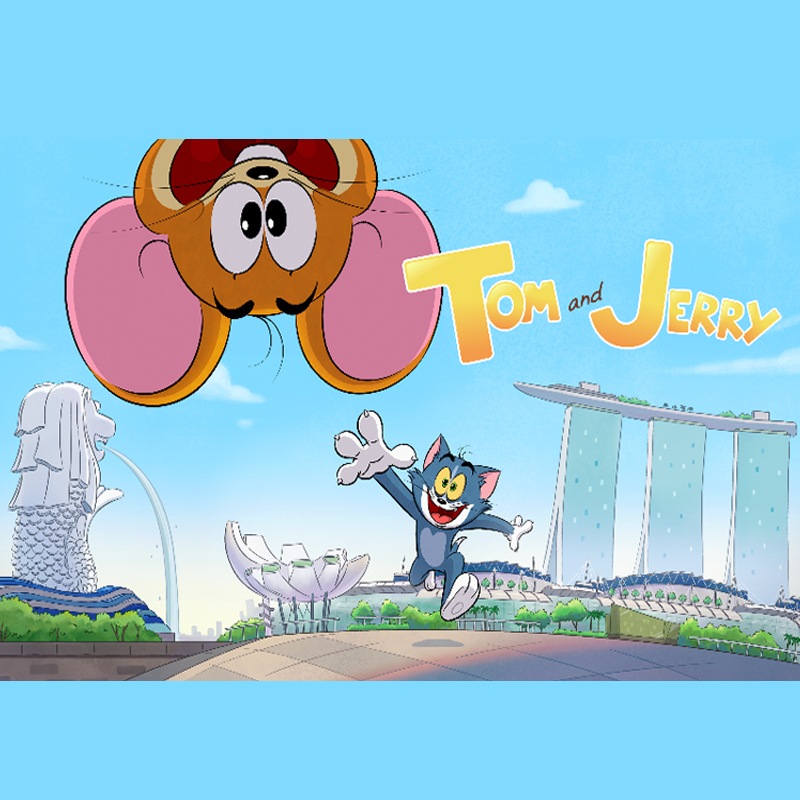
Mumbai: Warner Bros. Discovery today announced its first-ever localised Tom and Jerry series, featuring the beloved cat and mouse duo as they take their rivalry through Singapore.
Produced locally in Asia, and in association with Warner Bros. Animation, the new series comprises 7×3-minute shorts and will premiere on Cartoon Network in Asia Pacific, before being rolled out internationally. A pilot episode giving a flavour of what’s to come will launch in August – further details will be announced soon.
Warner Bros. Discovery head of kids – Southeast Asia Christopher Ho said, “This series brings back the iconic music and classic animation style from the Hanna-Barbera 1950s era – but with a modern Singaporean twist. With distinctive landmarks, backdrops and atmosphere, the Asian city-state is the ideal location to create a humorous addition to the Tom and Jerry canon. Working with homegrown creative talent in Singapore and across Asia, this project grows the much-loved franchise in the region and beyond.”

Warner Bros. Animation and Cartoon Network Studios Senior Vice President of Series Vishnu Athreya, said, “Tom and Jerry are two of our most universally loved characters, proving that laughs can translate to any audience. The fans in Asia have long embraced these characters and it’s great to finally give them a version to call their own.”
The project is produced by Warner Bros. Discovery’s Carlene Tan. Vivek Bolar serves as Lead Director. The project is animated by Aum Animation Studios India, with stories and designs from Singapore-based Robot Playground Media and Chips and Toon Studios.
There are also plans to launch additional Tom and Jerry-branded consumer products to complement the series launch later this year.
Tom and Jerry is one of the leading franchises in the Warner Bros. Discovery portfolio with a global social reach of 50 million and almost 30 billion minutes watched on the Warner Bros. Kids YouTube channel. There have been more than 500 episodes and 15 movies made so far in its 83-year history, securing seven Academy Awards along the way.

English Entertainment
ZEE5 UK partners Narrative Entertainment to add UK channels
Six FAST channels added as platform sharpens hybrid play in Britain

LONDON: ZEE5 UK struck a first-of-its-kind deal with Narrative Entertainment, bringing mainstream UK television channels onto an Indian streaming platform as it pushes to deepen its footprint in a crowded, mature market.
The partnership adds six of Narrative’s FAST channels to the service, including Great! Movies, Great! Romance, Great! Mystery and kids brands POP, Tiny Pop and POP UP, widening ZEE5 UK’s appeal across genres and age groups.
The move reflects a clear shift in strategy. ZEE5 UK is betting on a hybrid model that blends on-demand content with curated, always-on channels to drive discovery and increase time spent on the platform.
“This partnership represents a meaningful evolution in how we serve audiences in mature markets like the UK, where viewers are defined by habits, convenience and choice rather than geography or language alone,” said Parul Goel, territory head, Europe, Zee Entertainment. “By bringing trusted mainstream UK channels together with our premium originals, movies and kids’ content, we are building a more consumer-centric platform that simplifies viewing while increasing depth and relevance.”
Fateha Begum, commercial director, Narrative Entertainment, said the tie-up would fuel growth for both sides. “Our portfolio of quality programming, with such wide and enduring appeal, is a perfect complement to ZEE5 UK. This is a strong partnership that will support growth for both parties, and we share Zee Entertainment’s vision of an increasingly partnership-led future for the industry.”
ZEE5’s global library spans over 4,000 films and more than 500 originals, with over 130 new titles added annually. The addition of Narrative’s channels strengthens its kids offering and introduces genre-led linear experiences alongside its on-demand catalogue.
The deal also gives Narrative access to ZEE5 UK’s fast-growing user base, extending reach without diluting brand identity, while reinforcing ZEE5 UK’s network of more than 40 live channels.
As streaming wars intensify, ZEE5 UK is widening its playbook, blending content, convenience and partnerships in a bid to win screen time in one of the world’s toughest markets.







