News Broadcasting
Vissa TV banks on grounds events, movie acquisition to raise channel share


MUMBAI: Regional channel Vissa TV has finally zeroed on an action plan to better its performance in the Telugu television arena.
The Telugu channel from Raj Television Network Limited will be introducing more shows based on ground events and giving a complete make over to its film programming to shed the ‘underdog image’ it had been carrying ever since its launch in June 2003.
According to the latest channel share figures released by TAM (Andhra Pradesh 1 mn + towns including Hyderabad, 23 May to 19 June) Vissa TV holds a modest 2 per cent share.

Talking to Indiantelevision.com, Vissa TV vice president R Radhakrishnan explained the reasons why the channel had been faring poorly: “Basically we are new entrants in the Andhra Pradesh television arena and we have been facing fierce competition. Taking into account the Telugu’s craze for films, we have this handicap called ‘fresh movies’. The older channels hold the chunk of popular movies”
Radhakrishnan revealed that Vissa had adopted an aggressive movie acquisition strategy and would be looking to acquire the maximum number of new films available this year.
Talking about the extra measures taken by Vissa to tap the maximum audience share from the film-crazy viewer segment, Radhakrishnan said the channel had started telecasting Telugu feature films on weekday afternoons and on Friday nights.
Radhakrishnan said the channel would be launching as many as five new shows in the next three months, which include two ground event based shows.
“We are planning a fashion show during the first week of August, followed by a model hunt in September 2004 across seven to eight major towns in Andhra Pradesh.”
The channel has also bagged exclusive telecast rights of the South Indian Filmfare awards for an estimated Rs 5 million. The show will air on 11 July. The live event was held on 12 June.
Vissa TV will launch a daily show for women in August targeting the afternoon band. Two interactive programmes are also being lined up for an immediate launch.
Commenting on Vissa TV’s progress with the launch of its news channel Vissa News, Radhakrishnan said they were in the process of setting up infrastructure and the launch would take place during early 2005.


News Broadcasting
News18 India launches Command Centre war explainer with Arya
New show shifts from debates to decoding global conflicts and impacts
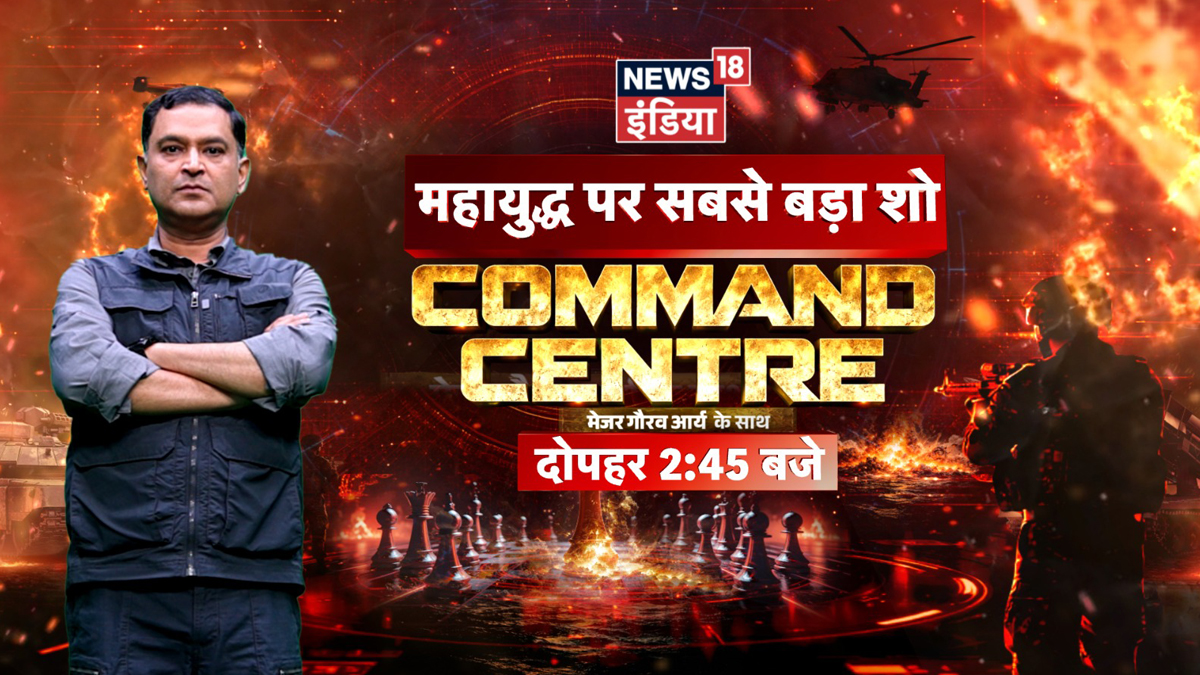
MUMBAI: News18 India has rolled out a new war-focused programme, Command Centre, featuring Gaurav Arya, as it looks to offer viewers a sharper, more grounded take on global conflicts amid rising tensions in West Asia.
Positioned as an “insider war room”, the show moves away from conventional panel debates and instead focuses on explaining military developments, decoding strategy and connecting global events to their everyday impact, from fuel prices to economic shifts.
The format leans heavily on visuals and data. The studio has been designed like a command hub, complete with large LED war maps, real-time graphics and an alert system to track developments as they unfold.
At the centre of it all is Arya, who brings his military background to simplify complex war strategies for viewers. His signature line, “Seedhi baat samjhiye”, anchors the show’s promise of clarity over noise.
News18 India managing editor Jyoti Kamal said, “Command Centre, featuring Major Gaurav Arya is designed to deliver accurate insights and a clear perspective on how evolving conflicts impact everyday life, from household budgets to national security. With expert voices analysing every development in real time, the show goes beyond headlines to decode what’s happening now, what it means, and what could come next.”
Echoing the intent, Gaurav Arya added, “In times of war, confusion is the biggest threat. With News18 India’s Command Centre, we are bringing viewers inside the war room, decoding strategies, tracking every escalation, and explaining, in the simplest terms, what it means for India and for every household. Seedhi baat samjhiye, this is where you understand not just what is happening, but what happens next.”
The weekday show will air in the afternoon slot and will also feature Gaurav Shukla, adding to its editorial depth.
With its mix of analysis, visuals and a clear focus on impact, the show reflects a broader shift in news consumption. Viewers are no longer just watching events unfold, they are looking to understand what those events mean for them.






