Hardware
Video’s the way forward for Cisco


MUMBAI: With the ever increasing demand for video services, Cisco is among a clutch of companies that views video as the next big thing.
Cisco TV coupled with Cisco STBs, caters to over 300 million homes globally and over 30 million households in India. The Cisco Videoscape Unity platform fulfils the demand for video on multiple screens, empowering service providers and media companies to create and connect new synchronised, personalised and intuitive multi-screen experiences at great speeds.
Video is the next big thing for us: we see the way video will be personalised, consumed and delivered to be very dynamic believes Arora

Says Cisco India & SAARC service provider – regional sales manager Sandeep Arora: “For Cisco, network is the platform for business enablement. Video is the next big thing for us: we see the way video will be personalised, consumed and delivered to be very dynamic.”
“There are multiple ways by which we are driving digitisation in India and helping our partners in what we call as a glass to glass strategy, so if you see our technology platforms, we serve from the IRDs – which is a picture coming from the lens of the camera to the glass of the TV screen,” adds Arora.
Cisco Videoscape Unity brings expertise in building comprehensive carrier-class cloud products and a flair for designing award-winning user experiences that implement each provider’s unique brand and vision. Cisco then engineers this vision into a coherent and deployable multi-screen product.
“So while we are enabling technology platforms, we are also enabling business platforms, and since it’s a very capex (capital expenditure) driven industry, we are also using our financial arm – Cisco Capital – to drive that high capex worth of business going forward. So in the end, we are just focusing on providing the right value for the end consumer by using the Cisco technology and to be a part of the immersive experience,” says Arora.
Six to seven years ago, Cisco acquired Scientific Atlanta – its largest acquisition till date – and over the years, it has been acquiring multiple companies to enhance its network capabilities and platform technologies. “So be it content aggregation, content creation or content distribution, all of this need to come together and we need to drive this experience,” says Arora.
About digitisation, Arora says there have been many anxious moments during phase I and phase II. “There is a technical digitisation that has happened – with the seeding of STBs in homes – but the business digitisation is still evolving – where the revenue is pumped in – and what we are looking at is it kicking in and that’s where the business model starts functioning,” he explains.
A behavioural change is also taking place, according to him, which is necessary for the success of both technical and business digitisation. “So with phase III and IV of digitisation approaching soon, we are moving to the bottom of the pyramid, and each phase will have its unique set of requirements and challenges, the fragmentation will also increase as digitisation penetrates further. The audience being addressed is very different, so we need to keep thinking how to redefine ourselves as we move forward,” he points out.
While others may aspire to offer either quick and powerful cloud-based services or customer-specific experiences, Cisco Videoscape Unity is unique in that it offers both.





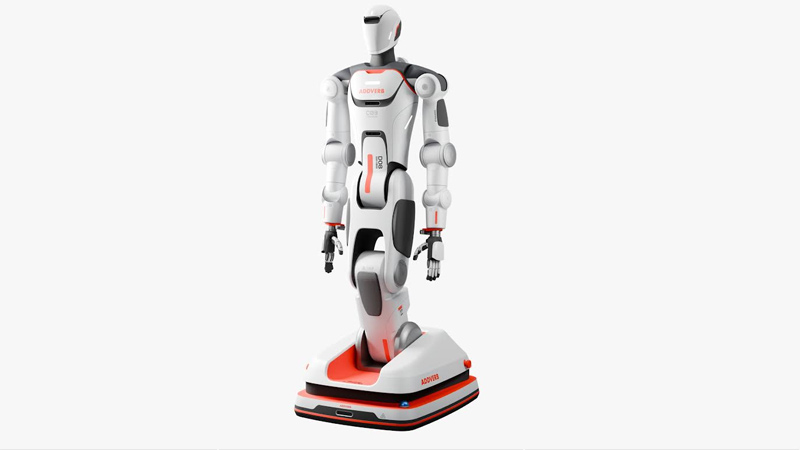
MUMBAI: Addverb has taken a decisive turn on the road to humanoid automation, unveiling its first wheeled humanoid robot, Elixis-W, at LogiMAT India 2026 in Mumbai. Built and manufactured in India, the robot signals the company’s push to make so-called physical AI a practical presence on the factory floor rather than a futuristic concept.
Unlike traditional fixed automation, Elixis-W is designed to move, think and work alongside people in dynamic industrial settings. The robot combines adaptive wheeled mobility with dual arms, each fitted with five-fingered dexterous hands, allowing it to handle tasks that demand precision as well as flexibility.
At its core sits a Physical AI-ready architecture, supported by dual Nvidia Jetson Orin and Thor computing units. This setup is intended to give the robot the ability to perceive, plan and adapt to changing environments, rather than simply follow pre-programmed routines.
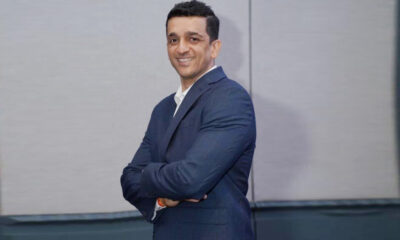
According to Addverb CEO and co-founder Sangeet Kumar, the humanoid reflects the company’s long-standing belief in human-robot collaboration. He said the robot is designed to take on repetitive, risky or physically demanding tasks, freeing human workers to focus on higher-value decision-making roles.
Alongside the humanoid, Addverb also showcased two new intralogistics solutions. The Cruiser 360, a four-way pallet shuttle, is aimed at high-density storage environments where space and speed matter. The FlowT, an autonomous forklift, is designed to move materials safely in busy warehouses and factory spaces.
Visitors also saw Trakr, the company’s quadruped robot, navigating the exhibition floor, offering a glimpse of how legged machines could assist in future warehouse and industrial operations.
Addverb, which began as a warehouse automation specialist, has steadily expanded its global footprint across the United States, Europe, Australia and Asia. Its client list includes Reliance, HUL, PepsiCo, Maersk, Mondial Relay and DHL.
With the launch of Elixis-W, the company is steering towards a future where robots are not just bolted to the floor, but rolling, reasoning and working shoulder to shoulder with people on the shopfloor.








