iWorld
Viacom18 and Turner India tie up for Voot’s kids content

MUMBAI: Viacom18 and Turner India have announced a strategic tie-up that will see Turner’s popular kids shows play on Viacom18’s over-the-top service Voot.
With this deal, Voot will add to its already existing powerhouse list of close to 100 characters that cut through broadcast affiliation. Shows likeThe Powerpuff Girls, Ben10, Roll No. 21 and Chotta Bheem alongside Dora, Spongebob, Motu Patlu, Shiva and Pokemon are among the few.
Commenting on the tie-up, Turner India South Asia senior vice president and managing director Siddharth Jain said, “We at Turner are dedicated in engaging consumers and collaborators in new ways to develop immersive worlds that enable our fans to experience our brands, franchises and content wherever, whenever and however they like. The collaboration with Viacom18 is a strategic move towards achieving this objective of being where our fans are and we know from our own New Generations 2016 research that 71% of today’s plurals are mobile phone users and 30% of them are on surfing the internet.”

Viacom18 group CEO Sudhanshu Vats said, “Online kids content is one of the major white spaces that exists in the country today. Through a dedicated offering within VOOT, called VOOT Kids we had started our journey to create the largest online destination for kids’ content in India. This vision saw us aggregate content from both within our network brand Nick and outside, to launch with over ~7000videos of kids content. This strategic partnership with Turner India will further bolster our content repository for VOOT Kids. Additionally, this also brings two powerhouses of kids content on a singular platform to bring forth the best viewing experience for our loyal little viewers.”
Viacom18 Digital Ventures COO Gaurav Gandhi further explained, “With close to one-fifth of all viewing on VOOT coming in for VOOT Kids already, we clearly have managed to catch the attention of one of the most discerning audiences and the true digital natives. With this multi-year strategic tie-up with Turner India, we are adding to the depth and variety of content for this audience.”







Gaming
India’s broadcasters say no to Fifa World Cup 2026
Fifa has slashed its asking price by 65 per cent but India’s broadcasters are still not buying
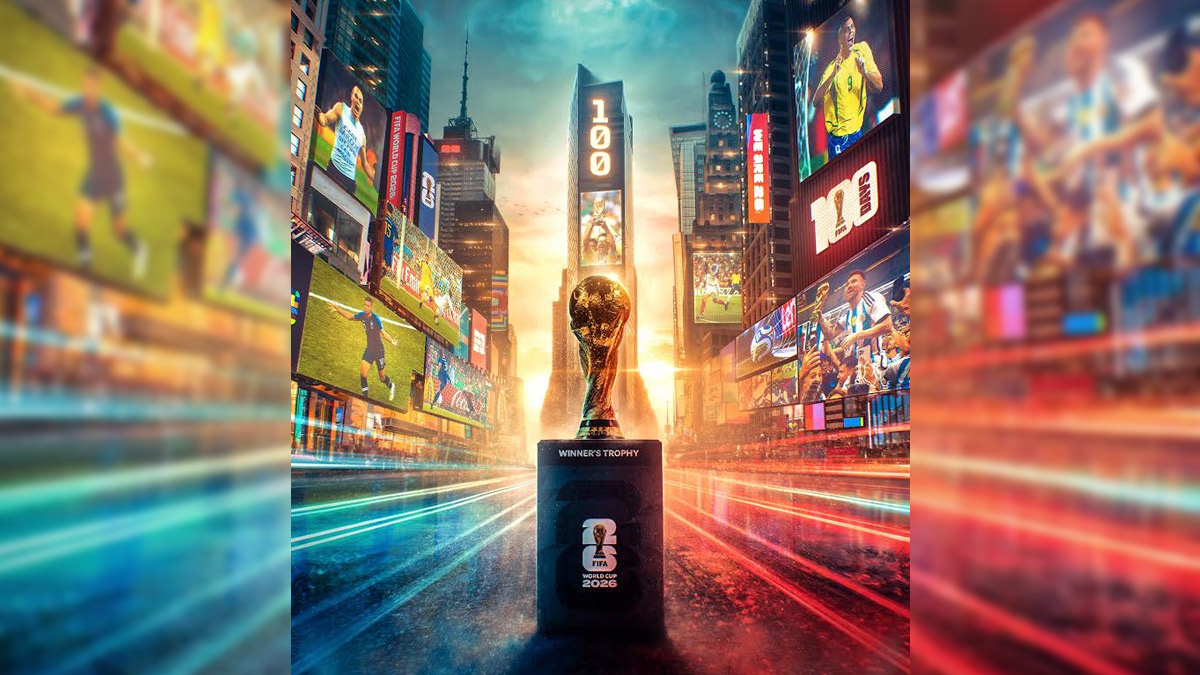
MUMBAI: The world’s biggest sporting event cannot find a single taker in the world’s most sports-mad nation. Fifa’s television rights for the 2026 World Cup remain unsold in India, and the clock is ticking loudly.
To shift the property, world football’s governing body has already swallowed hard and cut its asking price from $100m to $35m, bundling in the 2030 edition as a sweetener. It has not worked. Indian broadcasters have looked at the offer, done the sums and quietly walked away.
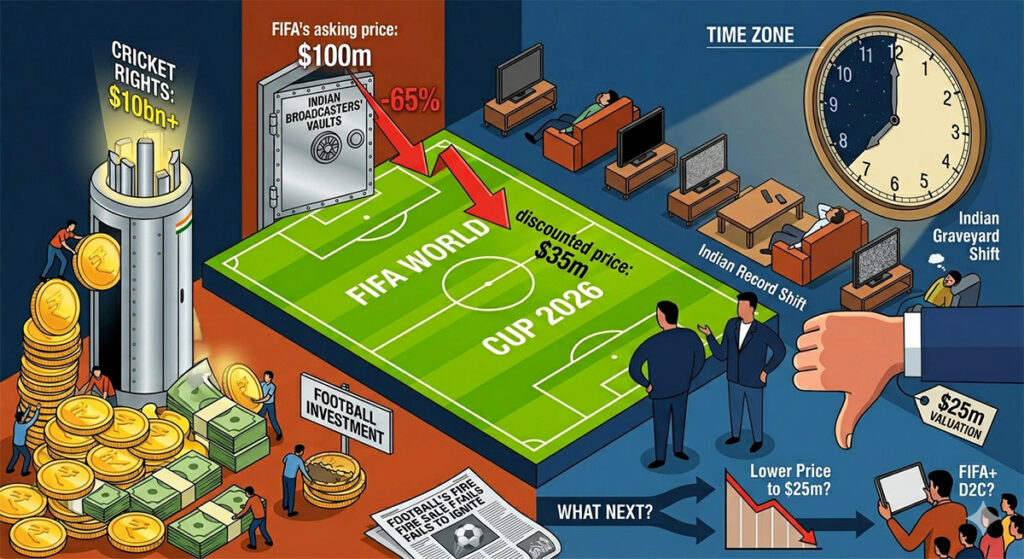
The reasons are brutally simple. The 2026 tournament, co-hosted by the United States, Canada and Mexico, kicks off in a time zone that turns India’s primetime into a graveyard shift. Most matches will air between midnight and 7am IST, a scheduling catastrophe for advertisers chasing mass reach. The 2022 Qatar edition was a gift by comparison, with matches dropping neatly into Indian evenings. North America offers no such luxury.
The market itself has also changed beyond recognition. The merger of Star India and Viacom18 into JioStar has gutted the competitive tension that once sent sports rights prices soaring. Where rival bidders once slugged it out, there is now a single dominant buyer, and it is in no hurry. JioStar has valued the rights at roughly $25m, a full $10m below Fifa’s already-discounted floor price. That gap has so far proved unbridgeable.
Broadcasters are also nursing a ferocious cricket hangover. Between 2022 and 2023, Indian media houses committed well over $10bn to cricket rights alone, covering IPL, ICC events and BCCI domestic fixtures combined. After a binge of that scale, appetite for a football package that delivers a fraction of the ratings, in the dead of night, is close to zero.
The economics of football broadcasting make the maths even harder. Cricket, with its natural breaks every few overs, is an advertiser’s paradise. Football offers a 15-minute halftime and precious little else. Recovering a nine-figure rights fee from a single half-hour ad window is a stretch at the best of times. These are not the best of times: the Indian government’s tightening grip on real-money gaming and gambling advertising has vaporised a category that once underwrote the economics of big sporting events.
Nor is the World Cup an anomaly. Indian Super League valuations have cratered. English Premier League rights have softened across successive cycles. The cooling of football as a broadcast commodity in India is structural, not cyclical.
With the tournament opening on 11th June, Fifa is running out of road. It may yet blink and meet JioStar at $25m. Or it may go direct, streaming the entire tournament on its own platform, Fifa+, or cutting a digital deal with YouTube, and hoping that a generation of Indian football fans finds its way there without a broadcaster to guide them.
Either way, the beautiful game’s Indian chapter is looking decidedly ugly.






