News Broadcasting
Veep: ‘Advertorials’ and ‘response features’ edge out editorials today

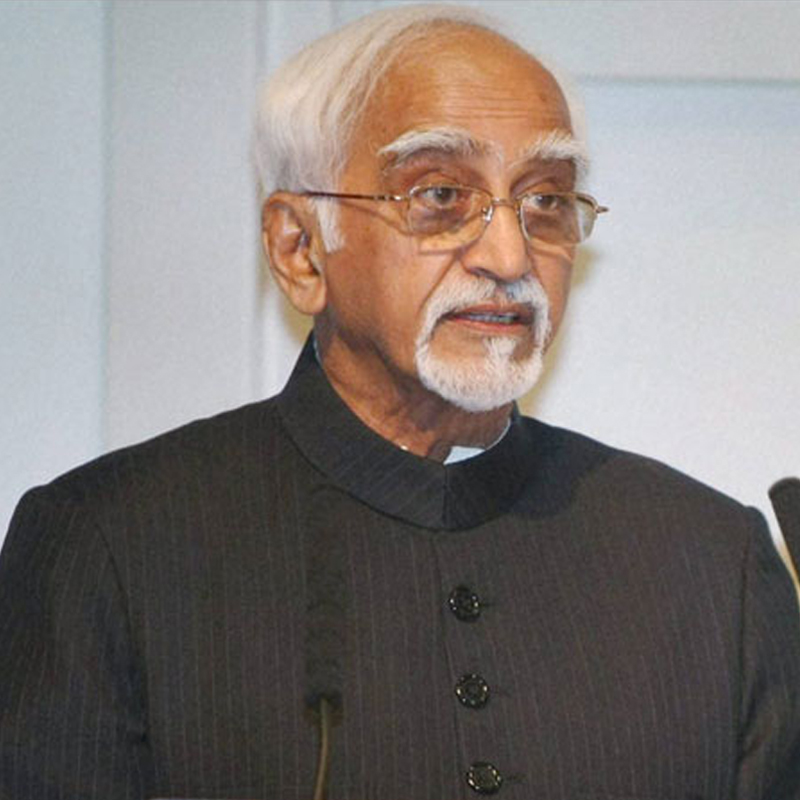
NEW DELHI: Vice President M Hamid Ansari has said that the media must stand up to fear, seek information and speak out, not hesitating to tell the powers their errors in commission and omission.
He said that is a fundamental function of the media and a basic requirement for the functioning of a healthy democracy.
He was addressing the gathering after giving away the C H Mohammed Koya National Journalism Awards 2016 here. Former Defence Minister A K Anthony and other dignitaries were present on the occasion. Koya was a former Chief Minister of Kerala.

The Vice President said Journalism as a professional calling is more than a mere job, it is a public good. A healthy, vibrant democracy not only creates the space for a free media, but rather it needs an impartial and independent media for its survival, he added.
The Vice President said that a responsible press is needed to hold power to account and that is why our founding fathers enshrined the freedom of press in the Constitution under the rubric of Article 19 (1)(A), subject only to reasonable restrictions. The media has an important responsibility, particularly in a democratic polity, to tell the truth to the powers that be, even if the powers that be have a habit of not liking this, he added.
“In this era of ‘post-truths’, where ‘advertorials’ and ‘response features’ edge-out editorials, we would do well to recall one of the greatest journalists that India has ever produced, and look at the ethos and principles that powered his journalism,” he added in a reference to Mahatma Gandhi.
Gandhi’s work as journalist was the association with six journals, and for two very influential weeklies, he was the editor. He published no advertisement; at the same time he did not want his newspapers to run at a loss. He had gained considerable experience in South Africa, where he had taken over the editorial role of the ‘Indian Opinion’ in 1904 and published it in English, Tamil and Gujarati, sometimes running the press himself. Later, ‘Young India’ and ‘Harijan’ became powerful vehicles of his views on all subjects. He wrote on all subjects. He wrote simply and clearly but forcefully.
For Gandhi, the three objectives of the press were to understand the popular feeling and give expression to it; to arouse among the people certain desirable sentiments, and to fearlessly expose popular defects.
Recalling words of Gandhi and other journalists, Ansari said journalism as a professional calling is more than a mere job, it is a public good. The fourth estate has an important role to play in a democracy. A healthy, vibrant democracy not only creates the space for a free media, but rather it needs an impartial and independent media for its survival. The essential roles that a free and responsible media is expected to play in a democratic society include:
• Inform the people of democratic choices through the clarification of complex issues, particularly in an age when information is the driving force of economic advancement and international events impact on people’s daily lives as never before;
• Provoke public debates leading to greater public participation in decision making;
• Uncover abuses of power for their rectification;
• Alert and mobilize public opinion to instances of injustices;
• Allow space for political pluralism by carrying different views and opinions, and;
• Keep leaders attuned to public opinion while offering them a medium to explain their policies and decisions to public opinion.
Also Read:
Mass Comm courses in regional languages significant: Naidu
Guest Column: The new gods of digital newsrooms




News Broadcasting
CNBC India unveils new logo, rolls out refreshed identity across network
Debuted at IBLA, the redesign signals a sharper, digital-first future

MUMBAI: CNBC has unveiled a refreshed brand identity across its India network, introducing a new logo and visual system that reflects a more modern, digital-first direction.
The rebrand was officially revealed at the India Business Leader Awards held in Mumbai on March 14, marking the first public showcase of the updated design at one of the network’s most prominent platforms.
The overhaul is among the most visible brand updates for CNBC in recent years, aimed at aligning its look and feel with evolving audience habits and a growing multi-platform presence.
At the centre of the refresh is a redesigned logo that moves away from the network’s long-standing multi-coloured peacock motif, opting instead for a cleaner and more minimalist aesthetic. A key visual cue is a blue upward-pointing arrow embedded within the letter ‘N’, symbolising forward momentum, growth and a focus on the future.
The new identity is being rolled out across the entire CNBC cluster in India, including CNBC-TV18, CNBC-TV18 Prime, CNBCTV18.com, CNBC Awaaz and CNBC Bajar. The move brings a more cohesive and contemporary design language across television and digital platforms alike.
The rollout began on March 30, with the network aiming to create a unified viewer experience regardless of how audiences access its content, be it on broadcast, online or connected devices.
With this refresh, CNBC is signalling its next phase of growth in India, blending legacy credibility with a sharper, forward-looking identity designed for an increasingly digital news ecosystem.