Cable TV
VBS 2019: Broadcast industry dwells on TRAI consultation paper, NTO impact and way forward

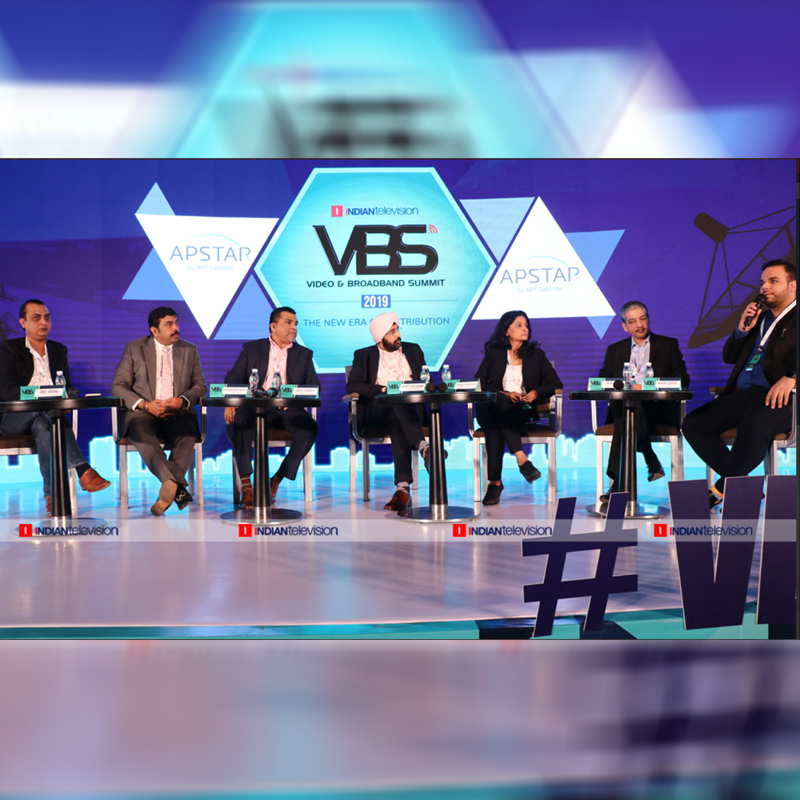
MUMBAI: The new consultation paper on broadcast tariffs is only seeking to address some infirmities in the earlier New Tariff Order (NTO) and will not bring any fundamental changes to the regulatory framework, said TRAI advisor Arvind Kumar at VBS 2019. His comment hinted that there might be some changes in the regulatory framework, which will bring NTO 2.0.
The first panel discussion at VBS 2019 organised by Indiantelevision.com and its production division ITV2.0 focused on ‘NTO-The future roadmap.’
The panel was moderated by Elara Capital VP- research analyst (media) Karan Taurani among the panelists IndiaCast Media Distribution president Amit Arora, Star India Distribution and international business president and head Gurjeev Singh Kapoor, Metro Cast Network India promoter Nagesh Narayandas Chhabria, The Remediation Company founder & partner Shyamala Venkatachalam, IndusInd Media & Communications chief executive officer Vynsley Fernandes and GTPL Hathway vice-president Yatin Gupta.

The objective of the NTO was to bring transparency, freedom of choice, level playing field in the industry and rationalising the consumers’ cost. The panelists agreed that the dust of the new tariff order has settled down but the NTO 2.0 period might impact pricing again. With the new consultation paper Gupta expected that there would be price capping on bouquets and a la carte.
Said Kapoor: “Very fairly the NTO has allowed consumers to exercise the power of choice. For DPOs the level playing field has come out very clearly. For the first time broadcasters were allowed to go with their understanding on pricing and packaging. We collaborated with all the stakeholders and ensured that smooth transition of the NTO happens. It wouldn't have been possible without the entire ecosystem coming together. I appreciate that MSOs and LCOs came together and were able to manage this really well. Post NTO has been good learning and deep understanding from Star’s perspective.
Whereas Arora said, “NTO has brought us closures as partners. There have been cases where platforms had designed packages and shown them to us for feedback. We don’t have the expertise of forming packages but we understand consumers as well as the retail price, which is feasible for my market. I don't understand the concept that the consumer has to pay less. I believe the consumers pay for value and content. As we move forward the challenge is going to be how do we make consumers pay more revenue for the content he/she watches. It’s between me and the platform to work together on how do we get him to buy."
National MSO GTPL Hathway’s Gupta said, “Any industry is always resistant to changes especially if it's technology based. One important thing is how do regulators ensure that it benefits the consumers but not at the cost of industry. There has been a lot of effort that went into building the new regulatory framework. As we see in the past few months, industry has begun to settle down and it's about to grow again. Looking at the tectonic shift, the cable industry is not just here to stay but to grow.”
“Most of the LCOs have settled down and they have adopted the new structure. They have been able to maintain and grow their business. Over the period of time various MSOs and various platforms have taken different views,” said Fernandes.
Taurani opined that 60 to 70 per cent of subscribers who cut the cord on cable TV have moved to DTH. It was an important change that has been observed. This was due to various reasons: MSOs not being able to implement the NTO in effective ways, delays on the MSOs’ front in coordination, etc.
On the same Venkatachalam commented, “On the DTH side, they already had established backend systems, the NTO just gave them a jump to make the transition process even easier. For the MSOs, it took them some time to put all the things in place.”
The panelists also shared their perspective on norms of 15 per cent capping on bouquet and FTA channels moving behind a pay wall and their expectations from the consultation paper released by TRAI to review NTO.
Gupta said, “With NTO 2.0 we are expecting the price capping of a la carte. The discounts being offered today range from 10 per cent to 70 per cent, so there should be some capping on that which can help consumers to make intelligent choices."
Agreeing with Gupta’s comment, Venkatachalam said that NTO 2.0 will impact the pricing.






Cable TV
Hathway Cable appoints Gurjeev Singh Kapoor as CEO
Leadership change comes as cable TV faces shrinking subscriber base and modest earnings pressure
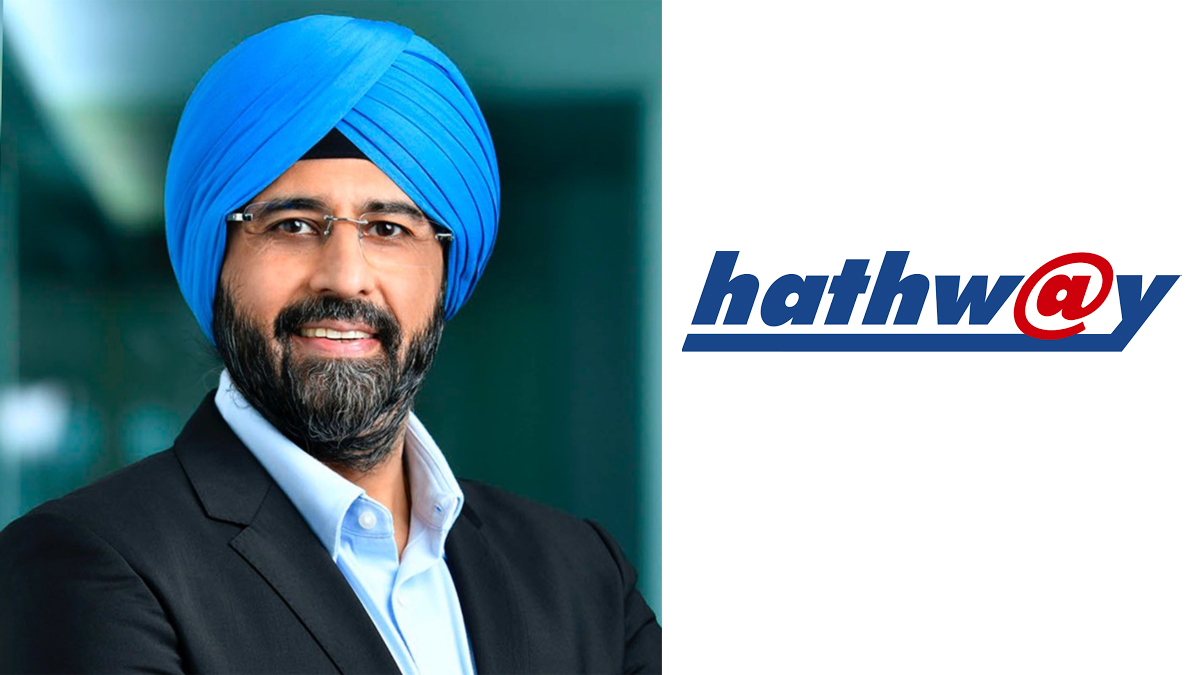
MUMBAI: Hathway Cable and Datacom has tapped industry veteran Gurjeev Singh Kapoor as chief executive officer, marking a leadership pivot at a time when India’s cable television business is under mounting strain.
Kapoor will take over from Tavinderjit Singh Panesar, who is set to retire in August after a long innings with the company. Panesar, chief executive since 2023, has held multiple leadership roles at Hathway, including his latest stint beginning in 2022.
Kapoor brings more than three decades of experience in media and entertainment. He most recently led distribution at The Walt Disney Company’s Star India business, now part of JioStar. His career spans television distribution and affiliate partnerships, with stints at Sony Pictures Networks India, Discovery Communications and Zee Entertainment.
Panesar, with over three decades in the industry, has worked across strategic planning, distribution and business development in media, broadcasting and manufacturing. His past associations include ESPN Star Sports, Star India, Apollo Tyres and JK Industries.
The transition lands as the cable sector grapples with structural disruption. Traditional operators are losing ground to streaming platforms, while telecom and broadband players tighten the squeeze with bundled offerings.
An EY report estimates India’s pay-TV base could shrink by a further 30 to 40 million households by 2030, taking the total down to 71 to 81 million. The slide follows a loss of nearly 40 million homes between 2018 and 2024, a contraction that has already wiped out more than 37,000 jobs in the local cable operator ecosystem.
Hathway’s numbers reflect the strain. The company reported a consolidated net profit of Rs 93 crore for FY25, down from Rs 99 crore a year earlier. Revenue inched up to Rs 2,040 crore from Rs 1,981 crore. As of December 2025, it had about 4.7 million cable TV subscribers and roughly 1.02 million broadband users.
Kapoor steps in with a familiar brief but a shrinking playbook. In a market where viewers are cutting cords faster than companies can reinvent them, the new chief executive inherits a business fighting to stay plugged in.







