Cable TV
‘Vardah’: Cables uprooted; antennae warped: Chennai MSO, DTH most affected


MUMBAI: It seemed that the month of December was not so favourable for the Indian state Tamil Nadu. We can recall that, last year, Tamil Nadu was badly affected by floods which caused damages to the tune of around Rs 9000 crore and hundreds of deaths. The more recent catastrophe is the cyclone Vardah, an intense storm to have hit the state again, which left at least 12 dead in TN and Andhra Pradesh.
According to news reports, the severe cyclonic storm affected electricity, communication lines and put rail, road and air traffic in disarray as it crossed the coast, pounding Tiruvallur, Chennai, and Kanchipuram with heavy rain and squall.
Also Tamil Nadu, being a broadcasting hub was badly affected by the calamity. Not only the broadcast industry but the MSOs, LCOs and DTH players too were terribly hit by the cyclone.

Speaking to Indiantelevision.com, Raj TV vice-president programming and production vice-president Amit Bose said, “No one could do much to ease the situation because of power failure and heavy roadblocks due to uprooting of trees throughout the city. Internet and phones were out of system, and hence communication and mobility were affected.
Bose added, “Productions were disrupted and TV viewing was not possible for the people of Chennai. DTH and cable connections were thrown out of gear and even for the people who had inverters and cable homes deserted on a powerless mode. Power backups could not sustain for a long time. This calamity might have affected Chennai’s viewership more than rest of the markets. On the whole, I apprehend the broadcasters, MSOs and viewers suffered the most.”
Polimer TV creative consultant Mathivannan Raju said, “Failure of power is the major issue right now. Also, the antennae of houses with a DTH connection have been destroyed, and there is no way to watch television. The issue is on the path to rectification.”
Raju added, “Of course, viewership will be affected due to the unfortunate event, which will eventually affect revenue as well but it is something beyond control. As this wasn’t our strategic plan, I am unsure how its actual impact on revenues. But, the MSOs and DTH industry has been majorly affected.”
Commenting on the cable industry, Raju said, “At present, cables used for delivering television content have been washed away in Chennai. Almost 99 per cent cables switched off. To recover the lost ground, we need to establish the complete network again. Most of the dish antennae that MSOs had installed have been dislocated, and we need to reinstall them.” “Moreover, on the LCOs front, cables from their office to the consumer’s houses/offices have been eroded. Most of the fibre cable severed into pieces; a new network of cables will now be required,” Raju lamented.
On the MSOs front, Chennai Metro Cable Operators Association general secretary MR Srinivasan said that there was a short supply of fibre cable and other equipment; that’s another problem that the cable industry was facing. In next 10-12 days, the association believes, everything will come to normal.”
As there was negligible electricity in the state, Srinivasan said, it was difficult to check whether DTH antennae were working properly.
From 15 December, the electricity will hopefully be reinstated; and only then people will come to know about the actual conditions vis-a-vis entertainment. With 120 km of wind speed, the antenna might have dislocated from their places, they need to be realigned.
On the DTH front, Tata Sky CEO Harit Nagpal said that the cyclone had not affected the DTH industry in any way. The dish antennae at the residences of some subscribers might have tilted because of the strong winds, and this might have had temporarily affected reception, but this was set right by the subscribers themselves, and so there were no complaints of any disruption.
Another MSO from Chennai informed that it would take another week for the cable industry to get to normal functioning in Chennai and other parts of the state. The state and local government will step in to clear fallen trees and restore wires.




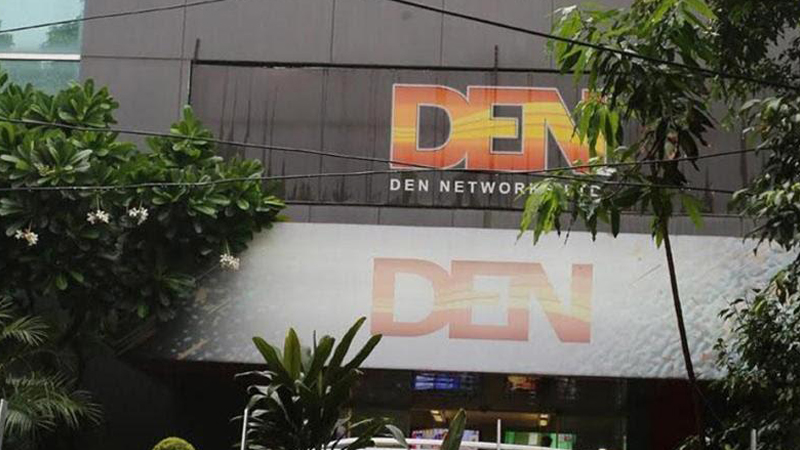
MUMBAI: When margins wobble, liquidity talks and in Q3 FY25-26, cash did most of the talking. Den Networks Limited closed the December quarter with consolidated revenue of Rs.251 crore, marginally higher than the previous quarter but down 4 per cent year-on-year, even as profitability stayed resilient on the back of strong cash reserves and disciplined cost control.
Subscription income softened to Rs.98 crore, slipping 3 per cent sequentially and 14 per cent from last year, while placement and marketing income offered some cheer, rising 15 per cent quarter-on-quarter to Rs.148 crore. Total costs climbed faster than revenue, up 7 per cent QoQ to Rs.238 crore, driven largely by higher content costs and operating expenses. As a result, EBITDA dropped sharply to Rs.13 crore from Rs.19 crore in Q2 and Rs.28 crore a year ago, pulling margins down to 5 per cent.
Yet, the bottom line refused to blink. Profit after tax stood at Rs.40 crore, up 15 per cent sequentially and only marginally lower than last year’s Rs.42 crore. A healthy Rs.57 crore in other income helped cushion operating pressure, keeping profit before tax at Rs.48 crore, broadly stable quarter-on-quarter despite the tougher cost environment.
The real headline-grabber, however, sits on the balance sheet. The company remains debt-free, with cash and cash equivalents swelling to Rs.3,279 crore as of December 31, 2025. Net worth rose to Rs.3,748 crore, while online collections accounted for 97 per cent of total receipts, underscoring strong cash discipline across operations, including subsidiaries.
In short, while Q3 showed signs of operating strain, the financial backbone remains solid. With zero gross debt, steady profits and a formidable cash war chest, the company enters the next quarter with flexibility firmly on its side proving that in uncertain markets, balance sheet strength can be the best growth strategy.






