News Broadcasting
V6 challenges suspension; BARC to place facts before court

MUMBAI: V6 News, from the stable of the Telugu channel popular across Telangana and Andhra Pradesh, also wants to challenge Broadcast Audience Research Council India (BARC India) after the latter suspended its ratings review for some weeks along with other two channels on 24 November, 2016.
BARC India, the only television audience measurement body in India, had temporarily suspended the review of viewership of three news channels. BARC communicated to all the broadcasters that ratings for India News, TV9 Telugu and V6 News were suspended owing to suspected mala fide practices.
Media buying and planning (advertising) agencies and brands had reacted strongly or cautiously when it came to commenting on famous yet delinquent channels. Dentsu Aegis chairman Ashish Bhasin had lauded the BARC decision: “It is a bold step taken by BARC to name and shame the mischievous entities.” It sends out a warning message to the channels to behave, and will act as a deterrent for other possible mischief-mongers that could spoil the purity of the currency for a Rs 20000 crore annual TV advertising business in India, Bhasin said.

However, the Bombay High Court on 6 December stayed the suspension of ratings review of India News even as BARC hinted at continuing its crusade. Describing the suspension of India News ratings as ‘arbitrary and illegal’, the court stated that the suspension and subsequent communication to all the subscribers has prima-facie been seen as a reputation-maligning action, a press release from India News stated. India News CEO Varun Kohli said, “India News is a credible news channel in the broadcasting business in the country and has grown consistently in the last four years both in the times of BARC ratings and TAM ratings, the predecessor of BARC.”
Reacting to the judgement, BARC India CEO Partho Dasgupta said: “We will continue to act as per our board and government guidelines, with the objective of providing the Indian broadcast industry with an accurate, robust and reliable television audience measurement system.”
Players in the news eco-system meantime saw an overall decline in the ratings, according to BARC week 48. Since the court stay, observers have been wondering whether other two erring and suspended yet holier-than-thou channels would also knock at the doors of the courts of law seeking redressal.
“We have filed a suit against the suspension of V6 review by BARC India,” V6 CEO Ravi Ankam communicated to Indiantelevision.com through the chief technical officer Kishore Kumar late yesterday evening. However, Ankam did not reveal the details, saying the “matter was sub-judice.”
When contacted for its comment on V6 News decision, BARC India was prompt in its curt reply. “We will place the facts in (the) court. At this stage, as the matters are sub-judice, it would not be appropriate for us to say anything more. We are confident of what we are doing,” the ratings body CEO said.
TV9 Telugu shied from reacting or commenting on BARC India action or the court stay. TV9 head of marketing Clifford Pereira passed on the responsibility of speaking to the media to the chief financial officer KVN Murthy. When Indiantelevision.com contacted CFO Murthy, he sought time as he was driving out of town for a private meeting, and then chose not to respond to calls or text messages.
Also Read
HC stays India News ratings suspension; BARC hints at continuing crusade
‘Name and shame delinquent channels’






News Broadcasting
Kamlesh Singh receives Haldi Ghati Award from MMCF
India Today Group editor honoured for three decades of journalism at Udaipur ceremony.
MUMBAI- Kamlesh Singh just turned a lifetime of sharp words into a shiny shield because when journalism wakes up a society, even the Maharana of Mewar wants to pin a medal on it.
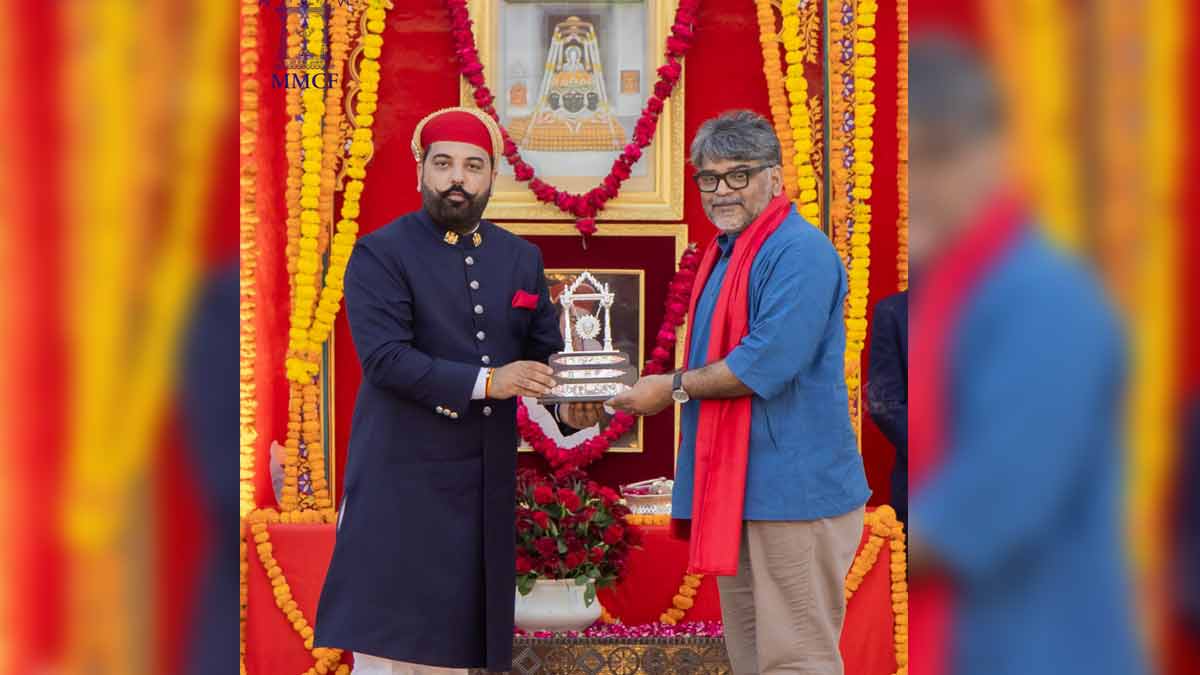
The Maharana of Mewar Charitable Foundation (MMCF) conferred its prestigious Haldi Ghati Award on Kamlesh Singh, a senior editor at the India Today Group, during a ceremony in Udaipur on 15 March 2026. The national award, instituted in 1981-82, recognises “work of permanent value that initiates an awakening in society through the medium of journalism.”
Singh, who leads several editorial initiatives including Aaj Tak Radio, the Teen Taal community and The Lallantop, was presented the honour by Lakshyaraj Singh Mewar, Managing Trustee of MMCF. The citation highlighted his three decades of contributions to Indian media, innovations in digital journalism, mentoring young reporters, and his popular podcast persona “Tau” on Teen Taal, which fosters thoughtful public discourse.
The Haldi Ghati Award, named after the historic Battle of Haldighati symbolising valour and resilience, is one of four national awards given annually by MMCF. Past recipients include Tavleen Singh, Piyush Pandey and Raj Chengappa.
Other honourees this year included Padma Vibhushan Pt Hari Prasad Chaurasia, Vedamurti Devvrat Rekhe, Treeman of India Marimuthu Yoganathan, Vir Chakra Capt Rizwan Malik, and US-based researcher Molly Emma Aitken, who received the Colonel James Tod Award for contributions to understanding Mewar’s spirit and values.
In an era where headlines often shout louder than substance, the MMCF quietly reminded everyone that real journalism isn’t about noise, it’s about the quiet, persistent work that stirs society awake, one thoughtful story at a time.







