News Broadcasting
Uttaranchal Tourism Board joins hand with BBC World to promote tourism

MUMBAI: To boost the state tourism sector and to communicate that Uttaranchal is a preferred destination, Uttaranchal Tourism Development Board (UTDB) has tied up with the international news channel BBC World.
An international electronic campaign has been launched for Uttaranchal, which will be shown on the BBC World.
The team at BBC World had produced two advertorials focusing on the state’s key tourist attractions, adventure and spirituality, in order to attract its target audience of high-end international travellers. These advertorials have been launched in the UK and European beam, South Asia and Middle East beam and North America with effect from 20 June. The campaign is expected to run till October 2006, informs an official release.
BBC World was chosen as the most suitable medium of communication to promote the unexplored attractions of the state of Uttaranchal in foreign markets based on proven research endorsing the fact that the channel’s viewership consists of a global audience with avid interest in long haul travel.

The challenge of the brief provided was to create a presence for UTDB through a campaign, which reflected the state’s unique attractions. In response, BBC World provided a suitable advertorial and sponsorship package to highlight the distinct characteristics of the state, which appropriately engages the core target group of the high-end international traveller.
BBC World also provided additional exposure to the campaign by airing the commercials on specific US Airways flights.
“BBC World understood our requirements perfectly and the team was able to creatively do justice and turn our vision into reality. We are hopeful in building the profile of the Uttaranchal region as a holiday destination through this unique campaign and expect increased inbound tourist arrivals from key foreign markets in the upcoming season. With BBC World’s credibility and reach in our focus markets, we are happy to work with them as partners”, says Uttaranchal Tourism Development Board marketing and publicity director Arun Srivastava in the statement issued today.
BBC World head of sales Seema Mohapatra comments, “We are proud to partner with the UTDB in producing this unique international electronic campaign for the state of Uttaranchal. Delivering successful campaigns to tourism clients has been one of our key strengths amongst many others and we are happy that the campaign has received encouraging reviews from across the globe. It is our endeavour to continuously bring to our clients a range of innovative and creative advertising solutions which reach their focus markets and target audiences worldwide and help them in building their brand on an international platform.”



News Broadcasting
News18 India launches Command Centre war explainer with Arya
New show shifts from debates to decoding global conflicts and impacts
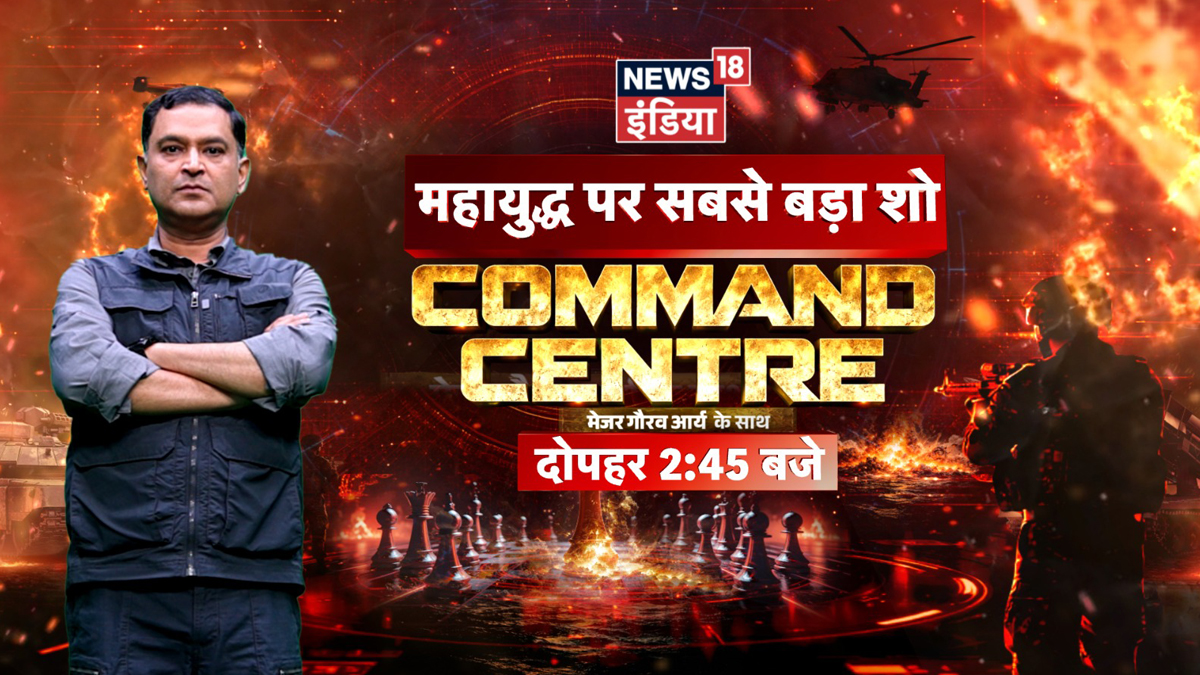
MUMBAI: News18 India has rolled out a new war-focused programme, Command Centre, featuring Gaurav Arya, as it looks to offer viewers a sharper, more grounded take on global conflicts amid rising tensions in West Asia.
Positioned as an “insider war room”, the show moves away from conventional panel debates and instead focuses on explaining military developments, decoding strategy and connecting global events to their everyday impact, from fuel prices to economic shifts.
The format leans heavily on visuals and data. The studio has been designed like a command hub, complete with large LED war maps, real-time graphics and an alert system to track developments as they unfold.
At the centre of it all is Arya, who brings his military background to simplify complex war strategies for viewers. His signature line, “Seedhi baat samjhiye”, anchors the show’s promise of clarity over noise.
News18 India managing editor Jyoti Kamal said, “Command Centre, featuring Major Gaurav Arya is designed to deliver accurate insights and a clear perspective on how evolving conflicts impact everyday life, from household budgets to national security. With expert voices analysing every development in real time, the show goes beyond headlines to decode what’s happening now, what it means, and what could come next.”
Echoing the intent, Gaurav Arya added, “In times of war, confusion is the biggest threat. With News18 India’s Command Centre, we are bringing viewers inside the war room, decoding strategies, tracking every escalation, and explaining, in the simplest terms, what it means for India and for every household. Seedhi baat samjhiye, this is where you understand not just what is happening, but what happens next.”
The weekday show will air in the afternoon slot and will also feature Gaurav Shukla, adding to its editorial depth.
With its mix of analysis, visuals and a clear focus on impact, the show reflects a broader shift in news consumption. Viewers are no longer just watching events unfold, they are looking to understand what those events mean for them.






