Gaming
Unlocking the impact of the 28-cent GST levy on online gaming, horse racing, and casino activities

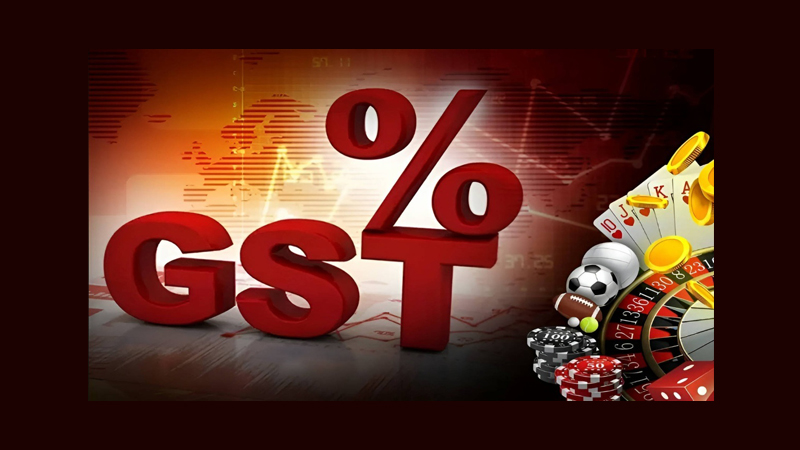
Mumbai: In recent developments, the GST Council, a body responsible for making crucial decisions regarding India’s Goods and Services Tax regime has made a significant announcement, reshaping the landscape of taxation in India. The council’s decision to impose a 28 per cent Goods and Services Tax (GST) levy on the entire value of online gaming, horse racing, and casino activities has sent ripples through various industries. This move has far-reaching implications, not only for businesses involved in these activities but also for the broader economy. In this article, we delve into the intricacies of this tax revision, exploring its implications and potential consequences for the gaming and entertainment sectors.
Before the implementation of GST, the taxation and regulatory landscape for online gaming, horse racing, and casino activities in India was marked by a lack of uniformity and consistency. Different states had different rules and tax rates, creating challenges for businesses operating in these sectors. The introduction of GST aimed to bring about a more standardized and streamlined taxation system for these industries across the country.
Potential Implications for Consumers

As these industries adjust to the new GST levy, consumers may also feel the impact. The 28 per cent tax rate could lead to higher costs for online gaming, horse racing bets, and casino visits. This may prompt some consumers to reconsider their entertainment choices or allocate their budgets differently. While it may pose challenges for businesses and consumers, it’s essential to adapt and navigate these changes effectively.
Here are some views on the topic by industry experts…
Edited excerpts
Skyesports founder and CEOShiva Nandy:
“The 28 per cent GST on online gaming only applies to real-money gaming in which players pay money to participate. As India’s leading esports tournament organizer with a goal of elevating esports from the grassroots, all our competitions are open with no entry fee. Thus, the new GST laws don’t apply to us and make no difference in our operations.”
Revenant Esports founder and CEO Rohit Jagasia:
“Only a year ago with the bans on Free Fire and BGMI, the Indian esports scenario was struggling with a dearth of options for mobile gamers. I applaud Garena in their efforts to bring Free Fire India and already make a commitment towards esports which will be a big boost to welcoming old and new players alike. While we don’t currently have an esports roster in the game, we are always on the lookout for potential titles to enter and Free Fire is certainly one on our radar.”
Esports Federation of India (ESFI) president & acting director general of the Olympic Council of Asia Vinod Tiwari
“It is imperative first to understand that the 28 per cent GST is going to be applicable to the iGaming sector, including Real Money Gaming (RMG), fantasy sports, teen patti, rummy, and poker which are categorised under gambling or betting in the rest of the world. Contrary to some media reports, this GST is neither applicable nor will it have any impact on the ‘Video Games’ or the Esports industry.”
“Esports has been officially recognised as a sport by the government which finally and thankfully distinguishes it from any and all activities like iGaming such as fantasy, teen patti, rummy, poker, betting, and gambling, among others. It will carry on to be taxed the way it always has been. Theories of ‘game of skill’ and ‘game of chance’ which only exist in our country neither apply nor are relevant in the Esports ecosystem,” said Tiwari.
E-Gaming Federation secretary Malay Kumar Shukla:
“This is an extremely unfortunate decision as charging a 28 per cent tax on full face value will lead to a nearly 1000 per cent increase in taxation and prove catastrophic for the industry. A tax burden where taxes exceed revenues will not only make the online gaming industry unviable but also boost black-market operators at the expense of legitimate tax-paying players, further undermining the industry’s image and capacity to survive. It is in addition to the loss of employment opportunities and the huge impact on marquee investors who are heavily invested in this sunrise sector. Furthermore, online gaming is different from gambling, and the Supreme Court and various High Court decisions have reaffirmed the status of online skill-based games as legitimate business activity protected as a fundamental right under the Indian constitution. While the industry was quite optimistic with the new developments including amendments to the IT rules and implementation of TDS on net winnings, all this will be moot if the industry is not supported by a progressive GST regime. We will wait for further details to assess the situation and evaluate our approach.”
PlayerzPot co-founder & director Mitesh Gangar:
“The GST council’s decision to levy 28 per cent GST on total face value on online gaming will corner the gaming industry in a big way. The overall operations will not be feasible. The high tax burden will completely restrict the cash flow, limiting a company’s ability to invest in research, innovation, expansion or survival. The higher burden will also put a blocker on India’s massive gaming industry and deter new players from entering the industry. The rising gaming economy will take a big hit and trigger economic stress, restrict job creation and curtail economic growth within the sector.”
Qlan co-founder and CEO Sagar Nair:
“The decision of the GST council to impose a 28 per cent tax will have a significant impact on the online gaming industry, which unfortunately includes the Esports community. While we understand that the government needs to impose such measures on casinos, horse racing, and gambling, the higher tax rate is not justified for the competitive gaming community. It can discourage new players from entering the market as their hard-earned earnings generated through their efforts just like mainstream athletes will be taxed on the same level as those involved in gambling and other such practices. For the Esports industry to continue its unprecedented growth and recognition on the international stage, it is vital for the government to treat Esports as a separate category with reasonable tax rates that would support the development of the sector.”
Alpha Zegus founder & director Rohit Agarwal:
“Yet again, esports being included in the same domain as online gaming, horse racing, and casino, has put our industry at a major disadvantage. While the government might have fair reasons to impose higher GST on horse racing and casino winnings, imposing the same rules on an industry like esports doesn’t seem fair. Esports does not only have a ‘win or lose’ situation based on luck but also has a very big element of skill that determines the outcome of the game. This is not what I expected, and our fight to separate esports from other labels still continues.”
IndiaPlays COO Aaditya Shah:
“The GST council’s recent stance is both surprising and disappointing. Despite the government’s previous positive steps and clarifications regarding the skill-based gaming industry, such as clarification about TDS on winnings and establishing self-regulatory bodies, this new decision contradicts and undermines those efforts. As of 2022, the revenue generated by the Indian online gaming industry has already surpassed $2.8 billion, and it is projected to reach $5 billion by 2025, indicating an annual growth rate of 28-30 per cent. The number of gamers in India currently stands at 420 million, and this figure is expected to experience exponential growth by 2025. Additionally, there are approximately over 1,300 gaming startups in India, highlighting the industry’s potential for unlocking further growth. However, imposing a 28 per cent GST on anything other than our gross revenue will have adverse consequences. It would be highly unjust to burden the industry with such a significant tax. Not only would this decision impede the industry’s progress, but it would also put millions of jobs at risk.”
AIGF Spokesperson said,
“A vast majority of online gaming companies fall within the MSME sector. With over 400 per cent increase in GST liability under the new tax regime, many entrepreneurs who had innovated in the sector would be disproportionately impacted with companies paying more in taxes than they would be generating in revenue. Since the decision, some companies have announced their closure or wide spread layoffs and we believe this trend will only increase in the coming months. While the decision might have been undertaken with a view to increase revenues to the exchequer, its impact might in fact see a fall in revenues as well as company valuations.”





Gaming
India’s broadcasters say no to Fifa World Cup 2026
Fifa has slashed its asking price by 65 per cent but India’s broadcasters are still not buying

MUMBAI: The world’s biggest sporting event cannot find a single taker in the world’s most sports-mad nation. Fifa’s television rights for the 2026 World Cup remain unsold in India, and the clock is ticking loudly.
To shift the property, world football’s governing body has already swallowed hard and cut its asking price from $100m to $35m, bundling in the 2030 edition as a sweetener. It has not worked. Indian broadcasters have looked at the offer, done the sums and quietly walked away.
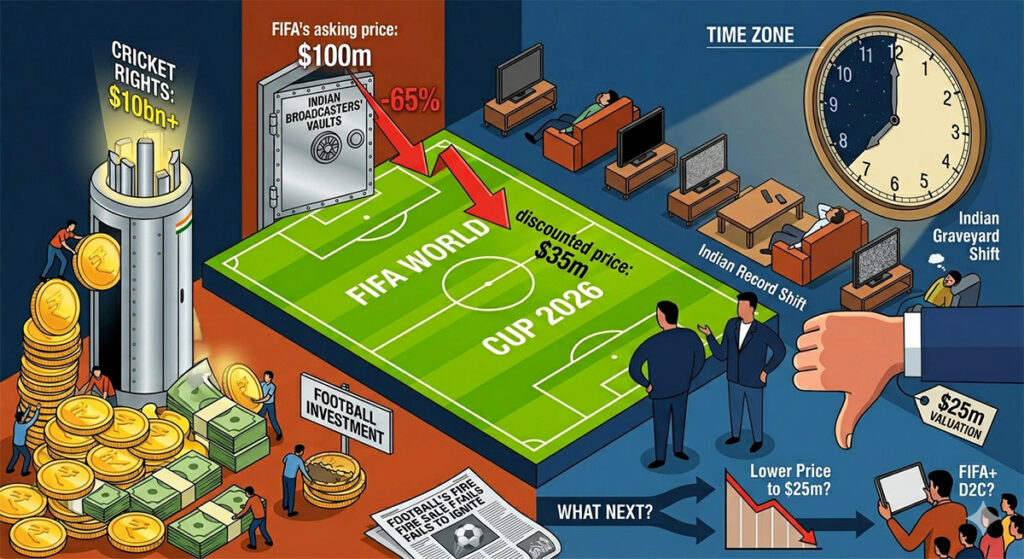
The reasons are brutally simple. The 2026 tournament, co-hosted by the United States, Canada and Mexico, kicks off in a time zone that turns India’s primetime into a graveyard shift. Most matches will air between midnight and 7am IST, a scheduling catastrophe for advertisers chasing mass reach. The 2022 Qatar edition was a gift by comparison, with matches dropping neatly into Indian evenings. North America offers no such luxury.
The market itself has also changed beyond recognition. The merger of Star India and Viacom18 into JioStar has gutted the competitive tension that once sent sports rights prices soaring. Where rival bidders once slugged it out, there is now a single dominant buyer, and it is in no hurry. JioStar has valued the rights at roughly $25m, a full $10m below Fifa’s already-discounted floor price. That gap has so far proved unbridgeable.
Broadcasters are also nursing a ferocious cricket hangover. Between 2022 and 2023, Indian media houses committed well over $10bn to cricket rights alone, covering IPL, ICC events and BCCI domestic fixtures combined. After a binge of that scale, appetite for a football package that delivers a fraction of the ratings, in the dead of night, is close to zero.
The economics of football broadcasting make the maths even harder. Cricket, with its natural breaks every few overs, is an advertiser’s paradise. Football offers a 15-minute halftime and precious little else. Recovering a nine-figure rights fee from a single half-hour ad window is a stretch at the best of times. These are not the best of times: the Indian government’s tightening grip on real-money gaming and gambling advertising has vaporised a category that once underwrote the economics of big sporting events.
Nor is the World Cup an anomaly. Indian Super League valuations have cratered. English Premier League rights have softened across successive cycles. The cooling of football as a broadcast commodity in India is structural, not cyclical.
With the tournament opening on 11th June, Fifa is running out of road. It may yet blink and meet JioStar at $25m. Or it may go direct, streaming the entire tournament on its own platform, Fifa+, or cutting a digital deal with YouTube, and hoping that a generation of Indian football fans finds its way there without a broadcaster to guide them.
Either way, the beautiful game’s Indian chapter is looking decidedly ugly.







