Applications
University Kaiserslautern fast tracks Quantum Computer development with new DDS firmware option

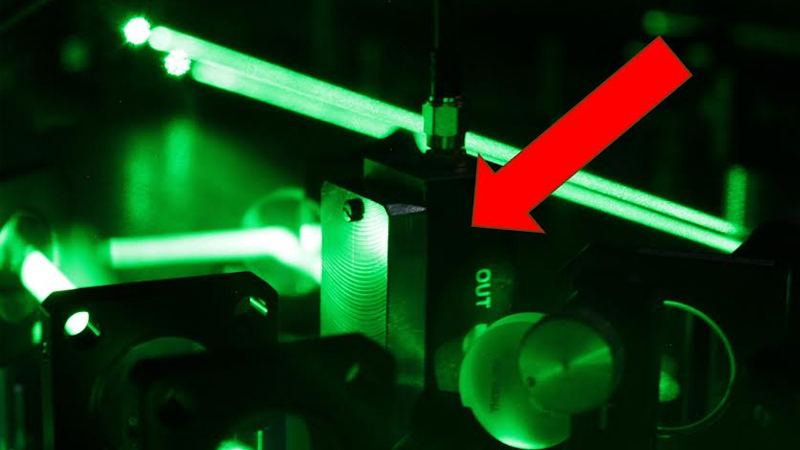
Mumbai: There are many ways to build a Quantum Computer (QC) and RPTU Kaiserslautern’s approach within the Rymax One collaboration is to create an array of single atoms that act as qubits. The challenge is moving and holding each atom in its precise location. This is done by using a laser on each atom that traps it into the center of the laser beam effectively acting as an optical tweezer. However, point-by-point programming of each movement of the beam currently requires a lot of programming and a huge amount of data. This has now been cut dramatically with the use of the new Direct Digital Syntheses (DDS) firmware option from Spectrum Instrumentation so that the position of the lasers can be controlled with a few simple commands that define the start and stop parameters instead of making time consuming, large data array calculations.
Dipl.-Phys. Jonas Witzenrath said, “This is making a huge difference to the progress of our research. Using the new DDS option, we have been able to make rapid progress and reduce the complexity in the system allowing us to focus on advancing the research. The next step is to do the reordering of atoms in a static two dimensional array using the dynamic capabilities of the DDS-firmware.” Furthermore, in the next phase, they will use the AWGs to shape ideal UV laser pulses for precisely controlling interactions between qubits.
“DDS has become a vital tool in our project and we are finding that it can actually be used in other things in the lab as it is very flexible and can be used for other functions so we don’t have to buy dedicated equipment for them. For example, pulsed lasers, chirp generation, etc. We worked very closely with Spectrum to develop this DDS feature and are now working on expanding its possible uses in research so that it can help other laboratories.”

He added that the Spectrum AWG cards were chosen as they are becoming the solution of choice for quantum research due to their great analogue performance paired with large memory and high transfer speed onto the card. The latter is crucial as the experiment has to pause until the re-ordering waveforms are computed and uploaded onto the cards. The transfer speed sets the Spectrum AWG cards apart from other products and that is the main reason why they are widely used in the AMO/QC community. The speed of the card’s operation was also very important. Fast AWGs have the intrinsic problem of latencies on the order of tens of milliseconds or large jitter which results in inaccuracies and longer processing times as the system corrects and recorrects. The DDS firmware enables Spectrum’s AWGs to generate commands within twenty microsecond and, due to the intrinsic timing, the commands are practically jitter-free.
In one example experiment, the Spectrum Instrumentation AWG card M4i.6631-x8 is used to drive an AOD (Acousto-Optic Deflector) that generates a tweezer to trap the atoms. The AOD is driven with an RF-signal with a frequency around 82 MHz. With their current setup, a change of 1 MHz moves the tweezer with an atom by about 8 μm within 100 μs, using s-shaped frequency ramps to minimize heating. During this time, the amplitude of the signal is linearly changed to compensate for changes in light intensity.

Applications
With 57 per cent single new users, Ashley Madison rebrands as discreet dating platform
Platform says majority of new members now identify as single
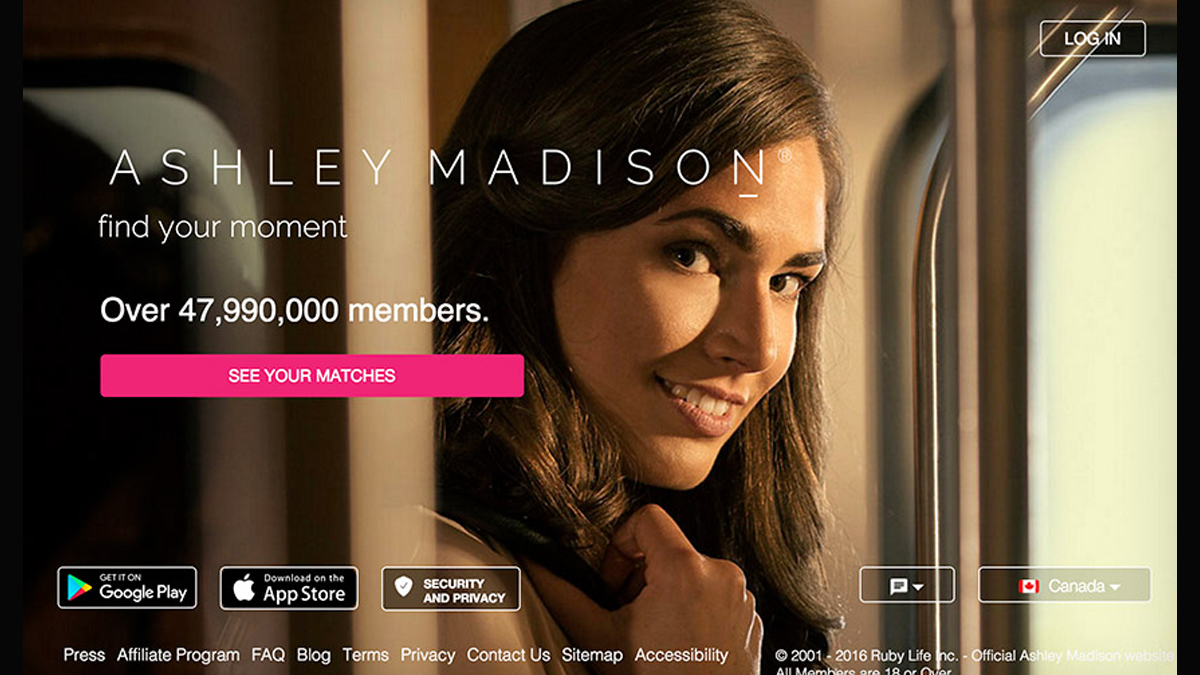
INDIA: Ashley Madison is shedding the “married-dating” label that defined it for two decades, repositioning itself as a platform for discreet dating in what it calls the post-social media age.
The rebrand, unveiled in India on 27 February, 2026, marks a structural shift in business model and identity. Once synonymous with married dating, the company now describes itself as the “premier destination for discreet dating” under a new tagline: Where Desire Meets Discretion.
The pivot is data-driven. Internal figures show that 57 per cent of global sign-ups between 1 January and 31 December, 2025 identified as single: a notable departure from the platform’s married core. The company argues that its community has already evolved beyond its original positioning.
“In an age where our lives have been constantly put on public display, privacy has become the new luxury,” said Ashley Madison chief strategy officer Paul Keable. He framed the platform’s offering as “ethical discretion” for singles, separated, divorced and non-monogamous users seeking private connections.
The shift also taps into wider digital fatigue. A global survey conducted by YouGov for Ashley Madison, covering 13,071 adults across Australia, Brazil, Canada, Germany, India, Italy, Mexico, Spain, Switzerland, the UK and the US, found mounting discomfort with hyper-public online lives.
Among dating app users, 30 per cent cited constant swiping and messaging as a source of fatigue, while 24 per cent pointed to pressure to curate public-facing profiles and early personal disclosure. Some 27 per cent said fears of screenshots or information being shared contributed to exhaustion; an equal share cited unwanted attention.
The retreat from oversharing appears broader. According to the survey, 46 per cent of adults actively try to keep most aspects of their life private online. Only 8 per cent feel comfortable sharing most aspects publicly, while 35 per cent say they are becoming more selective about what they disclose.
Ashley Madison is betting that this cultural recalibration towards controlled visibility can be monetised. By doubling down on privacy infrastructure and reframing itself around discretion rather than infidelity, the company is attempting to convert reputational baggage into a premium proposition.







