Budget
Union Budget 2026: What India Inc wants from the next reform push

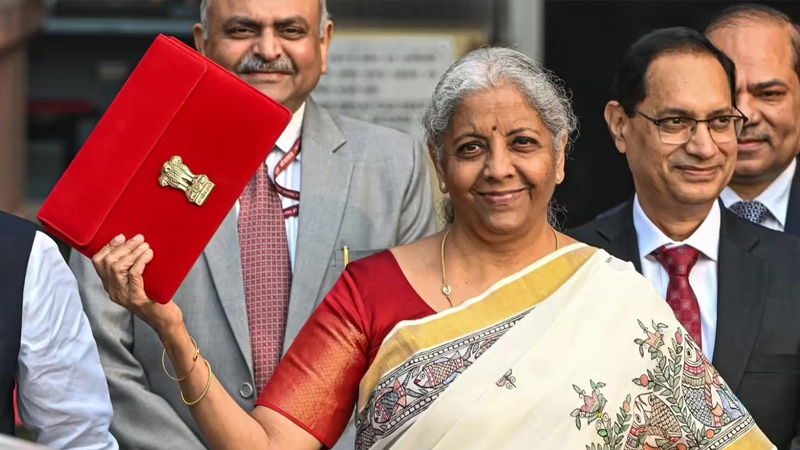
INDIA: As India gears up for the Union Budget 2026–27, scheduled to be presented on February 1, expectations are running high across industries amid strong macroeconomic momentum. The economy is projected to grow between 7 and 7.5 per cent, supported by resilient consumer demand, sustained infrastructure spending, and policy-led reforms.
Corporate activity remains buoyant, with mergers and acquisitions touching 61.3 billion dollars in the first half of FY25, while foreign investment inflows continue to strengthen. However, persistent challenges such as rising input costs, regulatory complexity, and over 5.4 lakh pending tax appeals underline the need for clarity, simplification, and faster dispute resolution. Against this backdrop, industry leaders are looking to Budget 2026 to deliver targeted reforms that boost manufacturing, formalisation, digital innovation, and inclusive growth.
Manufacturing and Infrastructure in Focus
For the furniture and manufacturing sector, cost pressures and competitiveness remain key concerns. Hettich India, Saarc, Middle East & Africa managing director Andre Eckholt said the upcoming budget presents a crucial opportunity to strengthen India’s furniture and manufacturing ecosystem.

“As India moves towards becoming a global manufacturing hub, the upcoming Union Budget 2026 presents a vital opportunity to further strengthen the furniture and manufacturing sectors. However, key challenges such as rising raw material costs and logistics expenses continue to impact competitiveness.We believe addressing these concerns through rationalised duties, stable input costs, and incentives for value-added manufacturing will be critical,” Eckholt noted. He also called for continued emphasis on infrastructure development, skill building, and ease of doing business to accelerate local production under the Make in India initiative.
Echoing the push for manufacturing-led growth, Stone Sapphire India MD & CEO Shobhit Singh, highlighted the need for policies that combine scale with innovation.
“The next phase of growth must focus on enabling innovation and full technology adoption, especially for MSMEs, on par with advanced global economies. For consumer categories such as toys, stationery, homeware and sports goods, targeted incentives for domestic manufacturing must be complemented by support for automation, digital infrastructure, R&D, and IP-led product development to create globally competitive Indian brands. A forward-looking budget that integrates manufacturing, technology, skills and exports will not only reduce import dependence but also position India as a trusted global sourcing and brand creation hub,” Singh said.
Financial Inclusion and Credit Flow
From the financial services sector, Muthoot FinCorp outlined a series of recommendations aimed at improving credit access in rural and semi-urban India. CEO Shaji Varghese urged the government to liberalise branch-opening norms for gold loan NBFCs and rationalise capital risk weights to reduce the cost of lending.
“Harmonising Sarfaesi Act applicability for NBFCs in line with banks and Housing Finance Companies (HFCs) to help drive rural housing credit and strengthen recovery mechanisms for smaller-ticket mortgage loans,” Varghese said, adding that targeted schemes should help bring temporarily defaulted borrowers back into the formal lending ecosystem while encouraging formalisation of gold lending.
Commodities, FMCG and retail seek policy balance
In the bullion sector, RiddiSiddhi Bullions Ltd managing director and India Bullion and Jewellers Association president and chairman Prithviraj Kothari, flagged the need for fair duty structures.
“The Indian bullion industry has highlighted three key policy demands to ensure fairness, competitiveness, and long-term sustainability. First, under the Tariff Rate Quota (TRQ) framework and FTAs such as the CEPA with the UAE, the 1 per cent customs duty benefit should be passed on equitably,” Kothari noted. “While Dubai imports around 180 tonnes of gold annually with a 1 per cent duty advantage, gold dore bars imported into India receive only a 0.65 per cent benefit, risking a sharp decline in dore imports. To correct this imbalance, we have proposed raising the duty on dore bar imports to 1.65 per cent.”
Within FMCG, DS Group emphasised a consumption-driven framework in Budget 2026, urging higher capital expenditure, corporate tax rationalisation, and targeted manufacturing incentives.
The group called for export-focused support alongside rural production initiatives such as capital subsidies, concessional land rates, GST relief on capital investments, and income tax benefits for new rural manufacturing units to drive decentralised and sustainable growth.
Joy Personal Care’s co-founder and chairman Sunil Agarwal also expressed optimism around policies that can sustain consumption recovery.
“A more balanced and consistent GST structure for personal care products, will play an important role in improving profitability while allowing companies to continue offering high-quality products at affordable prices. At the same time, e-commerce and modern trade have a strong opportunity to grow further, supported by increasing digital adoption and more efficient, integrated supply chains,” Agarwal said.
Meanwhile, HyFun Foods’ MD and Group CEO Haresh Karamchandani highlighted the need to strengthen India’s food processing ecosystem through outcome-linked policy support.
“PLI schemes, export incentives, cold chain investments, and backward integration can strengthen supply chains and unlock the full potential of value-added food sectors like frozen foods,” he said, positioning India as a dependable global supplier.
Gaming and Esports call for execution-focused support
India’s fast-growing gaming and esports ecosystem is looking for regulatory clarity, fiscal backing, and differentiated taxation. Nodwin Gaming co-founder and MD Akshat Rathee, said the sector has moved into the mainstream and now needs practical enablers.
“Fair taxation for esports on par with traditional sports, easier access to banking services, and targeted funding under the AVGC framework can help scale Indian game development and original IP creation,” Rathee said.
S8UL Esports co-founder and CEO Animesh Agarwal added that with the Promotion and Regulation of Online Gaming Act in place, the focus must now shift to capacity building.
“Investments in training infrastructure, grassroots competitions, incubation programmes, and creator-focused upskilling can strengthen India’s global position in esports and gaming,” he said.
LVL Zero Incubator’s head of incubation Sagar Nair, stressed the importance of moving from consumption to creation.
“Clear regulatory frameworks, budgetary commitment to the AVGC-XR mission, and incentives for local game development can unlock long-term capital and accelerate India’s emergence as a global development hub,” he noted.
CyberPowerPC India COO Vishal Parekh also pointed to the momentum created by recent regulatory moves, calling for esports prize money taxation in line with traditional sports and stronger grassroots participation through schools and state-level initiatives.
Digital Media and Creator Economy Seek Tech-Driven Reforms
From the digital media sector, Oneindia CEO Ravanan N, said the industry is looking for decisive support rather than broad policy statements.
“Content today runs on AI, automation, and data-driven distribution, yet incentives for tech-led publishing remain limited. A focused push on AI infrastructure, newsroom tools, and regional digital talent skilling will strengthen India’s information ecosystem,” he said.
In the creator economy, Hoopr CEO and co-founder Gaurav Dagaonkar highlighted the urgent need for modernised music licensing and copyright frameworks.
“Transparent, technology-led licensing systems, along with clear norms around AI-generated music and digital ownership, are essential to ensure fair creator compensation while enabling compliance for platforms and brands,” Dagaonkar said, also calling for targeted support for startups and MSMEs.
Healthcare Pushes for Preventive Focus
On the healthcare front, Global Cancer Care founder and chief vision officer Nivedita Basu, underlined the importance of increasing public health spending and shifting focus toward prevention and early detection.
“Public health expenditure remains below the National Health Policy target, while late-stage cancer detection continues to impose heavy human and economic costs. Budget 2026 should prioritise screening programmes, subsidised diagnostics, and expanded access to oncology services beyond Tier I cities,” Basu said. She also called for rationalised tax and regulatory structures for diagnostics and medical devices to improve affordability and innovation.
A Budget balancing growth and reform
As the government prepares its fiscal roadmap for 2026–27, expectations are high for a Budget that balances growth stimulus with structural reforms. While consumption-led sectors are pushing for tax relief and demand-boosting measures, capital-intensive industries are looking for sustained infrastructure spending and policy stability.
Across the board, the message from industry is clear: simplify tax laws, resolve disputes faster, support domestic manufacturing and continue investing in infrastructure. If these priorities are addressed, corporate leaders believe India will be well positioned to maintain its growth trajectory and strengthen its standing in the global economy.






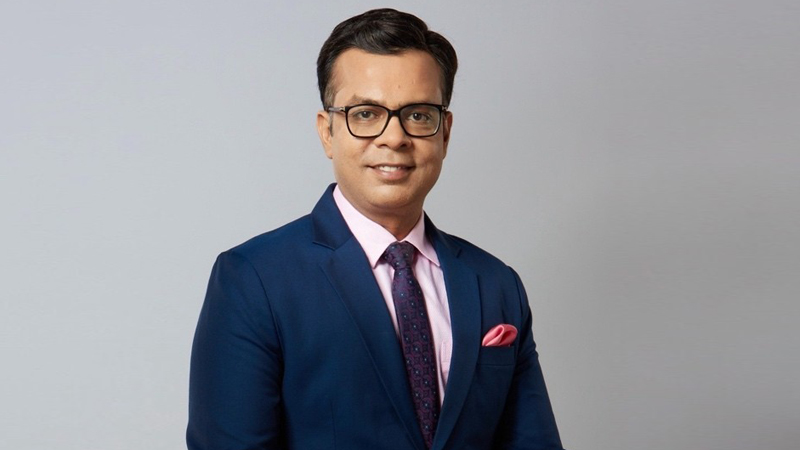
MUMBAI: Anuj Singhal, managing editor at CNBC- AWAAZ and CNBC BAJAR, operates at the sharp end of India’s business news ecosystem. With over two decades in business journalism, he has earned credibility for decoding policy, markets and macro trends for millions of Hindi-speaking investors. Equal parts newsroom leader and market analyst, he shapes editorial direction while anchoring flagship shows that break down the economy, politics and corporate India in real time.
Known for cutting through jargon and hype, Singhal blends data, discipline and clarity — a mix that has made him one of the most trusted voices in Hindi business news.
In this interaction, he discusses the Union Budget, trade deals, newsroom strategy and what truly moves markets and ratings.
• What was the single most market-moving announcement in this Budget, and why?
The most market-moving element was the clear commitment to fiscal consolidation without compromising capex. The glide path on fiscal deficit reassured bond markets and foreign investors, while sustained public investment kept growth expectations intact. That balance removed a big overhang for both equities and debt.
• Do you see this Budget as growth-oriented, fiscally cautious, or politically calibrated?
This Budget is growth-led but fiscally disciplined. It avoids overt populism, stays within macro guardrails, and prioritises medium-term competitiveness over short-term optics. Politically, it is restrained; economically, it is deliberate. The message is clear: stability over spectacle.
• How is CNBC-AWAAZ programming different, especially in decoding trade deal impact?
CNBC-AWAAZ goes beyond headline reaction. We translate policy into portfolio impact — sector by sector, stock by stock.
On trade agreements, our focus is on:
-Earnings visibility
-Export competitiveness
-Currency implications
-Margin sustainability
We don’t treat trade deals as political milestones. We decode them as profit-and-loss events for corporate India and map them to FY earnings trajectories.
• Which sectors look like clear winners and laggards over the next 12–18 months?
The next 12–18 months favour sectors aligned with structural spending and supply-side strengthening.
– Clear beneficiaries:
Capital goods and infrastructure
Manufacturing linked to export chains and PLI ecosystems
Power, defence, and logistics
– Relative laggards:
Consumption segments dependent on immediate demand revival
Businesses facing margin pressure from global volatility or pricing power erosion
This is not a momentum-driven market environment. It is execution-driven. Balance-sheet strength and order visibility will matter more than narrative.
• One headline to sum up this Budget 2026 for India Inc?
“Steady Hands, Long-Term Vision: A Budget That Rewards Discipline Over Drama”.
• What editorial filters do you apply before calling something ‘market-positive’ or ‘negative’?
We apply three structured filters:
– First: Earnings translation — does this materially change earnings visibility or cash flow outlook?
– Second: Time horizon — is the impact immediate, cyclical, or structural?
– Third: Valuation context — good news priced in or not.
If a policy doesn’t move earnings or risk perception, we don’t oversell it.
• How has business news consumption changed around big policy events?**
There has been a clear behavioural shift. They’re less interested in what was said, more in what it means for their money. There’s also a clear shift toward second-screen consumption, with digital platforms complementing live TV. The audience seeks sharper accountability. Viewers no longer accept broad optimism or pessimism — they want frameworks, numbers, and sector mapping.
• CNBC-AWAAZ decisively outperformed on Budget Day. What editorial and distribution choices mattered most?
Three deliberate strategic choices:
– Preparation depth:
We build scenarios months in advance — deficit ranges, sectoral incentives, tax calibrations — so we’re ready with analysis the moment numbers are announced.
– Language of impact:
We translate macro policy into investor-friendly Hindi without diluting complexity. That bridges accessibility and sophistication.
– Integrated distribution:
Television, YouTube, and digital platforms operate as one editorial grid, not parallel silos. This ensures continuity of narrative.We stayed analytical while others stayed reactive.
• How different is your YouTube audience from your TV audience?
The behavioural differences are subtle but important. TV audiences prioritise authority, structured debate, and context. YouTube audiences want speed, clarity, and actionable insights — often sharper, sometimes more opinionated. However, both share one expectation: accuracy. The format evolves; the trust benchmark does not.
• How do you retain viewers after the budget speech ends?
By shifting from announcements to implications.Retention comes from shifting the narrative from announcement to implication. We break down sectoral breakouts, stock-level impact, and what to do next. The speech is just the trigger; analysis is the destination.
• Is Budget Day your biggest traffic day?
It is one of the biggest — but more importantly, it is among the deepest in engagement. Viewers spend longer durations, revisit segments, and seek follow-up programming. That indicates behavioural trust, not just traffic.
• What’s the first thing you personally track on Budget Day — the speech or the markets?
The markets. They’re the fastest truth-teller. The speech explains intent; markets reveal interpretation.
• Your personal Budget-day ritual?
Early morning prep, minimal distractions, and once the speech begins, complete immersion. For me, Budget Day is less about reaction and more about reading between the lines.
• What drove your Budget-day ratings dominance, and how are Budget and trade deals shaping markets now?
Our dominance came from credibility, consistency, and clarity.
As for markets, both the Budget and recent trade deals are reinforcing a narrative of policy stability and global integration, which supports valuations even amid global volatility.
For Singhal, the market is the final judge. Policies can promise and speeches can persuade, but prices reveal what investors truly believe. As India’s investor class grows more informed and more demanding, business journalism is shifting from commentary to calibration. The premium is on clarity, context and credibility. In a landscape flooded with noise, the real edge lies in interpretation. In the end, the markets listen to numbers, not narratives , and Singhal’s craft is helping viewers tell the difference.






