News Headline
Unbundling channel rates a danger to TV ecosystem?

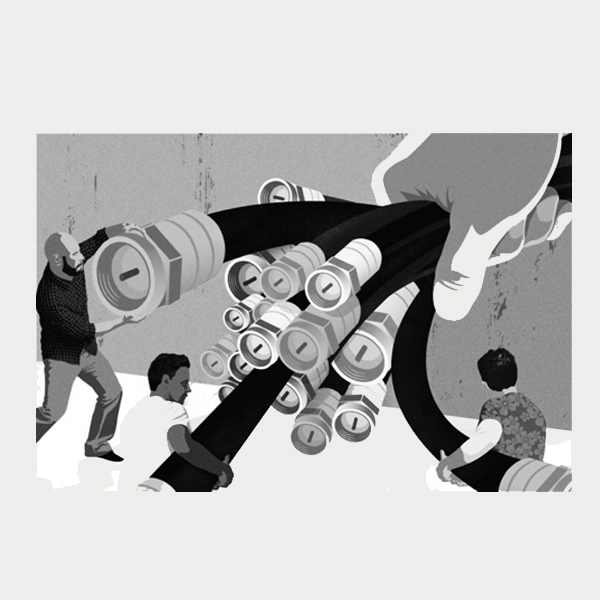
MUMBAI: In the midst of the digitisation process in India, several issues continue to be left unanswered. One such being the matter of unbundling of channels for which the Telecom Regulatory Authority of India (TRAI) issued a consultation paper asking suggestions from stakeholders regarding the same but no decision was reached after that. There is however a rift between MSOs and aggregators on the issue with the MSOs favouring it and aggregators being against it.
The real question is whether or not it will benefit everyone including the broadcasters, MSOs, aggregators and finally the consumer.
 |
A report on the situation in the US by investment banking and asset management firm Needham and Co’s entertainment analyst and MD Laura Martin says, unbundling of cable TV rates could well be a recipe for disaster for all concerned. In the report, Martin has taken a look at the issue from the consumer’s perspective and its consequences for them and for the ecosystem.
Martin’s report reveals that US households pay about $720 per year for 180 channels out of which they watch just 18. Consumers would like to pay $30 per month to watch these 16-20 channels. As compared to this, in India, annual rates are a paltry $30-$60 per annum for anywhere between 120 channels to 200 plus channels.

Martin argues that if consumers wanted to have all 180 channels as a la carte, their annual spending would increase to $1260, i.e, 75 per cent higher than the current price.
 |
Here’s how it goes: cable TV channels in the US generate $56 billion from advertising and $45 billion from subscribers, while pay TV distributors pocket $30 billion, if one goes by last year’s figures. She estimates that if there was unbundling about 124 channels out of these 180 would be wiped out as they would not be in a position to have an average of the 165,000 viewers which Martin estimates are needed to break even on each cable TV channel’s $280 million per annum investment. Her view is that niche channels would simply disappear.
The decrease in channel choices, points out Martin, would also mean that approximately $80 to $113 billion would be lost in consumer value and the government would lose $20 billion in taxes. It will also put the US, which is already dealing with a high unemployment rate of 7.3 per cent in October 2013, at a risk of losing 1.4 million additional jobs.
She also warns that if these 180 channels do not create content that is engaging young Americans in the 18-34 year age group, there might be no traditional linear television left in 10 years. Viewers are resorting to cord-cutting and migrating increasingly to online for their entertainment to services such as Hulu, Netflix, Big Frame, Defy Media, Fullscreen, Machinima, Maker Studios,etc. According to a statistics portal Statistica, 43 per cent of Americans between the ages of 18 and 34 preferred Netflix as compared to 46 per cent of paid subscribers who chose cable.






NEW DELHI: Hamdard Laboratories gathered a cross-section of India’s achievers in New Delhi on Friday, handing out the Hakeem Abdul Hameed Excellence Awards to figures who have left their mark across healthcare, education, sport, public service and the arts.
The ceremony, attended by minister of state for defence Sanjay Seth and senior officials from the ministry of Ayush, celebrated individuals whose work blends professional success with a sense of public purpose. It was as much a roll call of achievement as it was a reminder that influence is not measured only in profits or podiums, but in people reached and lives improved.
Among the headline awardees was Alakh Pandey, founder and chief executive of PhysicsWallah, recognised for turning affordable digital learning into a mass movement. On the sporting front, Arjuna Awardee and kabaddi player Sakshi Puniya was honoured for her contribution to the game and for pushing women’s participation onto bigger stages.
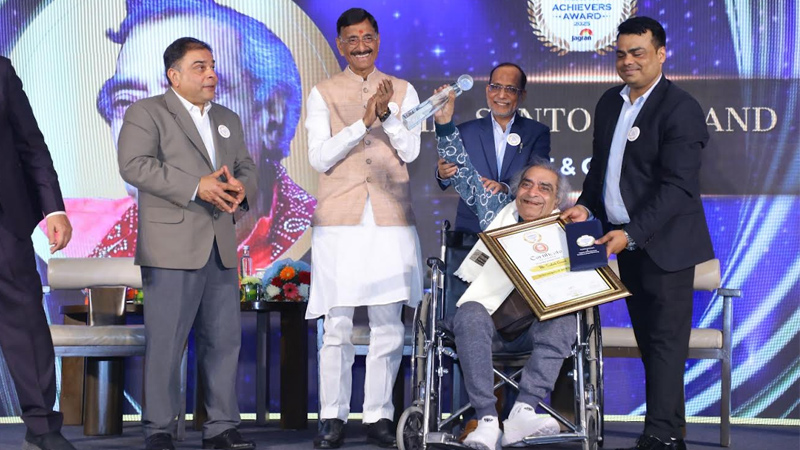
The cultural spotlight fell on veteran lyricist and poet Santosh Anand, whose songs have echoed across generations of Hindi cinema. At 97, Anand accepted the honour with characteristic humility, reflecting on a life shaped by perseverance and hope.
Healthcare honours spanned both modern and traditional systems. Manoj N. Nesari was recognised for strengthening Ayurveda’s place in national and global health frameworks. Padma shri Mohammed Abdul Waheed was honoured for his research-backed work in Unani medicine, while padma shri Mohsin Wali received recognition for his long-standing contribution to patient-centred care.
Education and social development also featured prominently. Padma shri Zahir Ishaq Kazi was honoured for decades of work in education, while former Meghalaya superintendent of Police T. C. Chacko was recognised for public service. Goonj founder Anshu Gupta received an award for his dignity-centred rural development initiatives, and the Hunar Shakti Foundation was honoured for empowering women and young girls through skill development.
The Lifetime Achievement Award went to former IAS officer Shailaja Chandra for her long career in public healthcare and governance, particularly in the traditional systems under Ayush.
Speaking at the event, Hamdard chairman Abdul Majeed said the awards were a tribute to those who combine excellence with empathy. “These awardees reflect Hakeem Sahib’s belief that healthcare, education and public service must ultimately serve humanity,” he said.
Minister Seth struck a forward-looking note, saying India’s young population gives the country a unique opportunity to become a global destination for learning, health and wellness by 2047.
The ceremony also featured the trailer launch of Unani Ki Kahaani, an upcoming documentary starring actor Jim Sarbh, set to premiere on Discovery on 11 February.
Instituted in memory of Unani scholar and educationist Hakeem Abdul Hameed, the awards have grown into a national platform that celebrates those building a more inclusive and resilient India. For one evening at least, the spotlight was not just on success, but on service with substance.






