News Broadcasting
UK govt. panel backs BBC’s licence fee


MUMBAI: A UK panel that is reviewing the future of the BBC has produced a report which suggests keeping the licence fee for 10 more years.
However, the move to digital television and the other technological advances are likely to raise a series of challenges to the continuation of the licence fee in its present form.
In addition, the panel, appointed by UK Culture Secretary Tessa Jowell as a part of the Governments Charter Review, said that the system of BBC governors is outdated and requires change.

The report stated that the new Charter should require the BBC to focus clearly on its core public service broadcasting purpose and the areas where it can generate value for audiences in addition to that provided by the rest of the market. Consistent high quality programming should be evident in characteristics such as rigour, accuracy, balance, fairness and innovation.
The report suggests that the BBC should avoid certain types of copycat programming, or head-to-head scheduling of particular genres of programme. The BBC should be more willing to exit programming which it had originated but which had subsequently become widespread and more of a commodity. An example would be make-over programmes or certain types of game-shows.
The report has noted that the massive expansion of choice of channels would likely to lead to a declining audience share for the main channels that are now free to air. They include BBC1, BBC2, ITV1, Channel 4 and Channel 5. In existing multi-channel homes in the UK this pattern is already clearly evident.
In terms of content that will grow in popularity, the report was of the opinion that general entertainment, films and sport would be watched in greater amounts regardless of whether it is funded by advertising or subscription. By contrast, traditional public service programming will be less well funded, and so less available and watched in smaller amounts. These trends would also imply that the BBC will provide a greater share of traditional PSB programming in the future.
The report has gone on to note that market pressures of a digital media world will lead to greater competition for advertising from other channels.
This is likely to impose greater pressures on ITV and Channel 4 to include in their schedules less “landmark” programming, where the level of investment is not justified by the level of income generated, and more commercially dependable and demographically targeted commodity programming.
UK audiences for broadcast content are likely to change. Society is becoming more fragmented, culturally diverse and the population is ageing. This is likely to lead to demands for more diverse kinds of programming while audiences are likely to become both more fragmented and more sophisticated in their use of a variety of media. Even though the population is ageing, the premium attached by advertisers to programmes appealing to younger audiences is likely to increase.
On the technological front the report notes that the differential value of some content will be further increased by the growing use of personal video recorders, for example Sky +. This gives viewers the ability to organise viewing to suit their own preferences and reduces the impact of scheduling. The ability to skip ads when viewing recorded programmes could also have some important long-term effects on the value of advertising and the economic model of commercial television.





News Broadcasting
CNN-News18 to host Fury in the Gulf conclave on West Asia crisis
Three-hour summit to unpack geopolitical fallout and impact on India
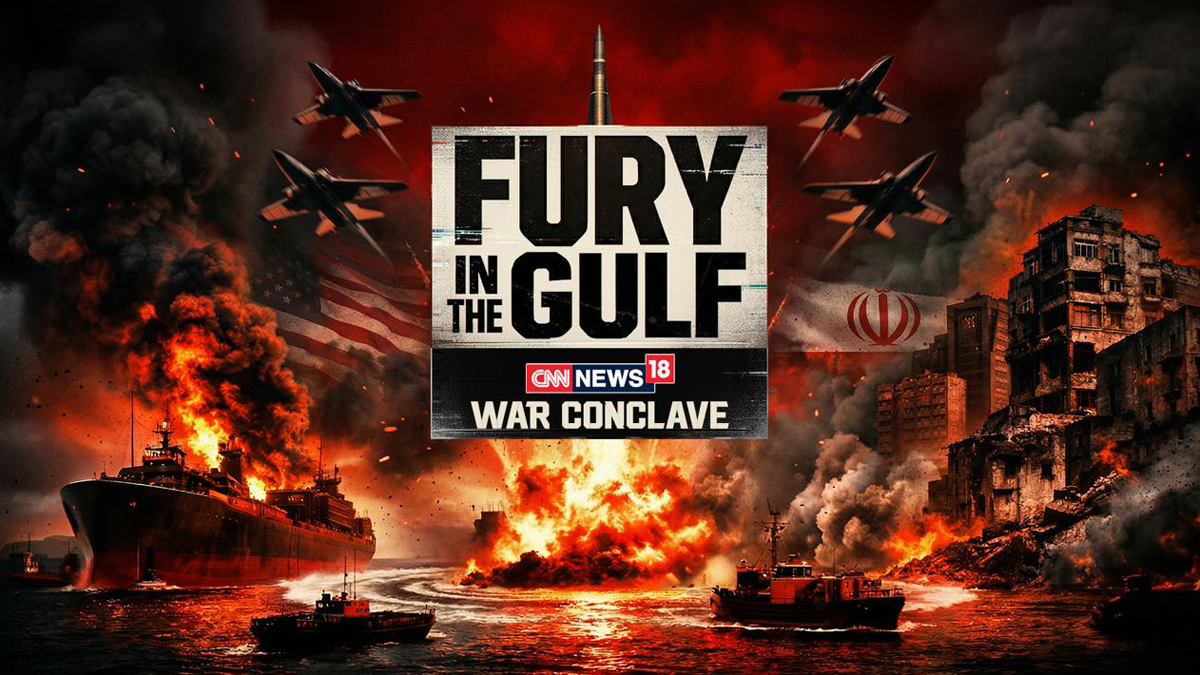
MUMBAI: CNN-News18 is set to host a special three-hour broadcast, Fury in the Gulf – War Conclave, on April 7, aiming to decode the escalating West Asia crisis and its far-reaching implications for India.
Scheduled from 4:00 PM to 7:00 PM, the conclave comes at a time when tensions between Iran and the United States are reshaping global geopolitics and triggering economic uncertainty. With India’s deep energy ties, trade links and large diaspora in the Gulf, the developments carry significant domestic relevance.
Built around the theme ‘Conflict, Consequences, and The Future,’ the programme will feature six curated sessions combining one-on-one interviews and panel discussions. The focus is to cut through the clutter and offer viewers a clearer understanding of the fast-evolving situation.
Key sessions include ‘Diplomacy in Times of War’ featuring Shashi Tharoor, and ‘World After the Iran Conflict’ with voices such as Ram Madhav, Reuven Azar, representatives from the European Union and the Iranian Deputy Envoy. Another session titled ‘Another Dunkirk?’ will bring together K. J. S. Dhillon and Jitin Prasada among others.
CNN-News18 editorial affairs director Rahul Shivshankar said, “In times of war, clarity becomes the most powerful tool. Fury in the Gulf – War Conclave brings together credible voices to address the questions and confusion that arise amid an overwhelming influx of information.”
He added that the initiative is aimed at delivering “facts, perspective, and insight” at a time when misinformation can easily cloud public understanding.
Echoing the sentiment, CNN-News18 CEO– English and business news Smriti Mehra said the conflict marks a defining global moment, with consequences that extend well beyond the region. She noted that the conclave seeks to present the crisis with “depth, nuance and responsibility” so audiences can better grasp its real-world impact.
As geopolitical tensions continue to dominate headlines, the conclave positions itself as an attempt to bring order to the noise, offering viewers a structured, insight-led look at a complex and rapidly shifting global situation.






