e-commerce
UC Ads lends a hand to individual content creators in India


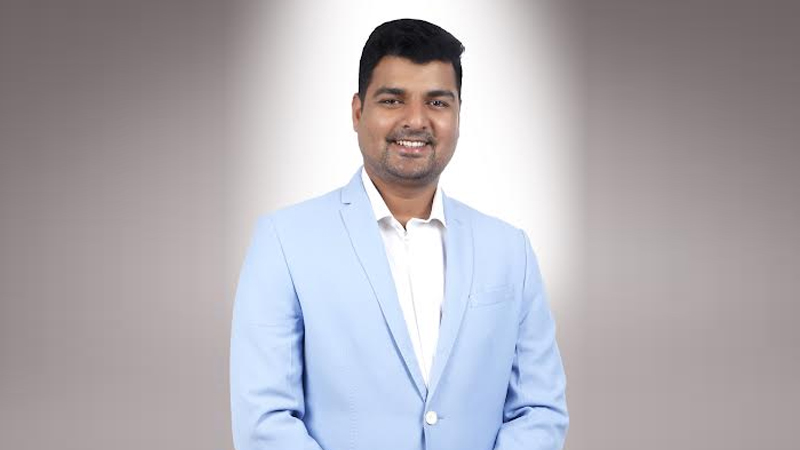
MUMBAI: Mobile marketing in India is no longer a side dish. It’s the entree. Brands know today that they need to invest a good chunk of their marketing budget to mobile ads. Sensing the opportunities in the evolving market, Alibaba Mobile Business group’s UCWeb launched innovative mobile marketing platform, UC Ads, last year. Alibaba UC Ads general manager Morden Chen, in an interaction with Indiantelevision.com spoke about business strategy and differentiated features of the platform.
While UCWeb is an integral part of the Jack Ma led e-commerce giant’s strategy, it offers three core products including UC Browser, UC News, 9 Apps. Explaining how UC Ads is increasing its reach in India, Chen mentioned that it’s correlated with its overall product strategy.
“Our product strategy is to serve another half of the global users who are just getting started for mobile internet. Users who just got their new Android phone, who just started mobile internet, can explore this interesting mobile world through our browser, a product with newsfeed and app store,” he said. On the back of huge consumer base it has already created with existing products, UC Ads can help brands with the insights for targeted advertising.

Talking about the clients, Chen said almost every e-commerce player and phone manufacturer are currently working with them including Amazon, Oppo, Vivo, Honor and Lava.
After being in the Indian market for almost one year Chen says, “This market is rapidly growing. From my perspective, it will grow even faster due to new phone adaptations. It’s a booming market which I think will continue to boom in the next 10 years.” Interestingly, according to KMPG 2018 annual report, mobile advertisements are expected to grow from Rs 34.5 billion in FY17 to 304.5 billion in 2023 at a 43.8 per cent CAGR.
“Before 2013-14, it was small. Around 2015, it’s getting more and more attention. Advertisers also want to invest, try and experiment in the sector. With more resources coming in it will get better. Mobile has many advantages that traditional players lack. Location-based, device based tracking is super easy compared to TVC. It has huge potential,” he added further.
According to him, Indian online video space is full of long-form ads which are similar to TVC. On a different line, it is focusing more on short-form video created by individuals or small studios or individuals who want to have a studio and individual bloggers. It will mix official media content with articles from bloggers who have a deep understanding of something particular. “We want to let their articles also be viewed by users,” he added.
While Chen was asked about competitors, he said everyone would mention those “two big guys” but he would not do so. According to him, the ever-interesting advertisement space is full of “feminies” (friends and enemies). If someone does better in one front, a competitor can do in another. According to him, working together will help everyone. The real challenges are fast adaptation, better infrastructure and 4G quality for seamless user experience.
Talking about the Indian market, Chen also highlighted the necessity of good market research. Many internet startups came into India thinking it would be easy to monetise the product with the huge population. While getting users is not difficult, making the venture profitable is the real challenge.
“We want to stay here, grow with the market and align with the local players,” Chen concluded. Currently, while UC Ads is present in India, Indonesia, Russia, the product may be available soon in Vietnam.



e-commerce
Flipkart rolls out 105 per cent bonus for 20,000 employees
Strong FY25 performance drives payouts even as layoffs and shifts unfold.

MUMBAI: In a year where belts were tightened and rewards loosened, Flipkart seems to be playing both offence and defence trimming roles on one hand while handing out a generous 105 per cent bonus on the other. The Walmart owned e commerce major has rolled out a 105 per cent bonus payout for 2025, covering nearly 20,000 employees, signalling a year of steady operational momentum even as the company navigates restructuring pressures. The payout, communicated internally by chief human resources officer Seema Nair, is tied to performance across key metrics including growth, operational efficiency, financial outcomes and people indicators, a combination that suggests the company is inching closer to its long stated goal of sustainable profitability.
Employees at SD level and below are set to receive their bonuses in March, while payouts for senior leadership, including vice presidents and senior vice presidents, will follow after the close of the performance cycle. The elevated 105 per cent multiplier stands out in a sector where cautious payouts have increasingly become the norm, pointing to what appears to be a relatively strong internal scorecard for FY25.
Yet, the announcement arrives with a noticeable contrast. Earlier this year, Flipkart reduced its workforce by around 300 roles as part of its annual performance review process. While officially framed as performance driven, the juxtaposition of layoffs alongside above target bonuses reflects a more nuanced balancing act, one that prioritises cost discipline while continuing to reward and retain high performing talent.
This dual approach is becoming increasingly common across the technology and e commerce landscape, where companies are navigating an uneven hiring environment while under pressure to deliver profitability. Rewarding top contributors, even amid selective workforce reductions, allows firms to maintain morale and retain critical talent without losing sight of financial prudence.
At the same time, Flipkart is also undergoing leadership shifts that hint at a broader strategic recalibration. Nishant Verman has been appointed senior vice president for corporate development and partnerships, while group chief financial officer Sriram Venkataraman is set to step down. Ravi Iyer will take on expanded responsibilities within the finance function, marking a reshuffle at the top as the company gears up for its next phase.
These changes come amid reports that Flipkart is planning to shift its holding structure back to India, a move widely interpreted as groundwork for a potential public listing. While timelines remain fluid, the combination of stronger financial discipline, leadership restructuring and employee incentivisation suggests a company preparing itself for greater scrutiny and scale.
For employees, the 105 per cent payout offers a welcome boost in what has otherwise been a period of adjustment. For Flipkart, it is a signal that even as it cuts where necessary, it is willing to spend where it counts. In the high stakes game of growth versus profitability, the company appears to be hedging its bets carefully, rewarding performance while reshaping itself for what could be its most defining chapter yet.






