I&B Ministry
Two open house meetings every month to speed channel licence clearance

NEW DELHI: The new government at the centre certainly seems to be taking the issue of channel licence clearance very seriously. To clear the long list of pending applications for new TV channels, the Information and Broadcasting (I&B) Ministry has decided to hold open house meeting with stakeholders twice a month, as against the earlier practice of one meeting a month.
The next meeting is slated for 18 July in Shastri Bhavan, the main office of the Ministry. Stakeholders have been asked to send, in advance, the information they require, so that these can be supplied to them at the meeting.

It is understood that almost a hundred applications are pending for clearance at various stages either with the I&B Ministry, Home Ministry or the Department of Telecom.
Furthermore, the coming into force of the code of conduct in April this year prevented clearance of any new channels and therefore the number of channels which was 795 at the end of May remained the same at the end of June.
A large number of new applications including those by Media Content and Communications Services (MCCS) that runs the ABP group of channels, Star India for its second Tamil channel, and Epic TV are pending.
The only change was that the number of news and current affairs channels went up by two to 395 and the number of non news and current affairs channels came down by the same number to 400.
The first four months of 2014 saw licences being given to nine channels including AXN HD and SET HD.
The Ministry also placed on its website the names of the companies which own these channels, the language, and the date when permission was granted.

I&B Ministry
Digital radio, D2M tech set to reshape broadcasting and public messaging
Govt pushes next-gen delivery while TRAI tightens grip on spam ecosystem
NEW DELHI: India’s broadcasting and telecom landscape is undergoing a quiet but significant upgrade, with digital radio and Direct-to-Mobile (D2M) technologies emerging as powerful tools for mass communication, while regulators step up efforts to tackle spam calls.
According to the Ministry of Information and Broadcasting, digital radio and D2M are poised to transform how content reaches audiences by making more efficient use of spectrum. In simple terms, multiple channels can now be delivered over a single frequency, opening the door to a wider range of free-to-air content.
D2M technology takes this a step further by enabling video, audio and data to be broadcast directly to mobile handsets without relying on SIM cards or mobile data. The result is a resilient and cost-effective data pipe that can deliver everything from entertainment and education to critical emergency alerts, even in low-connectivity scenarios.
At the same time, the Telecom Regulatory Authority of India is tightening its grip on unsolicited commercial communication, better known as spam calls. The regulator has deployed a distributed ledger technology platform to bring transparency and accountability into the system.
Through this blockchain-based setup, consumers can register their preferences on receiving promotional messages, while businesses and telemarketers must also sign up and operate within defined rules. The platform also includes a complaint mechanism that allows users to report spam, with complaints shared across telecom operators for coordinated action.
The government’s broader push is being supported by infrastructure upgrades under the Broadcasting Infrastructure and Network Development scheme. Implemented through Prasar Bharati, the initiative focuses on modernising networks such as Akashvani and Doordarshan, including digitisation and adoption of next-generation broadcast equipment.
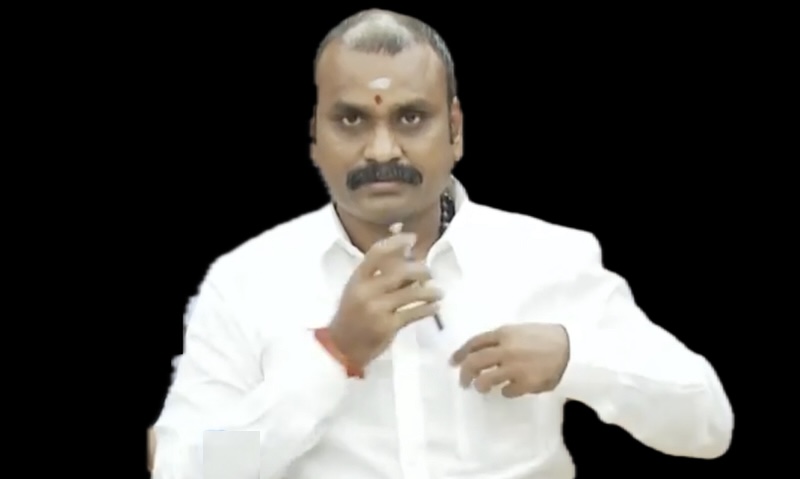
In a written reply in the Lok Sabha, Ministry of Information and Broadcasting minister of state for information and broadcasting L. Murugan said these steps are part of a larger effort to promote emerging technologies and strengthen the country’s broadcasting backbone. The response came to a query raised by member of Parliament Rao Rajendra Singh.
Together, these developments point to a dual-track strategy: expanding access to reliable, low-cost content while cleaning up the communication ecosystem. As digital pipes get smarter and spam filters sharper, India’s airwaves may soon feel a lot less noisy and far more useful.






