News Broadcasting
TVU Networks levels up Kumbh Mela coverage with game-changing tech!

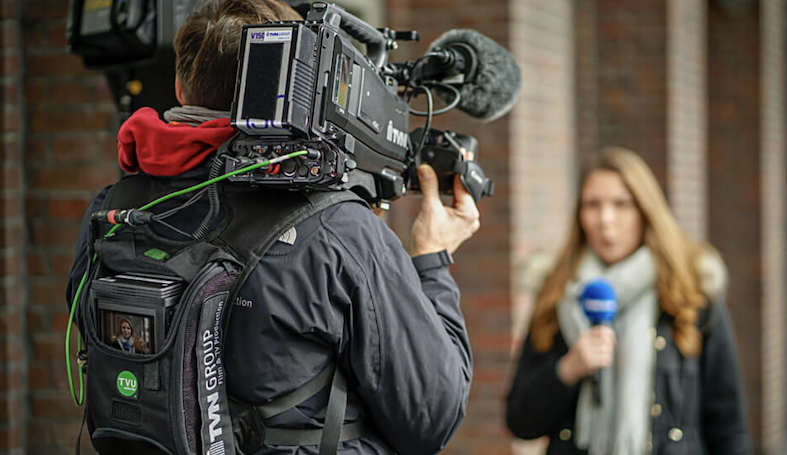
MUMBAI: Imagine a sea of 450 million devotees, converging at the sacred confluence of the Ganges, Yamuna, and Saraswati rivers, all seeking spiritual awakening—and now, imagine broadcasting that spectacle live, without a hitch. TVU Networks has done just that.
This year’s Maha Kumbh Mela, held in Prayagraj, India, from 13 January to 26 February 2025, posed an Everest-sized challenge to broadcasters. The sheer scale of the event—hordes of pilgrims, signal-clogging mobile devices, and unpredictable terrain—demanded a broadcasting solution as powerful as the festival itself. TVU Networks delivered, deploying a trifecta of game-changing technologies that ensured seamless live coverage despite massive network congestion and rugged conditions.
Three powerhouse solutions

1. TVU One backpacks – Mobile Mastery TVU’s field teams wielded TVU One backpacks, transforming even the busiest bathing ghats into makeshift studios. Featuring TVU’s patented Inverse StatMux Plus (IS+) transmission technology, HEVC format smart VBR encoding, and Forward Error Correction (FEC), these power-packed units enabled reporters to transmit crystal-clear video—even in the heart of the most crowded ritual sites.

2. TVU MLink transmitters – The Network Workhorses Broadcasting from a moving sea of people? No problem. TVU MLink transmitters, housed in strategically positioned broadcast vehicles, flexed their multi-network muscles, seamlessly aggregating 5G, 4G, Wifi, and ethernet. These high-tech hubs ensured rock-solid signal stability, even when millions of mobile devices strained the airwaves.

3. TVU Rack router 5G – The Ultimate Command Centre Temporary studios at Kumbh Mela ran on TVU Rack Router 5G, a six-network behemoth supporting speeds up to one gbps. By integrating satellite, microwave, Wifi, and ethernet into one rock-solid connection, it provided reliable internet access, keeping production teams fully equipped and on-air.

“We are incredibly proud to provide the technological backbone for broadcasting this historic spiritual gathering,” said TVU Networks general manager for south Asia, Subodh Aggarwal. “Our solutions were specifically designed to tackle the unique challenges of the Kumbh Mela—from massive network congestion to the need for both mobile and fixed broadcasting positions. The successful implementation showcases our commitment to delivering reliable, cutting-edge broadcasting solutions even in the most demanding environments.”
This achievement cements TVU Networks’ position as an industry leader in live broadcasting. The Maha Kumbh Mela 2025 was not just a test of faith for the devotees—it was a trial by fire for media technology, and TVU Networks emerged victorious, setting a new gold standard for large-scale event coverage in India and beyond.






News Broadcasting
UDF poised to return to power in Kerala, says Manorama-CVoter survey
Massive opinion poll projects shift in Kerala politics ahead of 2026 Assembly elections.
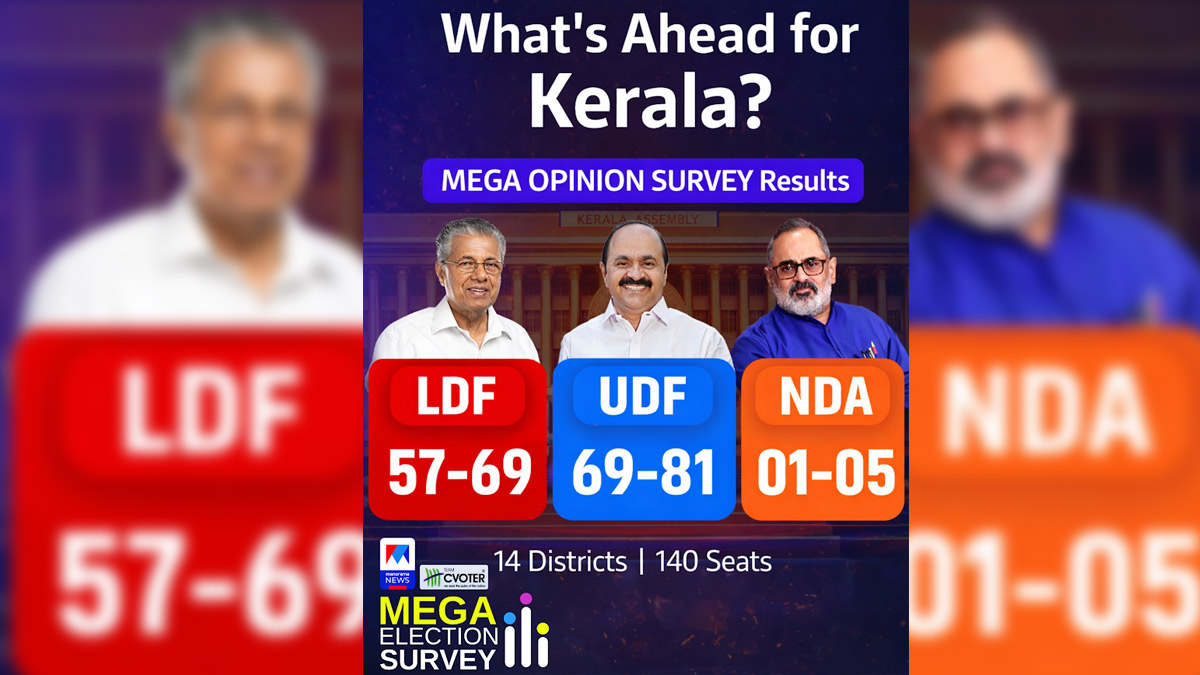
MUMBAI: The winds of change appear to be blowing through Kerala’s political landscape and this time, they seem to favour the United Democratic Front. A comprehensive mega opinion survey conducted by Manorama News in partnership with CVoter projects a potential comeback for the UDF in the upcoming Kerala Legislative Assembly Elections 2026. The survey, covering all 140 constituencies with a massive sample size of nearly 90,000 respondents, predicts the UDF could win between 69 and 81 seats.
The ruling Left Democratic Front (LDF) is expected to secure 57 to 69 seats, a significant drop from the 99 seats it won in the 2021 elections. This would mean the LDF losing 30 to 42 of its sitting seats. Meanwhile, the National Democratic Alliance (NDA), which drew a blank in 2021, is projected to open its account with 1 to 5 seats.
Region-wise, the UDF is expected to make strong gains in Malabar, winning 25 to 34 out of 48 seats, and in Central Kerala, where it could bag 29 to 33 out of 53 seats. In South Kerala, the LDF is likely to retain an edge with 21 to 25 seats, while the UDF may improve to 12 to 16 seats. The NDA could pick up 1 to 3 seats in the southern region.
The survey was conducted between 14 and 26 March 2026, with additional tracker and snap polls carried out from December 2025 to March 2026. A total of 89,693 respondents participated, ensuring representation across all demographics and social segments.
Manorama News has a strong track record of accuracy, with its previous projections closely matching the actual results of the 2019 and 2024 Lok Sabha elections as well as the 2021 Kerala Assembly polls.
In Kerala’s famously fierce political battles, this survey suggests the pendulum may be swinging back. Whether the final verdict matches these numbers or throws up another surprise, one thing is clear, the 2026 Assembly elections are shaping up to be one of the most keenly watched contests in the state’s history.






