News Broadcasting
TV18’s Avinash Kaul on bringing the local Indian flavour to infotainment genre

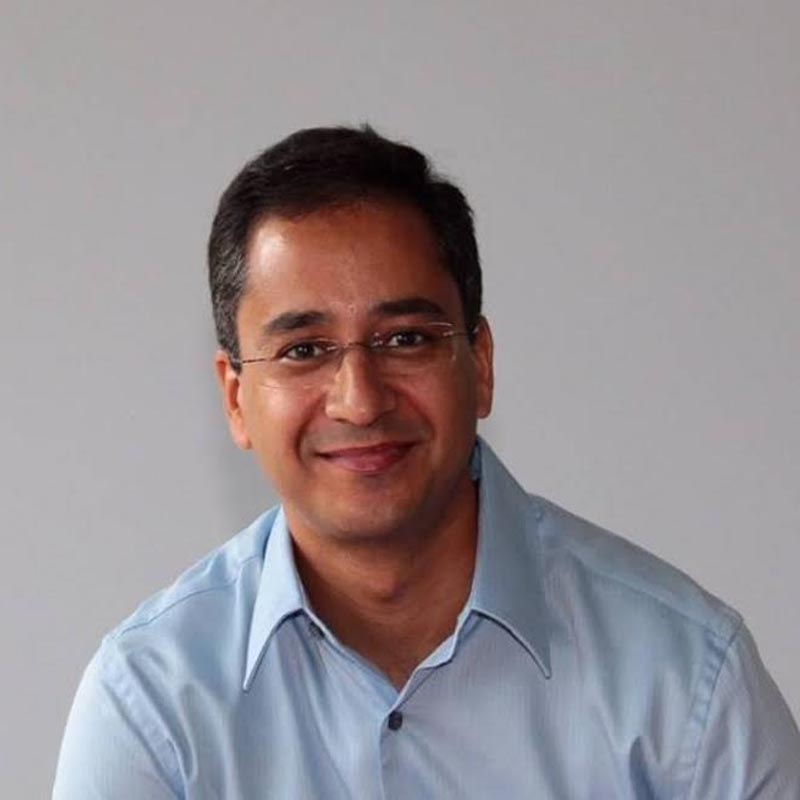
MUMBAI: Capturing viewers’ interest with shows on issues of contemporary, local significance like surgical strikes, national elections, Ganesha festivals, marvels and mysteries of India – that’s how History TV 18 aims to stand out in the niche segment of infotainment channels in India.
The channel has traversed the length and breadth of the country to bring season seven of its stand-out show, OMG! Yeh Mera India. Showcasing everything from bizarre foods and strange rituals to unexplained phenomena and rare talents that make this country Incredible India, the show has made a mark on audiences; and the new season is shaping up to be just as fascinating, featuring some more curious and extraordinary true stories from every corner of the nation.
In freewheeling chat with indiantelevision.com’s Shikha Singh A+E Networks | TV18 MD & Network18 CEO Avinash Kaul shared the success story of OMG! Yeh Mera India, cracking the Indian infotainment space, viewers’ tastes, advertiser interest, and more.

On what sets OMG! Yeh Mera India season 7 apart.
The very fact that this is the seventh season, itself narrates its success story. It was a year-long process to shoot OMG! Yeh Mera India. We have travelled across India to curate stories. There is not one state that we have not done a story out of. From a standpoint of a viewer, it is our flagship property which has always delivered good ratings. Over the past five years, 18 crore people have watched this show. The digital impressions are 550 crores, with 84 crore views on digital platforms. These kinds of motivating stories remain on social media all throughout the year. They are regular people who are creating history every day and that is what HistoryTV18 stands for. I believe this is what has made it popular amongst viewers and advertisers.
On how big the audience for factual entertainment in India is.
Till about the NTO came in, HistoryTV18 would reach more than 100 million households. Basically this was the footprint that was available on distribution. As measured by BARC, we have 18 crore people who have watched this show on our channel. It is equivalent to what number one or two Hindi news channels would be. Those are the kind of numbers that factual entertainment typically delivers. Of course, the numbers have suffered after the implementation of NTO. But it also lends to the power of subscription, people would need to pay for watching this kind of content. I believe that is where business models eventually will pivot. While you may find a lot of English entertainment on OTT, you won’t find a lot of factual entertainment content. Hence, there is a bigger audience for India originals.
On audience preferences evolving.
In today’s time, viewers are exposed to a plethora of content. They have a finite amount of time, and just because 100 channels will be launched does not mean people would spend 100 minutes extra on television. They have a choice of OTT, linear television, social media and more such platforms. As and where our audiences go, we would like to make our content available to them. We are constantly working towards creating India originals and that is what has made us beat our own competition in this space.
On growth in terms of revenue.
The year 2020 has been challenging, in terms of revenue. Businesses across the globe have suffered. Ad-volumes have de-grown massively. Especially during the first and the second quarter, there was a huge drop in volumes. Things have started picking up from the third quarter onwards.
On ad-rates for documentaries of such nature.
For India originals, there are premiums rates associated with all the shows. So, it doesn’t operate at a normal rate because obviously it is produced locally in India. Our sponsors have supported us with that, and this year was no different, we do have a substantially higher premium than usual for India’s originals.
BYJU’S is the title sponsor, HAVELLS is the co-presenting sponsor and LIC is the associate sponsor. Advertisersare always very keen to associate with the positive narrative that we as a channel are bringing to the table.
On competition in this space.
We compete in a genre where there are quite a few players, we don’t necessarily have survival content in our programming. Our emphasis has always been strategically on India content and we are continuously doing India-based content for the last seven years. Unfortunately, our competitors who have been in the country for more than 30 years haven’t really concentrated on local India production. It would be great having such shows across competition as proper franchises.
On plans to licence OMG! Yeh Mera India and other originals to OTTs.
So, far we have been conscious enough to put it out on our own platforms and work with that but going forward we are fairly open to the idea of licensing our shows on other platforms. The challenge is that on streaming platforms the focus is not yet on factual content, it is still on crime, thriller, horror or something which is bold in nature. OTT in India is still in infancy. But if we see international platforms in developed countries, there is a deeper wave of engagement where people look out for this kind of content. I believe in the next few years we will see the maturity of that industry coming in. With the new regulations also in place, we will see more of factual entertainment content as well on OTT. It would be a very welcome move.




News Broadcasting
Induction cooktop demand spikes 30× amid LPG supply concerns
Supply worries linked to West Asia tensions push households and restaurants to turn to electric cooking alternatives
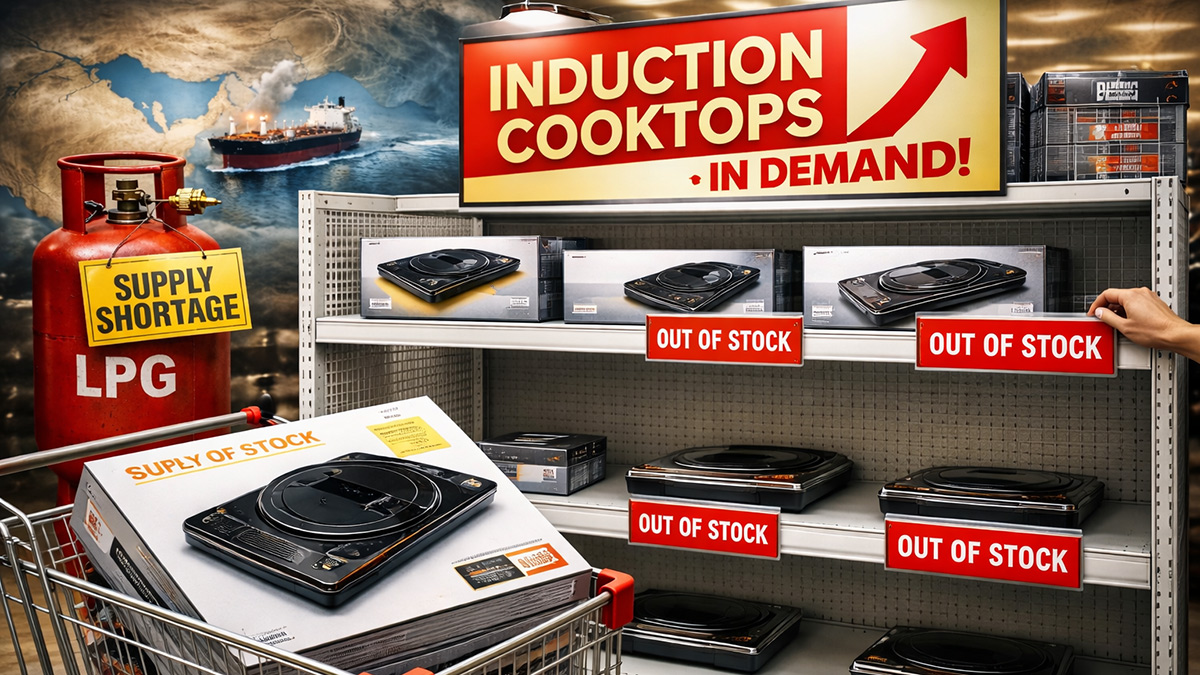
MUMBAI: As geopolitical tensions in West Asia ripple through global energy supply chains, the familiar blue flame in Indian kitchens is facing an unexpected challenger: electricity.
What began as concerns over the availability of liquefied petroleum gas (LPG) has quickly evolved into a technology-driven shift in cooking habits. Households across India are increasingly turning to induction cooktops and other electric appliances, initially as a backup but now, for many, a necessity.
A sudden surge in demand
Recent data from quick-commerce and grocery platform BigBasket highlights the scale of the shift. According to Seshu Kumar Tirumala, the company’s chief buying and merchandising officer, demand for induction cooktops has risen dramatically.
“Induction cooktops have seen a significant surge in demand, recording a fivefold jump on 10 March and a thirtyfold spike on 11 March,” Tirumala said.
The increase stands out sharply when compared with broader kitchen appliance trends. Most appliance categories are growing within 10 per cent of their typical demand levels, while induction cooktops have witnessed explosive growth as households rush to secure an alternative cooking option.
Major e-commerce platforms including Amazon and Flipkart have reported rising searches and orders for induction stoves. Quick-commerce apps such as Blinkit and Zepto have also witnessed stock shortages in major metropolitan areas including Delhi, Mumbai and Bengaluru.
What was once considered a convenient appliance for hostels, small kitchens or occasional use has suddenly become an essential addition in many homes.
A crisis thousands of miles away
The trigger for this shift lies far beyond India’s kitchens.
Escalating conflict in the Middle East has disrupted shipping routes through the Strait of Hormuz, one of the world’s most critical energy corridors. Nearly 85 to 90 per cent of India’s LPG imports pass through this narrow waterway, making the country particularly vulnerable to supply disruptions.
The ripple effects have been swift.
India currently meets roughly 60 per cent of its LPG demand through imports, and tightening global supply has already begun to affect domestic availability and prices.
Earlier this month, the price of domestic LPG cylinders increased by Rs 60, while commercial cylinders rose by more than Rs 114.
To discourage panic buying and hoarding, the government has also extended the mandatory waiting period between domestic refill bookings from 21 days to 25 days.
Restaurants feel the pressure
The strain is not limited to households. Restaurants, hotels and roadside eateries are also grappling with supply constraints as commercial LPG availability tightens under restrictions imposed through the Essential Commodities Act.
In cities such as Bengaluru and Chennai, restaurant associations report that commercial LPG availability has dropped by as much as 75 per cent, forcing many establishments to rethink their kitchen operations.
Some restaurants have reduced menu offerings, while others are rapidly installing high-efficiency induction systems, creating hybrid kitchens where electricity now shares the workload with gas.
For smaller eateries and roadside dhabas, the shift is less about sustainability and more about survival.
A potential structural shift
The government has maintained that there is no nationwide LPG crisis and has directed refineries to increase production to stabilise supply.
Nevertheless, the developments of March 2026 may already be triggering a longer-term behavioural shift.
For decades, LPG has been the backbone of cooking in Indian households. However, recent disruptions have highlighted the risks of relying on a single fuel source.
Increasingly, households appear to be hedging against uncertainty by adopting electric cooking options to guard against price volatility and delivery delays.
If the current trend continues, the induction cooktop, once viewed as a niche appliance, could emerge as a quiet symbol of India’s evolving kitchen economy.







