News Broadcasting
TV18 Group is now Network18; unveils logo

MUMBAI: TV18 Group is rechristened as Network18. The new branding will unify all current and future entities of the TV18 Group under a single umbrella.
Existing companies such as TV18, GBN, Web18, Homeshop18, Viacom18, Studio18 and Events18 will reflect the new corporate identity.
The Group will also don a new logo which is red and white in colour. “The logo reflects the company’s brand identity which is a window to an ever-changing world in addition to connoting the stature and ambitions of the emerging global media corporation,” the company said in a statement.

Commenting on the new branding, Network18 managing director Raghav Bahl said, “We have come a long way since TV18 began in 1992 as a small production house. From television news to filmed entertainment, Network18 leaves little untouched and unconquered, thus taking it a step closer to becoming the undisputed media mega brand! Despite our rapid growth and diversification, the one thing that has not changed, is our vision to be ‘better than the best’ and to continuously set new standards in this fast growing industry.”
Added Network18 Group CEO Haresh Chawla, “Network18 has built some of the most enviable media brands and audience franchises in India and we continue to work aggressively towards building India’s finest truly multi-platform media conglomerate. The new Network18 identity unites our over 3000 strong team and operations with a common set of values and aligns them behind a common purpose. The unified identity will help us harness the power of our individual brands and build an even stronger relationship with all our stakeholders. It is an exhilarating moment for all of us.”
Network18 Group COO B Sai Kumar said, “Network18 embodies all the attributes of a start-up and combines it with the power to enable, enlighten and entertain every Indian. Over the past decade, the Group has been able to empower more than 80 million Indians. The re-energised entity will aim to reach out to a much larger audience in India and globally. In the process, we also hope to make Network18 the first truly Indian, global media company.”







News Broadcasting
CNN-News18 to host Fury in the Gulf conclave on West Asia crisis
Three-hour summit to unpack geopolitical fallout and impact on India
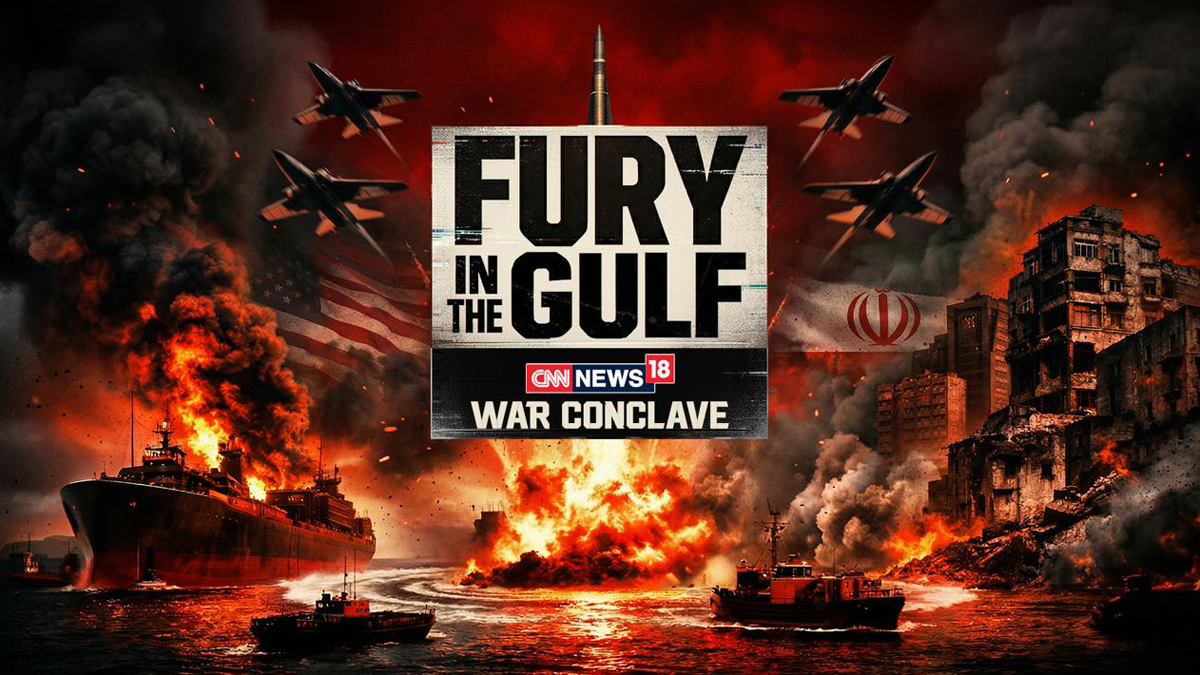
MUMBAI: CNN-News18 is set to host a special three-hour broadcast, Fury in the Gulf – War Conclave, on April 7, aiming to decode the escalating West Asia crisis and its far-reaching implications for India.
Scheduled from 4:00 PM to 7:00 PM, the conclave comes at a time when tensions between Iran and the United States are reshaping global geopolitics and triggering economic uncertainty. With India’s deep energy ties, trade links and large diaspora in the Gulf, the developments carry significant domestic relevance.
Built around the theme ‘Conflict, Consequences, and The Future,’ the programme will feature six curated sessions combining one-on-one interviews and panel discussions. The focus is to cut through the clutter and offer viewers a clearer understanding of the fast-evolving situation.
Key sessions include ‘Diplomacy in Times of War’ featuring Shashi Tharoor, and ‘World After the Iran Conflict’ with voices such as Ram Madhav, Reuven Azar, representatives from the European Union and the Iranian Deputy Envoy. Another session titled ‘Another Dunkirk?’ will bring together K. J. S. Dhillon and Jitin Prasada among others.
CNN-News18 editorial affairs director Rahul Shivshankar said, “In times of war, clarity becomes the most powerful tool. Fury in the Gulf – War Conclave brings together credible voices to address the questions and confusion that arise amid an overwhelming influx of information.”
He added that the initiative is aimed at delivering “facts, perspective, and insight” at a time when misinformation can easily cloud public understanding.
Echoing the sentiment, CNN-News18 CEO– English and business news Smriti Mehra said the conflict marks a defining global moment, with consequences that extend well beyond the region. She noted that the conclave seeks to present the crisis with “depth, nuance and responsibility” so audiences can better grasp its real-world impact.
As geopolitical tensions continue to dominate headlines, the conclave positions itself as an attempt to bring order to the noise, offering viewers a structured, insight-led look at a complex and rapidly shifting global situation.






