Connect with us

News Broadcasting

TV18 acquires Crisil MarketWire

Published

on

MUMBAI: Raghav Bahl-promoted Television Eighteen Group is on an acquisition spree. Having gobbled up several internet firms, the company is now acquiring the assets of Crisil MarketWire (CMW), a financial news wire service from Crisil Ltd, for an undisclosed amount.

The CMW business will be rechristened NewsWire18 Pvt LTD and will be a group company of the TV 18 Group. The transfer will take effect from 1 January. This follows the earlier decision of CRISIL and TVI8 to jointly develop a framework for business collaboration.

CMW will transform itself from a real-time financial newswire into an integrated information terminal, targeted initially at the domestic market. “This transfer will further enhance CMW’s capability to meet customer demand for a good quality, locally-focused real-time news and data product that meets all the needs of financial market participants in India. The TV 18 Group is committed to grow the news and the information terminal business,” the company said.

Advertisement

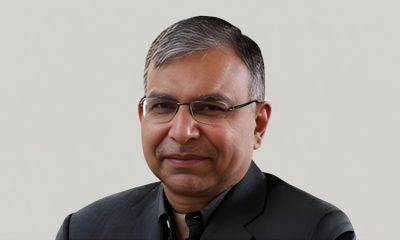
The old team will be retained and Crisil MarketWire Ltd. CEO Pankaj Aher will continue to head the business. “The new venture will carry with it all the staff of CMW across all locations and functions,” TV18 confirmed.

Commenting on the acquisition, Bahl said: “The strategic fit that the newswire business will provide to our existing business will create tremendous shareholder value. This acquisition marks an important milestone in our journey towards becoming a more integrated news company.”

Added Television Eighteen Group CEO Haresh Chawla, “We are very pleased to have the CMW business on-board and are committed to help it grow to its rightful potential. This transaction and the news and data platform complements our leadership brands in the financial news and information space and will help us extend our dominance to the institutional segment and serve it better.”

Advertisement

The news business will have its own real-time market data and news terminal that is sourced from Tenfore Systems Ltd. Founded in 1989, Tenfore has direct end users in more than 60 countries, and boasts over 500 corporate clients including HSBC, ING and Rabobank and 45 wholesale / redistribution clients including Thomson Financial and GFI.

Tenfore is head quartered in the UK, with offices in Germany, The Netherlands, and Switzerland.

Advertisement
Click to comment

Leave a Reply

Your email address will not be published. Required fields are marked *

News Broadcasting

Newsrooms rethink AI, trust and revenue models

Editors and tech leaders debate tools, deepfakes and viability.

Published

on

MUMBAI: If yesterday’s newsroom ran on caffeine and chaos, tomorrow’s may well run on code but with a human still holding the pen. At the 22nd edition of the Video Broadcast and Broadband Tech Summit hosted by IndianTelevision.com, some of the sharpest minds in Indian media gathered to examine how artificial intelligence, automation and shifting audience behaviour are reshaping journalism. The session, titled The Newsroom of Tomorrow Tools, Trust, and Business Viability In Focus, did not descend into techno-utopian hype. Instead, it wrestled with a more uncomfortable question: how do you stay relevant, credible and profitable when the audience is changing faster than the headline cycle?

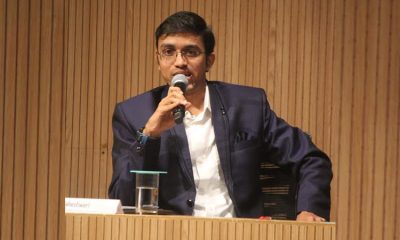
The panel featured Govindraj Ethiraj, Editor of The Core, Dr Nilesh Khare, COO of Sakal Media Group; Prakaran Tiwari, Chief Executive Producer at NDTV Profit; Manoj Padmanabhan, Head of Business Media and Entertainment at AWS; Neeraj Mishra, Key Account Manager at Vizrt and session chair; and Mayuresh Konnur, Bilingual Correspondent at Collective Newsroom, publisher for BBC in India.

Govindraj Ethiraj set the tone with a frank assessment. “The reason people do not consume as much news through us is because they are consuming news through other sources they trust more,” he said. In a fragmented ecosystem flooded with content, trust has become the real differentiator.

Advertisement

Yet AI is undeniably transforming workflows. Ethiraj admitted he now uses AI tools to proofread his own articles. “Sometimes it is scary how much it picks, but it helps,” he said. What once required layers of sub-editing can now be assisted by machines trained to flag errors, inconsistencies and structural weaknesses.

He pointed to how newsroom roles have evolved. The desk editor, widely advertised over the last 15 years, barely existed in its current form before the internet boom. As digital publishing accelerated, tasks such as curating listicles, ranking stories and optimising headlines became specialised functions. Now, many of those responsibilities can be performed or at least supported by AI systems. The disruption is not hypothetical; it is operational.

Dr Nilesh Khare approached the issue from both a business and technological standpoint. Sakal Media Group is developing its own large language model, built on 60 years of text and photo archives. The goal is independence. “We won’t need to depend on other platforms to develop ours,” he said, underscoring the strategic value of proprietary data.

Advertisement

For Khare, AI represents opportunity as much as anxiety. It can help expand content across geographies and languages, particularly in bridging North and South Indian markets. It can streamline production and reduce costs. He did not shy away from the implications. “As a journalist I feel bad but as a content producer I feel good that we will require less manpower,” he said, articulating a tension many in the room recognised but few openly admit.

He also highlighted how audience behaviour is evolving. Today, a retail investor can follow a stock using Gemini or GPT instead of toggling between multiple news channels. News is no longer consumed linearly; it is queried, personalised and synthesised. The newsroom must therefore produce content that survives not just on screens but within AI-generated summaries.

Prakaran Tiwari offered a more philosophical reflection. “AI has developed itself and adapted on the basis of how news is consumed. It’s all about giving a perspective,” he said. In his view, the competitive edge will not lie in speed alone but in interpretation. Facts are increasingly commoditised; context is not.

Advertisement

He also suggested that formats are fluid. While short-form video dominates social feeds, long-form audio is resurging. Govindraj Ethiraj noted that in the United States the 2024 election was described as the “podcast election”, reflecting how audiences are investing time in deeper, long-form discussions. The newsroom of tomorrow must cater to both scrolling and sustained listening.

Manoj Padmanabhan of AWS reframed the debate. Technology, he argued, is not an existential threat but an amplifier. “The power is given to the human journalist with all this technology in their hand, with it acting as a support or assistant to deliver the correct and relevant news to the people,” he said.

The traditional divide between a “normal” newsroom and a “digital” newsroom is fading. “It will not be two newsrooms,” he said. “It will be one newsroom.” In that integrated environment, the storyteller remains central. AI may assist with research, editing and distribution, but editorial judgement remains human.

Advertisement

Neeraj Mishra of Vizrt echoed the assistive narrative. India, he said, is a market of organised chaos, where news broadcasters are pushing ever-increasing volumes of content. AI will help manage scale. It is not here to replace people but to assist them.

Production barriers are already collapsing. “You don’t need a green screen to produce content now,” Mishra observed, hinting at virtual production tools and real-time rendering technologies. And this, he said, is only the beginning. In a cost-conscious market like India, AI adoption in both B to B and B to C segments is likely to rise sharply. The skills are available, he argued, the real question is whether organisations are willing to invest.

If opportunity was one half of the conversation, risk was the other. Mayuresh Konnur warned that fake news is now being peddled with alarming ease using AI tools. Deepfakes, synthetic audio and fabricated visuals can damage credibility overnight. Several journalists, he said, have already faced instances where manipulated content was circulated in their name.

Advertisement

“Eventually it becomes a question of how authentic you are in the market,” Konnur noted. In a crowded information economy, credibility is the ultimate moat. Regulations and clear guidelines, he argued, are necessary to curb misuse without stifling innovation.

Mishra added a note of caution against overuse. “AI should not be everywhere. It has to be used optimally,” he said. The value lies not in blanket automation but in strategic integration.

One of the most resonant metaphors came from Padmanabhan. AI, he suggested, is like a brush in a human hand. Powerful, versatile, transformative but inert without the artist. It cannot survive without the human touch.

Advertisement

Konnur distilled the session’s core takeaway, AI is inevitable, but the art of storytelling will never disappear.

In a media landscape defined by speed, shrinking attention spans and intense competition, the newsroom of tomorrow is not simply a technological upgrade. It is a recalibration. Between efficiency and ethics. Between automation and authenticity. Between reducing manpower and retaining meaning.

The algorithms may write cleaner copy and generate sharper graphics. They may even predict what audiences want before audiences know it themselves. But the enduring task remains unchanged to tell stories that inform, interrogate and inspire.

Advertisement

And for that, the human newsroom is still very much open for business.

Continue Reading

Advertisement News18
Advertisement All three Media
Advertisement Whtasapp
Advertisement Year Enders

Copyright © 2026 Indian Television Dot Com PVT LTD