News Headline
TV Vision Ltd’s financial struggles deepen; loss per share stands at Rs 3.17


Mumbai: In the vibrant world of Indian television, TV Vision Ltd. once stood as a beacon for music and regional entertainment, captivating audiences with its flagship channel, Mastiii. Known for its pulse on Hindi music and commanding viewership, Mastiii carved out a niche in the crowded airwaves, consistently topping the charts. Yet, behind the bright lights and catchy tunes lies a story of financial struggle. TV Vision’s latest quarterly results paint a somber picture—shrinking revenue, mounting costs, and a recurring cycle of losses that threaten to overshadow its legacy. As the company grapples with an uphill battle to regain its financial footing, the future of this media giant teeters on a precarious edge.
For the quarter ending 30 September 2024, TV Vision’s consolidated income from operations fell to Rs 1,260.48 lakh, down 15 per cent from Rs 1,482.83 lakh in the same quarter last year. This downturn reflects the ongoing challenges in revenue generation, a critical weakness given the company’s extensive cost base.
The operating expenses continue to burden the financial structure of TV Vision. The total expenditure for Q2 FY25 reached Rs 1,796.43 lakh, an 11 per cent increase from Rs 1,614.87 lakh the previous year. Of particular concern is the rise in employee benefit expenses, which, though slightly decreased quarter-on-quarter, continue to erode profit margins at Rs 104.09 lakh.

Adding to this strain is a notable increase in depreciation costs, totaling Rs 373.30 lakh for the quarter. The consistent depreciation expense underscores an aging asset base, highlighting the limited flexibility the company faces in managing capital expenditures and reinvestment.
The impact of these costs is clear in the bottom line. TV Vision recorded a consolidated net loss of Rs 526.73 lakh in Q2 FY25, widening from a loss of Rs 541.30 lakh in Q2 FY24. On a half-yearly basis, the figures are even more dismal, with losses amassing to Rs 1,227.45 lakh for the period. The loss per share stands at Rs 3.17, underlining the dwindling returns to shareholders and the deteriorating equity position.
Despite a marginal improvement in cash reserves, from Rs 99.04 lakh in March 2024 to Rs 325.28 lakh in September, the company’s overall cash flow remains precarious. Financing activities reflect a significant strain, with a reduction of Rs 295.55 lakh in current borrowings. Coupled with high finance costs, which stood at Rs 30.14 lakh for the quarter, the ability to service debt without additional liquidity sources appears doubtful.
The most alarming aspect of TV Vision’s financial state is its mounting negative equity. The company’s other equity balance plummeted to Rs 16,796.66 lakh, a stark reflection of accumulated losses that threaten long-term viability. Shareholder confidence appears eroded, and without tangible efforts to rein in costs or generate substantial revenue growth, the outlook for equity remains bleak.
With the latest report, it is evident that TV Vision is facing a formidable set of financial obstacles. Operational inefficiencies, coupled with an inflexible cost base, leave the company in a fragile state. For investors, the need for swift and effective strategic restructuring is clear. As the broadcasting landscape grows more competitive, TV Vision’s ability to adapt could determine whether it can turn the tide on its financial woes.
TV Vision’s second-quarter results underscore a troubling trajectory, with widening losses and limited financial flexibility casting a shadow over its future. The company faces urgent calls for a strategic overhaul, without which it risks sinking deeper into financial distress. As the challenges mount, the question lingers: can TV Vision pivot swiftly enough to ensure its survival in an unforgiving market?

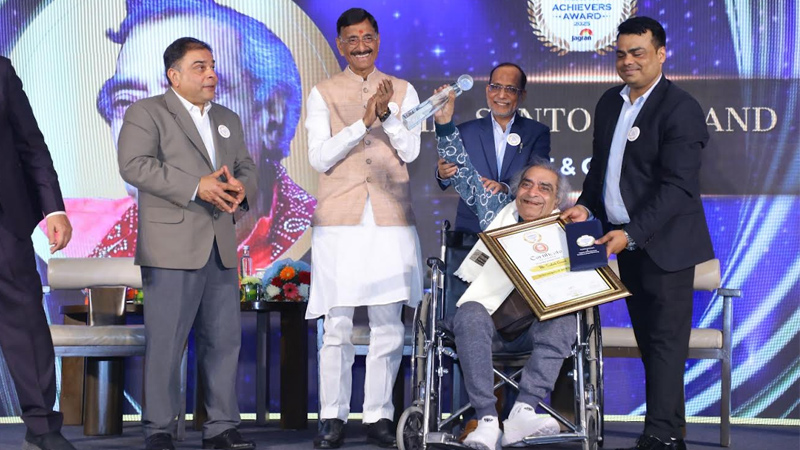
NEW DELHI: Hamdard Laboratories gathered a cross-section of India’s achievers in New Delhi on Friday, handing out the Hakeem Abdul Hameed Excellence Awards to figures who have left their mark across healthcare, education, sport, public service and the arts.
The ceremony, attended by minister of state for defence Sanjay Seth and senior officials from the ministry of Ayush, celebrated individuals whose work blends professional success with a sense of public purpose. It was as much a roll call of achievement as it was a reminder that influence is not measured only in profits or podiums, but in people reached and lives improved.
Among the headline awardees was Alakh Pandey, founder and chief executive of PhysicsWallah, recognised for turning affordable digital learning into a mass movement. On the sporting front, Arjuna Awardee and kabaddi player Sakshi Puniya was honoured for her contribution to the game and for pushing women’s participation onto bigger stages.
The cultural spotlight fell on veteran lyricist and poet Santosh Anand, whose songs have echoed across generations of Hindi cinema. At 97, Anand accepted the honour with characteristic humility, reflecting on a life shaped by perseverance and hope.
Healthcare honours spanned both modern and traditional systems. Manoj N. Nesari was recognised for strengthening Ayurveda’s place in national and global health frameworks. Padma shri Mohammed Abdul Waheed was honoured for his research-backed work in Unani medicine, while padma shri Mohsin Wali received recognition for his long-standing contribution to patient-centred care.
Education and social development also featured prominently. Padma shri Zahir Ishaq Kazi was honoured for decades of work in education, while former Meghalaya superintendent of Police T. C. Chacko was recognised for public service. Goonj founder Anshu Gupta received an award for his dignity-centred rural development initiatives, and the Hunar Shakti Foundation was honoured for empowering women and young girls through skill development.
The Lifetime Achievement Award went to former IAS officer Shailaja Chandra for her long career in public healthcare and governance, particularly in the traditional systems under Ayush.
Speaking at the event, Hamdard chairman Abdul Majeed said the awards were a tribute to those who combine excellence with empathy. “These awardees reflect Hakeem Sahib’s belief that healthcare, education and public service must ultimately serve humanity,” he said.
Minister Seth struck a forward-looking note, saying India’s young population gives the country a unique opportunity to become a global destination for learning, health and wellness by 2047.
The ceremony also featured the trailer launch of Unani Ki Kahaani, an upcoming documentary starring actor Jim Sarbh, set to premiere on Discovery on 11 February.
Instituted in memory of Unani scholar and educationist Hakeem Abdul Hameed, the awards have grown into a national platform that celebrates those building a more inclusive and resilient India. For one evening at least, the spotlight was not just on success, but on service with substance.







