News Headline
TV viewership jumps by a whopping 18%: BARC India

MUMBAI: BARC India has released its weekly viewership data on the basis of a revised Universe Estimate (UE), which is based on the results of Broadcast India Survey – the largest-ever research study undertaken to ascertain TV universe & television viewing habits in India.
With this, BARC India has updated and aligned its TV universe with ground-level changes in demographics, TV ownership and connection type, language preference and changes in NCCS profiles etc.
Fieldwork for the Broadcast India Survey was carried out over November 2015 to Feb 2016, and covered 3,00,000 homes across 590 Districts comprising of about 4300 Towns/Villages. All 1 Lakh+ towns were covered, while towns below 1 Lakh were selected by a Probability Proportional to Size (PPS) method.

With the new UE, Week 8 has seen a significant increase of 18Per cent in Total TV viewership in the country. Total TV impressions have grown from 22.7 billion in week 7 to 26.7 billion impressions in week 8.
“BI 2016 is one of the biggest survey’s done in the country so far. The TV universe in India is ever growing and changing and so is the profile and choice of a TV viewer. The last survey done was in 2013 and the last Census was in 2011. The consumer and viewer landscape is changing rapidly – with electrification, prosperity, changing modes of signal and digitisation. We wanted to reflect this change in viewership numbers and hence conducted our own Establishment Survey. This will help our subscribers and the eco system align their strategies for better targeting. The new reality is TV viewership is rapidly growing and how,” said BARC India CEO Partho Dasgupta.
The study also highlights the fact that TV HHs have grown faster in NCCS B and C, thus increasing the share of the middle class. While NCCS A has dropped from 22 per cent to 21 per cent , NCCS B and C have gone up from 24 per cent to 27 Per cent and 31 Per cent to 32 Per cent respectively. NCCS D/E on the other hand has de-grown from 23 per cent to 20 per cent . These trends are in line with fragmentation of family sizes (leading to lower average family sizes) and rising economic growth and rising prosperity. It also shows that India has more nuclear families without elders than ever before, and it is also the dominant family group among TV owning homes. While composition of joint families in the universe has come down from 26 per cent to 22 per cent, nuclear families with elders has grown from 53 per cent to 58 per cent .
Some key changes have been seen in the BI study like electrification, migration, digitisation, rise in smaller and nuclear family culture, increase in middle class, inclusion of rural markets and single TV households which has an impact on TV viewership behaviour.
BI-2016, the report based on the survey, contains not just an updated count and composition of TV homes across urban and rural India, but also offers data and insights that would be of immense value to marketers and advertisers. It contains granular data and information on media consumption habits of Indians, as well as select durable ownership and packaged goods purchase profiles. It is an updated database of Indian consumer behaviour.







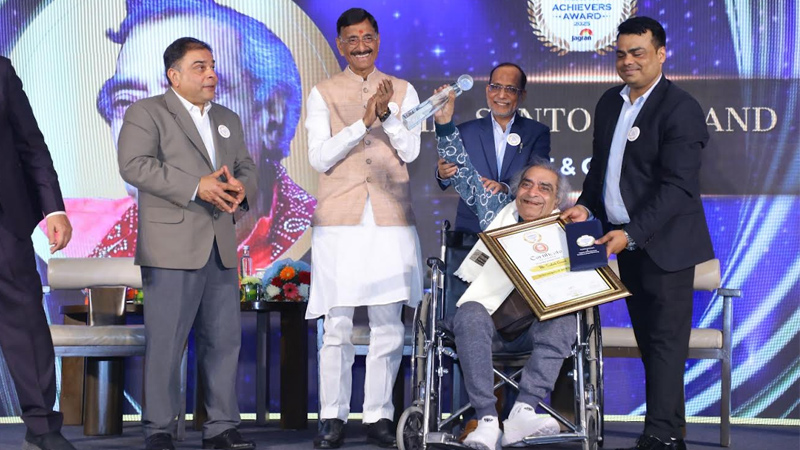
NEW DELHI: Hamdard Laboratories gathered a cross-section of India’s achievers in New Delhi on Friday, handing out the Hakeem Abdul Hameed Excellence Awards to figures who have left their mark across healthcare, education, sport, public service and the arts.
The ceremony, attended by minister of state for defence Sanjay Seth and senior officials from the ministry of Ayush, celebrated individuals whose work blends professional success with a sense of public purpose. It was as much a roll call of achievement as it was a reminder that influence is not measured only in profits or podiums, but in people reached and lives improved.
Among the headline awardees was Alakh Pandey, founder and chief executive of PhysicsWallah, recognised for turning affordable digital learning into a mass movement. On the sporting front, Arjuna Awardee and kabaddi player Sakshi Puniya was honoured for her contribution to the game and for pushing women’s participation onto bigger stages.
The cultural spotlight fell on veteran lyricist and poet Santosh Anand, whose songs have echoed across generations of Hindi cinema. At 97, Anand accepted the honour with characteristic humility, reflecting on a life shaped by perseverance and hope.
Healthcare honours spanned both modern and traditional systems. Manoj N. Nesari was recognised for strengthening Ayurveda’s place in national and global health frameworks. Padma shri Mohammed Abdul Waheed was honoured for his research-backed work in Unani medicine, while padma shri Mohsin Wali received recognition for his long-standing contribution to patient-centred care.
Education and social development also featured prominently. Padma shri Zahir Ishaq Kazi was honoured for decades of work in education, while former Meghalaya superintendent of Police T. C. Chacko was recognised for public service. Goonj founder Anshu Gupta received an award for his dignity-centred rural development initiatives, and the Hunar Shakti Foundation was honoured for empowering women and young girls through skill development.
The Lifetime Achievement Award went to former IAS officer Shailaja Chandra for her long career in public healthcare and governance, particularly in the traditional systems under Ayush.
Speaking at the event, Hamdard chairman Abdul Majeed said the awards were a tribute to those who combine excellence with empathy. “These awardees reflect Hakeem Sahib’s belief that healthcare, education and public service must ultimately serve humanity,” he said.
Minister Seth struck a forward-looking note, saying India’s young population gives the country a unique opportunity to become a global destination for learning, health and wellness by 2047.
The ceremony also featured the trailer launch of Unani Ki Kahaani, an upcoming documentary starring actor Jim Sarbh, set to premiere on Discovery on 11 February.
Instituted in memory of Unani scholar and educationist Hakeem Abdul Hameed, the awards have grown into a national platform that celebrates those building a more inclusive and resilient India. For one evening at least, the spotlight was not just on success, but on service with substance.