GECs
TV Child Rights entries invited for APAC Awards


NEW DELHI: The Asia-Pacific Child Rights Award for Television 2015 has called for entries from broadcasters and producers.
The awards have been instituted by the Asia-Pacific Broadcasting Union (ABU), CASBAA and UNICEF.

Each year, the award is given to the best television programming on children’s rights produced in the Asia-Pacific region. It recognizes the efforts of broadcasters and producers in pursuing high quality children’s programming and better coverage of children’s issues.
Last year, the world marked the 25th anniversary of the UN Convention on the Rights of the Child. The celebrations of this landmark agreement will focus public and media attention on children’s rights. Television has a vital role to play in this.
Programmes both for and about children are eligible, and can cover any child rights issue.
Entries can include documentaries that detail the plight of children, dramas that help break down stereotypes and discrimination, or animation that teaches and entertains.
Entries must have been broadcast between June 2014 and May 2015 and must be received by 15 June, 2015. The award will be presented during the CASBAA Convention 26-28 October, in Hong Kong.


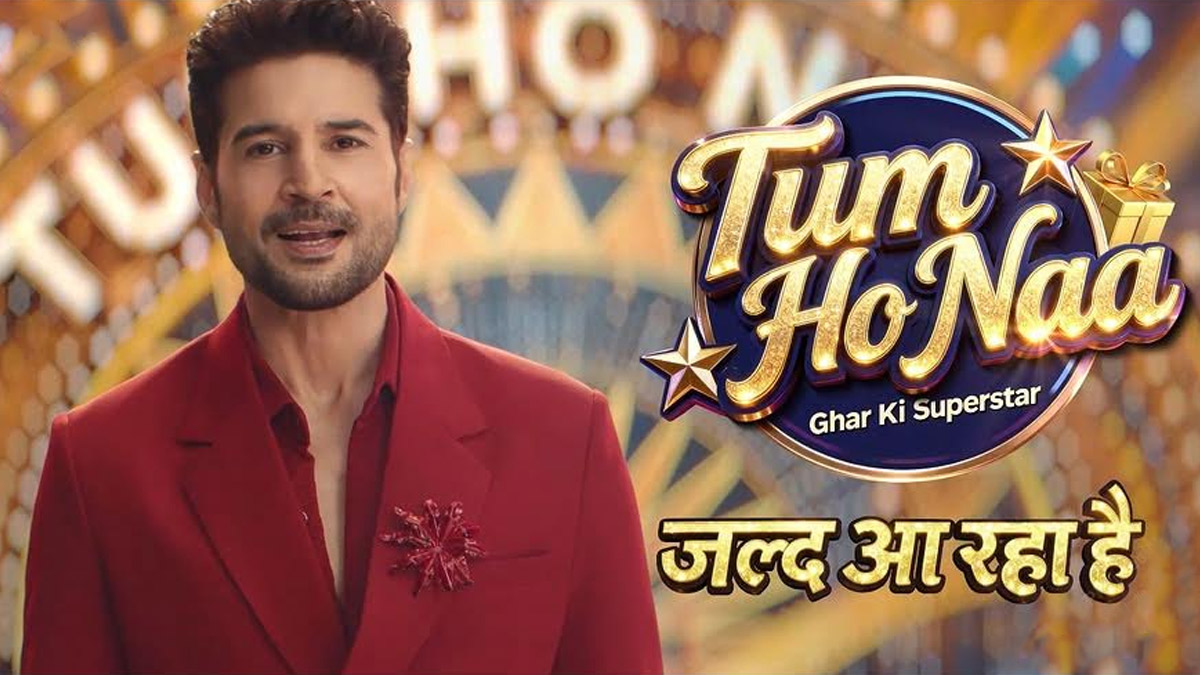
MUMBAI: Lights, camera… connection because this time, the game isn’t just about winning, it’s about who’s with you. Sony Pictures Networks India is gearing up to launch a new reality game show, Tum Ho Naa, expanding its unscripted slate with a format that promises both emotion and engagement.
The show will premiere soon on Sony Entertainment Television and stream on Sony LIV, with Rajeev Khandelwal stepping in as host. Known for his measured screen presence and selective choices, Khandelwal’s return to television adds a layer of familiarity and credibility to the upcoming format.
While specific details of the gameplay remain under wraps, the positioning suggests a reality format that leans as much on emotional resonance as it does on competition, an increasingly popular blend in Indian television, where audiences are gravitating towards content that offers both stakes and storytelling.
Khandelwal, reflecting on his return, noted that his choices have often been guided by instinct rather than convention, describing Tum Ho Naa as a project that feels “close to the heart”. His association also signals Sony’s continued focus on anchoring new formats with recognisable faces who bring both relatability and depth.
The launch comes at a time when broadcasters are doubling down on original non-fiction formats to drive appointment viewing, even as digital platforms expand parallel reach. By placing the show across both linear television and OTT, Sony appears to be aiming for a dual-audience strategy capturing traditional viewers while engaging digital-first consumers.
As the countdown to premiere begins, Tum Ho Naa positions itself not just as another game show, but as a reminder that sometimes, the biggest prize on screen isn’t the jackpot, it’s the journey shared along the way.






