News Broadcasting
Turner calls Murdoch a ‘warmonger’

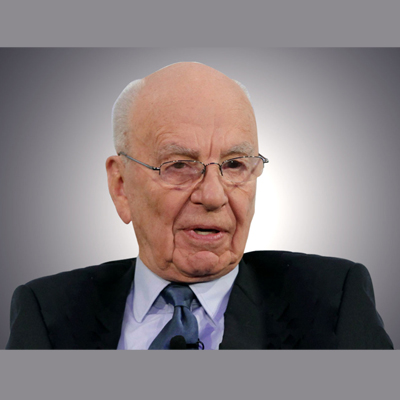
MUMBAI: The gloves are off. Literally. The irrepressible founder of CNN Ted Turner has called his pet hate of long standing Rupert Murdoch a warmonger for Fox News Channel’s reportage during the US-led invasion of Iraq. And unlike on another occasion when he challenged Murdoch to a boxing match-up in the ring, this time round Turner kept his jousting strictly verbal.
“He’s a warmonger,” a Reuters report quoted Turner as saying in an evening speech on Thursday to the Commonwealth Club in San Francisco of Murdoch, whose News Corp. Ltd. owns Fox News. “He (Murdoch) promoted it,” Turner was quoted as saying.
Turner also criticised the concentration of ownership of the vast majority of US television networks, radio and TV stations and newspapers in a few corporations. “There’s really five companies that control 90 per cent of what we read, see and hear. It’s not healthy,” Turner said.

A point that is especially relevant in the context of the Bush administration’s exhortations yesterday urging the Federal Communications Commission (which US secretary of state Colin Powell’s son Michael heads) to finish revising media rules governing ownership of newspapers and television and radio stations by the agency’s self-imposed June 2 deadline, saying the update was due.
Critics have warned that mergers resulting from looser rules could leave a few huge companies in control of what people watch, hear and read.
Turner’s barbs came on the same day as a roasting given by BBC director-general Greg Dyke to the US media over its “unquestioning” coverage of the Iraq conflict.
Dyke reserved his severest criticism for US radio giant Clear Channel, which went to the extent of organising pro-war rallies in the US as American and British troops were advancing on Baghdad.
Among the television networks, Dyke directed most of his ire at Fox over its pro-Bush stance.
Dyke made his comments in a speech delivered at Goldsmiths College in London yesterday.
Whatever may be Turner’s and Dyke’s views on the matter, it is hardly likely to change the Fox strategy, which has clearly delivered on the ratings front. Fox is the No. 1 news network in the US.




News Broadcasting
CNN-News18 to host Fury in the Gulf conclave on West Asia crisis
Three-hour summit to unpack geopolitical fallout and impact on India
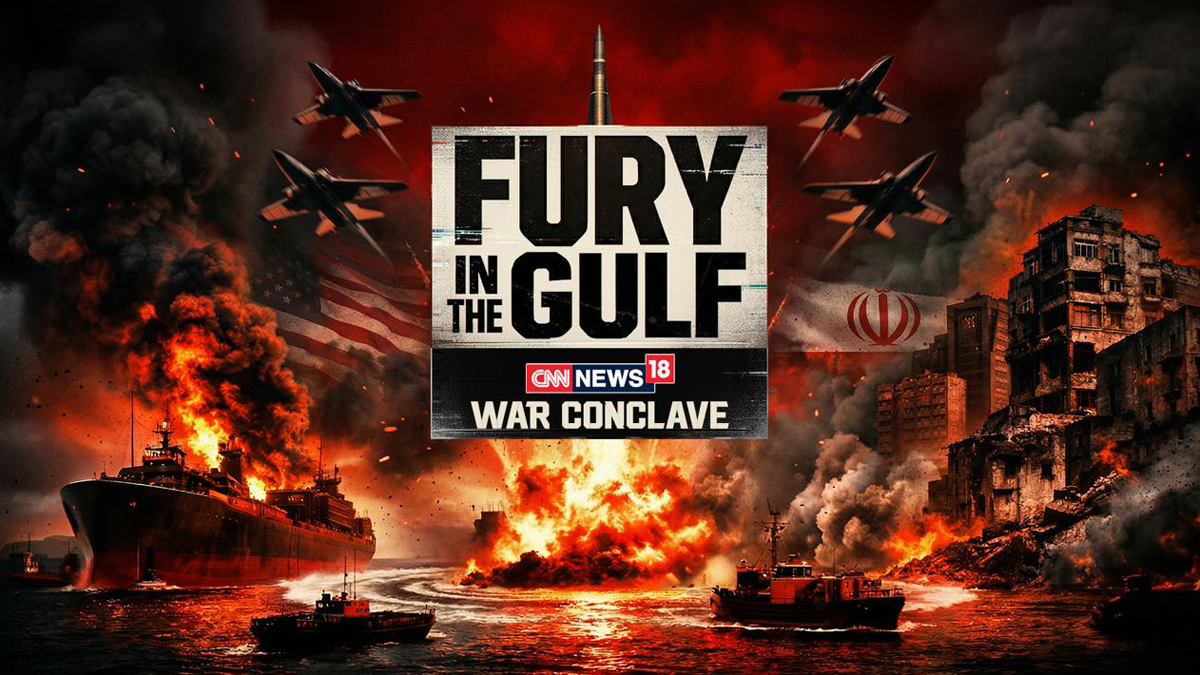
MUMBAI: CNN-News18 is set to host a special three-hour broadcast, Fury in the Gulf – War Conclave, on April 7, aiming to decode the escalating West Asia crisis and its far-reaching implications for India.
Scheduled from 4:00 PM to 7:00 PM, the conclave comes at a time when tensions between Iran and the United States are reshaping global geopolitics and triggering economic uncertainty. With India’s deep energy ties, trade links and large diaspora in the Gulf, the developments carry significant domestic relevance.
Built around the theme ‘Conflict, Consequences, and The Future,’ the programme will feature six curated sessions combining one-on-one interviews and panel discussions. The focus is to cut through the clutter and offer viewers a clearer understanding of the fast-evolving situation.
Key sessions include ‘Diplomacy in Times of War’ featuring Shashi Tharoor, and ‘World After the Iran Conflict’ with voices such as Ram Madhav, Reuven Azar, representatives from the European Union and the Iranian Deputy Envoy. Another session titled ‘Another Dunkirk?’ will bring together K. J. S. Dhillon and Jitin Prasada among others.
CNN-News18 editorial affairs director Rahul Shivshankar said, “In times of war, clarity becomes the most powerful tool. Fury in the Gulf – War Conclave brings together credible voices to address the questions and confusion that arise amid an overwhelming influx of information.”
He added that the initiative is aimed at delivering “facts, perspective, and insight” at a time when misinformation can easily cloud public understanding.
Echoing the sentiment, CNN-News18 CEO– English and business news Smriti Mehra said the conflict marks a defining global moment, with consequences that extend well beyond the region. She noted that the conclave seeks to present the crisis with “depth, nuance and responsibility” so audiences can better grasp its real-world impact.
As geopolitical tensions continue to dominate headlines, the conclave positions itself as an attempt to bring order to the noise, offering viewers a structured, insight-led look at a complex and rapidly shifting global situation.






