International
Trump to slap 100 per cent tariff on foreign films?

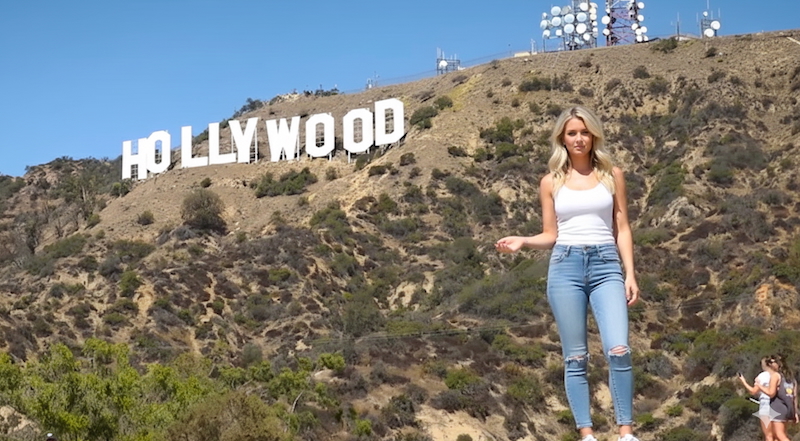
WASHINGTON: Donald Trump has declared war on foreign-made movies. The American president announced on Monday that he would impose a 100 per cent tariff on all films produced outside the United States, threatening to blow up Hollywood’s international operations. As well as possible revenues that Indian films make in Uncle Sam.
The move, posted on Trump’s Truth Social platform, marks an audacious expansion of his protectionist trade agenda into cultural industries. “Our movie making business has been stolen from the United States of America, by other Countries, just like stealing candy from a baby,” he wrote, taking a swipe at California’s “weak and incompetent” governor Gavin Newsom.
Yet the announcement left crucial questions unanswered. The White House offered no details on the legal authority Trump would invoke or how such tariffs would work in practice. Studio executives are baffled: modern filmmaking splices together production, financing, post-production and visual effects from multiple countries. How would a film shot in New Zealand with British money and American stars be classified?

Legal experts are equally sceptical. Films are intellectual property traded as services—a category where America typically runs a surplus. That raises doubts about whether tariffs can even be applied. Co-productions with foreign studios have become routine, further muddying the waters.
Trump first floated the idea in May, calling foreign productions a “national security threat” that imports “messaging and propaganda.” Entertainment executives were flummoxed then and remain so now.
The industry has increasingly decamped from Hollywood to chase tax breaks in Britain, Australia and New Zealand. California is scrambling to compete: Newsom has pushed to expand the state’s film tax credits. But some productions film abroad simply because their stories demand it. Directors like Denis Villeneuve and Christopher Nolan favour shooting on location rather than on soundstages.
The major American studios declined to comment to Reuters. Netflix shares, however, slipped 1.5 per cent in early trading.
The silence from studios suggests an industry still trying to parse whether Trump’s threat is bluster or genuine policy. Either way, it signals fresh uncertainty for an entertainment business already grappling with streaming upheaval and rising costs.







International
Russia-India cinematic spectacle Persimmon of My Love set for grand Moscow debut
Hindi cinema style musical revives Indo-Soviet cinema ties for today

MUMBAI: A new chapter in cross-border storytelling is set to unfold as Persimmon of My Love gears up for its premiere in Moscow on 1 April 2026, marking the first large-scale cinematic collaboration between Russia and India in decades.
Positioned as a modern nod to the cultural exchange that once brought Indian classics to Soviet audiences, the film blends Hindi cinema flair with Russian storytelling, aiming to rekindle a long-standing cinematic friendship.
Directed by Marius Weisberg, the musical comedy follows two brothers navigating a lively world of music, family and romance. The lead roles are played by Demis Karibidis and Mikhail Galustyan, with Karibidis also contributing as a screenwriter.
Shot entirely in India, the production leans heavily into Hindi cinema style spectacle. Filming took place across Mumbai studios and the cities of Udaipur and Jodhpur, whose architecture was used to create the fictional setting of Khurmada. A crew of over 350 worked on the project, with large-scale sequences featuring up to 1,000 extras.
The film also brings Indian creative talent into the mix. Dance sequences are choreographed by Jay Kumar, while music by Zurab Matua features songs in both Hindi and Russian, adding to its cross-cultural appeal.
Backed by TNT channel, MyWayStudio and the Russian Cinema Fund, the project reflects a broader push to strengthen cultural ties between the two countries.
With its mix of colour, comedy and cross-border collaboration, Persimmon of My Love is not just a film release but a reminder that cinema, much like music, travels well across borders.






