News Headline
Treat viewers as customers; package & sell your ‘sport’ brand well: PWL

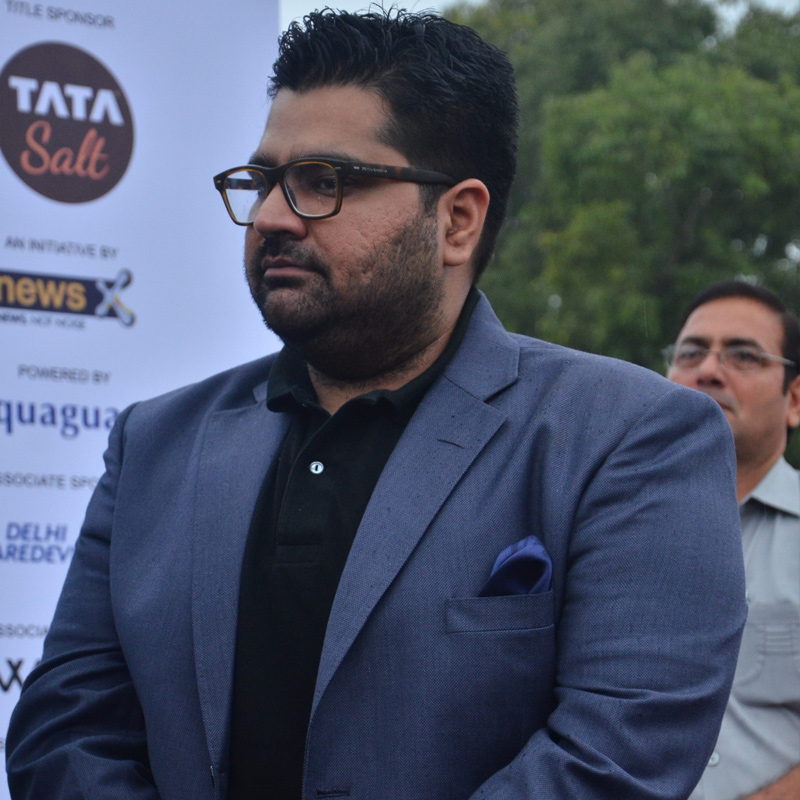
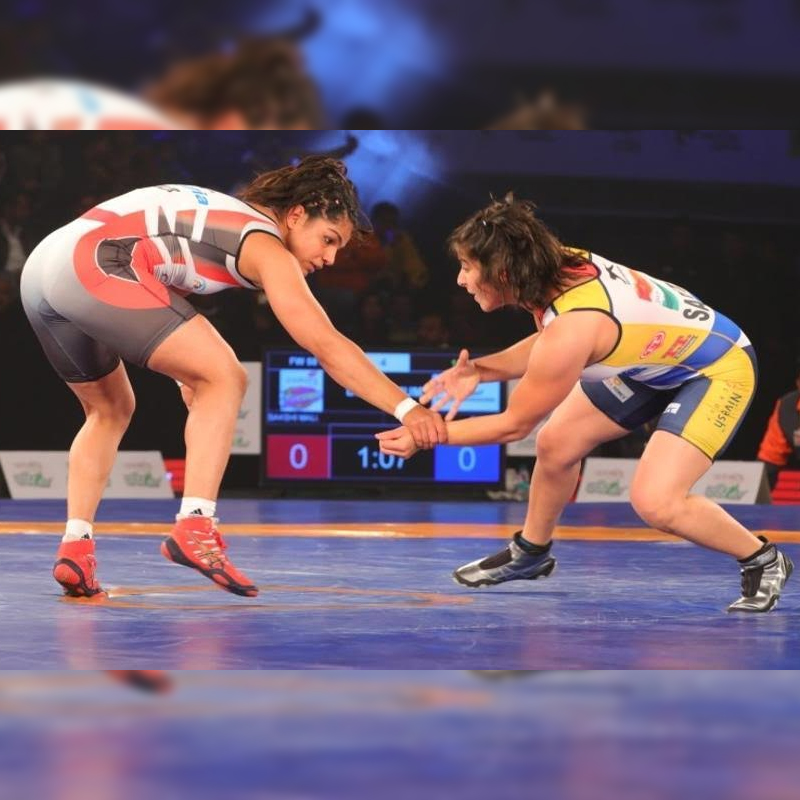
MUMBAI: Last year in Delhi thousands of people could be seen queued up outside a stadium waiting anxiously to get in after buying tickets. For a cricket match? Nope. The buzzing crowd was there to watch the wrestlers in action in the first season of Pro Wrestling League (PWL).
In sharp contrast, a tennis premier league also being held around the same time as PWL found it hard to get in the audience despite having big international and Indian stars on show. Though tennis league’s high cost of tickets could have been a deterrent for the average people, but Pro- Sportify and ITV Media Network managing director Karthikeya Sharma, the man behind the PWL has a point when he said, “It’s not always about bringing a big star or highlighting quirky aspects of the product, but it’s about getting the fundamentals right. We started by understanding the sport of wrestling, its importance and sentimental values for viewers and in-stadia audience and then built around it a league by properly identifying the customer.”
Wrestling joined the league of sporting leagues in India on 10 December 2015 and PWL is a property that’s jointly owned and managed by Wrestling Federation of India and Pro Sportify Pvt. Ltd. The league is supported by the International Wrestling Federation (IWF). The league, which garnered millions of eyeballs last year, is back in its second season from 15 December 2016 with the tagline “Double Dhamaka”. The new additions include having eight teams instead of six, increasing the players’ pool to 80 from the initial draft of 54 and spreading the duration of the multi-city league over a month from the initial 18-day edition.

However, it hasn’t been smooth sailing for the wrestling league or its organisers as in a cricket-crazy nation like India not many other sports succeed to get big bucks from advertisers or the swooning crowd in stadia. “We had to face lot of adversities as we had to pick up an Olympic sport that’s perceived boring and a long-hour format sport both from the point of broadcast and on-ground audience,” Sharma elaborated on the early difficulties at an event yesterday in Mumbai organised by Event and Entertainment Management Association (EEMA), Pro- Sportify and ITV Media Network.
But as rightly pointed out by Sharma wrestling does connect with the Indians at some level, especially those from semi-urban areas of India. Though cricket, tennis and in recent times badminton is seen as medal-winning sports in India, but the first Olympic medal for the country was won in 1952 by KD Jadhav in wrestling. “I think it’s a different story to pick a sport that’s, perhaps, not as popular (as cricket or tennis) and turn it into a commercial success by building on the facts that it is respected and connected to our land,” he explained.
Talking about the success of PWL, Sharma informed, “In the first season PWL was about 100 per cent more in terms of reach in viewership then ISL in second season. As the commercial sports league we are second highest watched property in its first season itself.”
The first season of PWL had 50 Olympians and 20 Olympic medallists from 35 counties. The numbers double in second season. The growing numbers are also an indication that the league is attracting financial supporters who see opportunities. “You cannot distinguish between the 10,000-20,000 people that come to watch in the stadium and the approximately 400,000 people who watch the same product on TV sitting their houses. I think it’s extremely important to hand out an experience that is not only valued by people sitting in the stadium, but also by people sitting at home,” Sharma held forth on the business of a league.
Pointing out that 48 per cent of viewership came from female audience for PWL’s first season, Sharma aptly summed up:“We are trying to build a product that’s dominated by the males. The female viewership largely came in because of innovations though we have not changed any Olympic rule.”




NEW DELHI: Hamdard Laboratories gathered a cross-section of India’s achievers in New Delhi on Friday, handing out the Hakeem Abdul Hameed Excellence Awards to figures who have left their mark across healthcare, education, sport, public service and the arts.
The ceremony, attended by minister of state for defence Sanjay Seth and senior officials from the ministry of Ayush, celebrated individuals whose work blends professional success with a sense of public purpose. It was as much a roll call of achievement as it was a reminder that influence is not measured only in profits or podiums, but in people reached and lives improved.
Among the headline awardees was Alakh Pandey, founder and chief executive of PhysicsWallah, recognised for turning affordable digital learning into a mass movement. On the sporting front, Arjuna Awardee and kabaddi player Sakshi Puniya was honoured for her contribution to the game and for pushing women’s participation onto bigger stages.
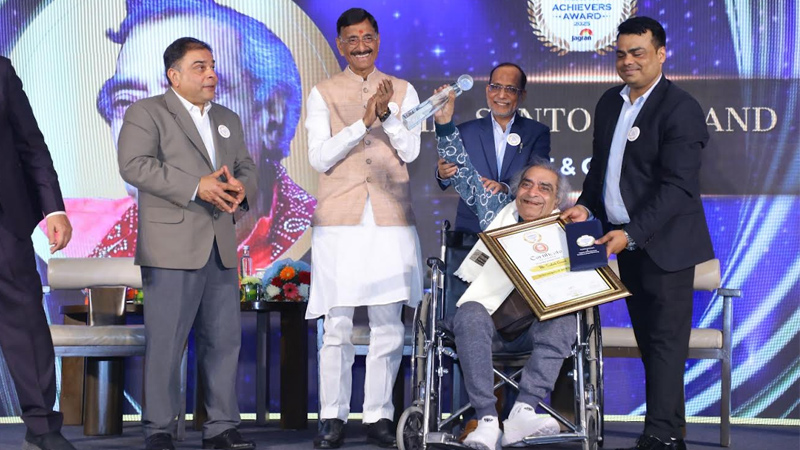
The cultural spotlight fell on veteran lyricist and poet Santosh Anand, whose songs have echoed across generations of Hindi cinema. At 97, Anand accepted the honour with characteristic humility, reflecting on a life shaped by perseverance and hope.
Healthcare honours spanned both modern and traditional systems. Manoj N. Nesari was recognised for strengthening Ayurveda’s place in national and global health frameworks. Padma shri Mohammed Abdul Waheed was honoured for his research-backed work in Unani medicine, while padma shri Mohsin Wali received recognition for his long-standing contribution to patient-centred care.
Education and social development also featured prominently. Padma shri Zahir Ishaq Kazi was honoured for decades of work in education, while former Meghalaya superintendent of Police T. C. Chacko was recognised for public service. Goonj founder Anshu Gupta received an award for his dignity-centred rural development initiatives, and the Hunar Shakti Foundation was honoured for empowering women and young girls through skill development.
The Lifetime Achievement Award went to former IAS officer Shailaja Chandra for her long career in public healthcare and governance, particularly in the traditional systems under Ayush.
Speaking at the event, Hamdard chairman Abdul Majeed said the awards were a tribute to those who combine excellence with empathy. “These awardees reflect Hakeem Sahib’s belief that healthcare, education and public service must ultimately serve humanity,” he said.
Minister Seth struck a forward-looking note, saying India’s young population gives the country a unique opportunity to become a global destination for learning, health and wellness by 2047.
The ceremony also featured the trailer launch of Unani Ki Kahaani, an upcoming documentary starring actor Jim Sarbh, set to premiere on Discovery on 11 February.
Instituted in memory of Unani scholar and educationist Hakeem Abdul Hameed, the awards have grown into a national platform that celebrates those building a more inclusive and resilient India. For one evening at least, the spotlight was not just on success, but on service with substance.






