Factual
Travelxp and Prashant Chothani’s 4K drive

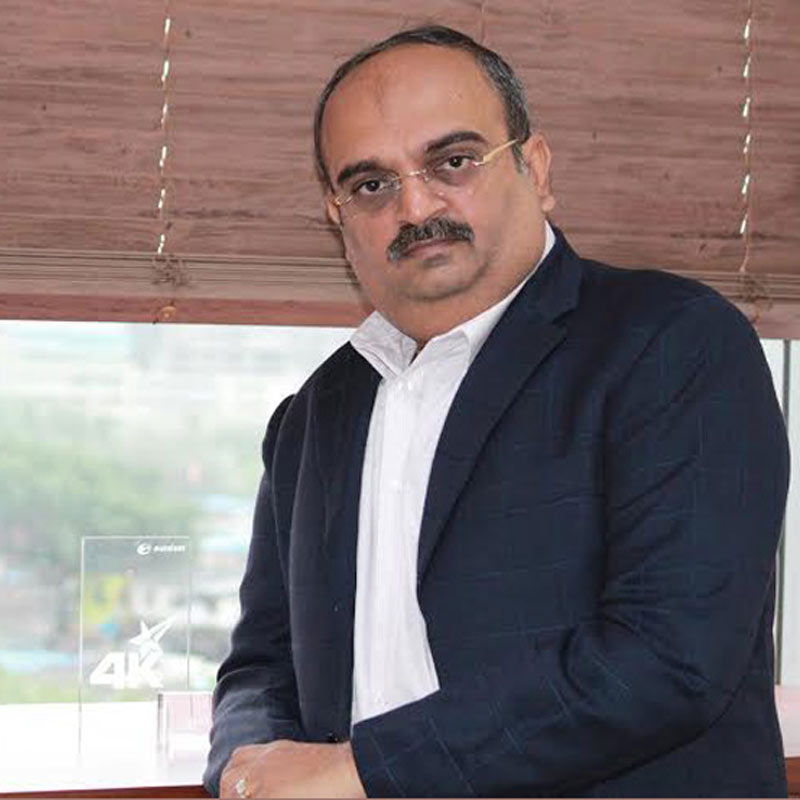
MUMBAI: Prashant Chothani is a man on a mission. The veteran cable TV professional-turned-Zee TV-associate-turned TV broadcaster has marked two dates in his calendar – October 2016 and February 2017. The founder and CEO of Travelxp- the Indian travel lifestyle channel – has set his sights on launching his channel in 4K globally in order to engage even international viewers by one of those two dates.
Says Chothani: “We have shot 100 hours of UHD (Ultra High Definition) 4K content and need another 50 hours of content to launch a full fledged 4K channel.”
It’s almost as if a race is on. And it’s a race he has ventured into by himself. Ever since he started dabbling in filming travel and lifestyle shows in 4K and got pole-vaulted into an elite group of 4K content pioneers thanks to MipTV and Mipcom in Cannes, the format has been coursing through his veins and keeping him awake night and day.

So much so that he has invested around $2 million in producing his shows in 4K over the past year or so. That kind of investment – when the entire channel Travelxp is turning over an estimated $3 million in revenues (both advertising and subscription) – shows his commitment and optimism about the future of UHD content and to be a pioneer.
“The process of 4K is long and time consuming and one needs a lot of investment and patience for this transition. We were amongst the first to begin the shift from Standard Definition to High Definition. And now we are all up for new age of 4k. As an Indian production company, we are setting the standards for 4K. We are very proud of that,” says Chothani excitedly.
He and his Travelxp team have shot in about 10 countries including a series in India with a plan to produce more indigenous content. 4K TV productions cost about four times more than a HD shoot. Travel shows take about six to eight months to complete with a crew of six to eight once again.
Chothani has invested a few million dollars in the 4K production pipeline. Travelxp owns Sony F5S cameras with Canon lenses. Colour grading is done on DaVinci Resolve machines. 4K requires terabytes of storage and processing the content requires high speed machines for rendering. The in-house production team at Travelxp is using Apple Pro modified machines to process the heavy raw footage.
He reveals that he challenge lay in selecting the right equipment which would allow him to maintain image and video quality in natural light. He and his team have done what Indians are known for “juggad” or innovating to get things working in the Indian ecosystem.
“We are the first ones to attempt this, so the learning was on the job. We made our mistakes, but learned as we went along,” says Chothani “The HD to 4K transformation is not easy for anyone. It will take undoing what is done and unlearning what production houses already know. Old infrastructure is not compatible for such a change.”
The advantage of 4K is the color quality, picture depth and image sharpness it offers to viewers. The viewer feels like he is experiencing each frame live with his naked eyes. One can see every inch of detail from blossoming flowers to morning dew and each merging shade of rainbow on one’s screen. Sports and travel and lifestyle content come out best when viewed in 4K.
Chothani has been filming keeping in mind the evolution of UHD standards set by the UHD Alliance recently. These state that for a production to be labeled as High Dynamic Range (HDR) 4K, it has to be shot at a 10 bit rate at 50 frames per second (fps) and 2100 REC with the pixel set at 3,840 X 2,160 and 16:9 format. But he and his team have filmed their 100 hours of content at 4K SDR (standard dynamic range) with the bitrate at 16 and at 50 fps. This Chothani states will allow all the content to be upgraded to 4K HDR rather easily. Says he: “We have kept the shooting quality with both the SDR and HDR options being open to us.”
It’s not as if the 4K HDR road is going to be easy and paved with gold. An estimated 30 million 4K TV sets or receivers have been purchased by TV viewers globally. But these are SDR sets and most will have to be replaced or use Hybrid Log Gamma tech to allow viewers to enjoy the better picture quality that HDR yields. And brands like Sony and Videocon have started manufacturing TVs matching the new 4K HDR standards.
Then there is the question of distribution via satellite. Each 4K channel requires 25 Mbps of bandwidth on a transponder. That means expenses. Chothani is in talks with satellite capacity providers such as with SES, Eutelsat, Measat and Hispasat. He says 20 distribution platforms worldwide have already agreed to carry Travel Xp 4K once it begins telecasting.
According to Chothani, it took some time and tedium for the industry and viewers to shift from standard definition to high definition viewing. Around 50 channels in India out of the 800 odd are beaming in HD, making it an eight to 10 per cent ratio. Chothani predicts that 8-10 per cent of HD channels will also likely transition to 4K in the short run. “The challenge is truly big, but change indeed is the only constant,” he says with a shrug of his shoulders. “And I indeed want to be ahead of the curve.”
Spoken like a true pioneer.







DUBLIN: Ireland is betting big on reality television. In a move that has Hollywood scouts scrambling for their passports, Dublin has unveiled Europe’s first tax credit dedicated solely to unscripted programming—think The Traitors rather than Game of Thrones.
The scheme offers producers a juicy 20 per cent rebate on qualifying expenditure, capped at €15 million ($17.5 million) per project. It’s a cultural credit with strings attached: programmes must pass a test proving they genuinely promote Irish and European culture. No word yet on whether Love Island derivatives need apply.
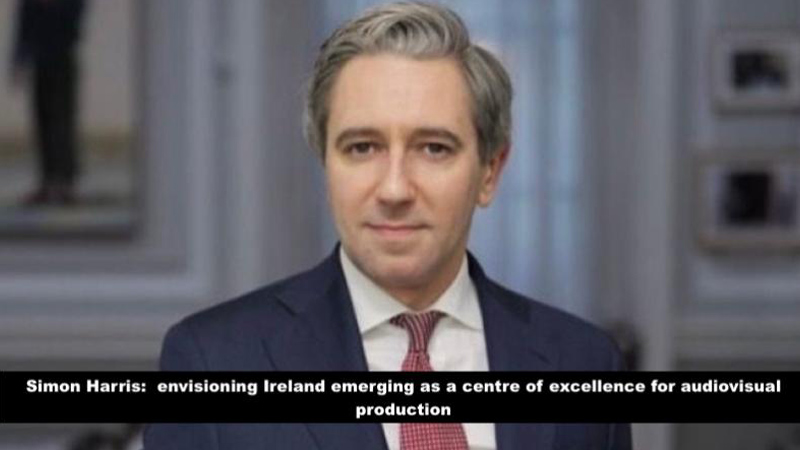
Ireland tánaiste and minister for finance Simon Harris says the incentive will cement Ireland’s reputation as a “centre of excellence” for audiovisual production. His colleague, minister for culture, communications and sport Patrick O’Donovan, insists Ireland has “the talent, creativity and production expertise to lead” in unscripted television. Bold claims for a nation that has spent decades exporting scripted drama.
The timing is canny. Unscripted production costs have soared globally, making Ireland’s existing infrastructure—and now its tax breaks—increasingly attractive. Fox Entertainment Studios already churns out shows like Beat Shazam and The Floor from Irish studios. Whether these American productions will pass the cultural test remains to be seen.
Producers must secure an interim cultural certificate before filming begins, allowing them to claim credits during production rather than waiting until wrap. A final certificate follows completion. The European Commission has blessed the scheme through December 2028.
Minimum thresholds apply: productions must cost at least €250,000, with eligible expenditure above €125,000. Only one season per project can claim relief in any 12-month period, though producers can juggle multiple projects.
Britain, take note. The UK industry has clamoured for similar support for 18 months, but Westminster has dithered. India’s ministry of information and broadcasting pay heed. Its incentive scheme for co-productions excludes unscripted television. To what end, no one knows! Ireland, meanwhile, is already rolling out the red carpet—or should that be green?
The message from Dublin is clear: when it comes to backing reality TV, Ireland isn’t messing about. Lights, camera, tax action.








