News Headline
TRAI’s tariff related consultation paper draws concern from IBF

MUMBAI: The IBF notes with some concern the issues raised for consultation by TRAI in the Consultation Paper issued on 16th August 2019 (CP). These issues strike at the very heart of the new MRP based tariff regime which TRAI made effective from 1st February 2019 (NTO). It is fair to say the implementation of the NTO has resulted in massive changes in the distribution landscape. Nevertheless, with the support of all stakeholders including broadcasters, DPOs and the end consumer, the transition to the new regime is being managed relatively smoothly. Broadcasters, on their part, along with other stakeholders, have done their best to ensure a smooth transition without a disruption of services. TRAI itself has stated at several fora that over 90% of consumers have migrated to the new tariff regime by choosing channels and/or bouquets of their choice.
In compliance with the NTO, pay broadcasters have published their Reference Interconnect Offers (RIOs) pricing their channels in a la carte and bouquet formations in accordance with the regulations. DPOs in turn have offered these channels both on a la carte basis and bouquets customized to meet the choice of their subscribers. In fact, it was TRAI that mandated DPOs to offer their subscribers a “best fit” plan of a la carte and bouquets to encourage a seamless transition to the new tariff regime.
Surprisingly barely a few months after the commencement of the NTO and even before the industry at large and more importantly the end consumer has fully adapted to the new regulatory regime, TRAI proposes a fresh CP seeking to make fundamental changes in channel pricing and bouquet formation. This goes against all norms of a stable regulatory regime so necessary for the economic advancement of any industry. TRAI’s CP proceeds on the assumption that consumers are being denied their choice of channels by excessive discounts on bouquets. IBF wishes to point out that the cap on bouquet discounts under the NTO was struck down by the Madras High Court as “arbitrary”. Further, the global practice in the television and cable industry is the offering of content in bouquets customized to meet the diverse needs of consumers. A report published by the prestigious thinktank, the Indian Council for Research on International Economic Relations (ICRIER), in March 2019 indicates that given a choice consumers, even internationally display a preference for bouquets. A 2004 FCC report concluded that mandating a la carte for cable consumers in the USA would very likely harm new and niche channels and reduce choice to consumers. An evaluation of a similar proposal in Canada in 2014 concluded that “unbundling” could have adverse effects for the broadcasting sector and could result in 26% of the current channels becoming unviable. As per CASBAA, in a study of broadcast regulations in 10 countries, apart from India, no country mandated a la carte and bouquets were the choice of consumers. The NTO itself allows broadcasters and DPOs to offer channels both a la carte and in bouquets giving the consumer the freedom of choice. In fact, the basic tier mandated by the NTO of 100 FTA channels for Rs. 130 is itself a bouquet offering. Thus, the impression being created that broadcasters are gaming the system to push bouquets is incorrect.

The essence of a free market economy is that consumers make their own choices about the products they buy or the services they wish to receive. Broadcasters have not only published their channel prices a la carte and for bouquets but also publicized their offerings through advertisements and promotions enabling the consumer to make an informed choice. As TRAI itself points out in the CP while a large number of consumers have opted for bouquets, many have also opted for a la carte channels. It is therefore incorrect and would be an affront to the consumer’s intelligence to suggest that they choose channels only on price and not on the quality of their content.
The Honorable Prime Minister’s call to make India a USD 5trillion economy by 2025 requires all industries to grow exponentially and contribute to overall GDP. Frequent tinkering with regulations and attempting to micro-manage free markets can lead to adverse consequences. Promoting a la carte at the cost of bouquets will deny consumers the choice they need in a country like India with such a large and variegated diversity of cultures and languages. Smaller as well as niche content channels will lose out and their viability will come under question. Broadcasters will be unwilling to launch new channels and producers will be unwilling to experiment with new content. All this will lead to fewer shows being produced which will have a knockdown effect on downstream production and on employment in the sector.
The broadcasting industry has gone through several major regulatory changes in the last few years moving from analogue to CAS to digital and addressable systems and now to an MRP pricing regime. Stability in policy formulation and “soft touch” in regulatory oversight is an absolute necessity for healthy industry growth. The Government’s focus on “ease of doing business” warrants minimal regulatory intervention. Hence regulatory intervention at this early stage in the implementation of the NTO is not only premature but will have disastrous consequences for the broadcasting industry. In these circumstances, IBF would urge TRAI to defer any further regulatory interventions and allow the industry and its stakeholders and especially the consumer more time to adapt to the new regulatory regime.





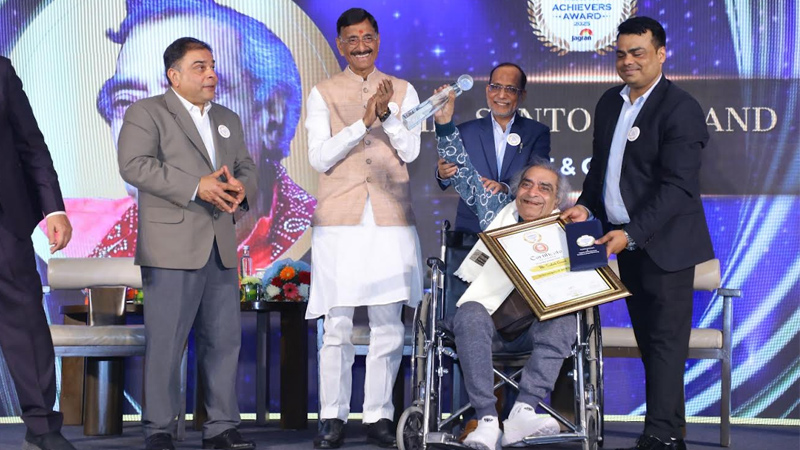
NEW DELHI: Hamdard Laboratories gathered a cross-section of India’s achievers in New Delhi on Friday, handing out the Hakeem Abdul Hameed Excellence Awards to figures who have left their mark across healthcare, education, sport, public service and the arts.
The ceremony, attended by minister of state for defence Sanjay Seth and senior officials from the ministry of Ayush, celebrated individuals whose work blends professional success with a sense of public purpose. It was as much a roll call of achievement as it was a reminder that influence is not measured only in profits or podiums, but in people reached and lives improved.
Among the headline awardees was Alakh Pandey, founder and chief executive of PhysicsWallah, recognised for turning affordable digital learning into a mass movement. On the sporting front, Arjuna Awardee and kabaddi player Sakshi Puniya was honoured for her contribution to the game and for pushing women’s participation onto bigger stages.
The cultural spotlight fell on veteran lyricist and poet Santosh Anand, whose songs have echoed across generations of Hindi cinema. At 97, Anand accepted the honour with characteristic humility, reflecting on a life shaped by perseverance and hope.
Healthcare honours spanned both modern and traditional systems. Manoj N. Nesari was recognised for strengthening Ayurveda’s place in national and global health frameworks. Padma shri Mohammed Abdul Waheed was honoured for his research-backed work in Unani medicine, while padma shri Mohsin Wali received recognition for his long-standing contribution to patient-centred care.
Education and social development also featured prominently. Padma shri Zahir Ishaq Kazi was honoured for decades of work in education, while former Meghalaya superintendent of Police T. C. Chacko was recognised for public service. Goonj founder Anshu Gupta received an award for his dignity-centred rural development initiatives, and the Hunar Shakti Foundation was honoured for empowering women and young girls through skill development.
The Lifetime Achievement Award went to former IAS officer Shailaja Chandra for her long career in public healthcare and governance, particularly in the traditional systems under Ayush.
Speaking at the event, Hamdard chairman Abdul Majeed said the awards were a tribute to those who combine excellence with empathy. “These awardees reflect Hakeem Sahib’s belief that healthcare, education and public service must ultimately serve humanity,” he said.
Minister Seth struck a forward-looking note, saying India’s young population gives the country a unique opportunity to become a global destination for learning, health and wellness by 2047.
The ceremony also featured the trailer launch of Unani Ki Kahaani, an upcoming documentary starring actor Jim Sarbh, set to premiere on Discovery on 11 February.
Instituted in memory of Unani scholar and educationist Hakeem Abdul Hameed, the awards have grown into a national platform that celebrates those building a more inclusive and resilient India. For one evening at least, the spotlight was not just on success, but on service with substance.






