News Headline
TRAI tariff order’s impact on the industry

MUMBAI: How will Trai’s Telecommunication (Broadcasting and Cable) Services (Eight) (Addressable systems) Tariff Order, 2017, impact the industry and listed television eco-system companies?
Leading institutional broker Kotak Institutional Equities (KIE) believes that the implementation of would enhance the bargaining power of distributors versus broadcasters, at the margin. KIE contends that while it is difficult to factor in all permutations and combinations and quantify the impact, Dish TV would most likely benefit. The impact on Zee would be negligible, if any, given the strength of its bouquet. Sun could potentially gain, but its upside is contingent on digitization in TN.
KIE believes that flexibility to consumers will not reduce industry’s subscription revenue pool because there is a provision of access fee of up to Rs 130/month (excluding taxes). It says that even if a household subscribes for 10 popular pay channels on a-la-carte basis, it may result in subscription fee of more than Rs 100 (excluding taxes). It is unlikely that value subscribers (base pack/ low-ARPU subscribers) would be able to optimize subscription spends. If at all, they may receive less content for the same price going forward. However, there is room for premium subscribers (HD, multiple TVs) paying more than Rs 500/month per STB to optimize its subscription spends especially in case of nuclear families in urban markets..

“We expect distributors to price and package channels such that consumers continue to find bouquet appealing. We also believe industry will not encourage or promote a-la-carte buying: (1) LCOs would likely discourage a-la-carte buying, (2) difficulty/hassle in opting for a-la-carte (through SMSes or call centres) will act as a deterrent,” says a KIE report.
The regulation could possibly reduce scale led advantages of distributors. The permissible discounts would likely be on penetration milestones (percentage penetration as against absolute scale). Thus, the scale-led advantage of larger distributors can moderate. However, it will be difficult to track and monitor placement and marketing deals which may be used as an avenue to pass on scale-related benefits.
KIE believes that it is likely that strong players will become stronger and weak players will become weaker. There is a high possibility that low-ARPU subscribers may get less content for the same price whereas premium subscribers may be able to optimize their subscription spends because of uniform pricing across urban markets and rural markets notwithstanding difference in purchasing power.
Also, standalone channels and small broadcasters may be forced to pay higher carriage to maintain reach (at present DTH garners negligible carriage; post implementation DTH may demand higher carriage). Some channels may not be able to absorb the increase in costs. Small distributors, who do not have wherewithal for technological changes, may find it difficult.
On upselling and HD push, the KIE paper says, “Access fee under the new regulation would contribute meaningfully to distributors’ revenue stream. Additionally, DTH should also see a sharp increase in carriage revenues. Given this, it has to be seen if the distributor ecosystem remains as focused on upselling and pushing HD. We believe the incentive for them to upsell is lower under the new regulation.”
KIE is unsure if the regulations would weigh on long-term ARPU growth. Intuitively, more flexibility to choose content can make optimization of subscription budget easier at household level. It contends that barring top channels, price of most pay channels would be negligible and many channels would convert to FTA. Monetisation of niche channels may be difficult at the margin.
The broking house feels that implementation of regulation would force cable to push package tiering and raise cable tariffs in line with DTH provided that LCOs align with it and broadcasters do not make any payments to cable other than prescribed by the regulation. The time lag between technical implementation of digitization and monetization is 1-2 years. In fact even after 3-4 years, Cable tariffs and MSOs ARPU in phase I-II markets lag expectations.






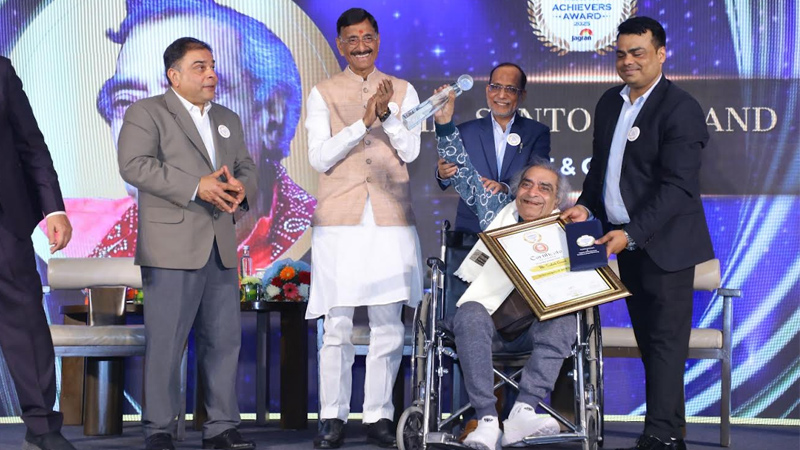
NEW DELHI: Hamdard Laboratories gathered a cross-section of India’s achievers in New Delhi on Friday, handing out the Hakeem Abdul Hameed Excellence Awards to figures who have left their mark across healthcare, education, sport, public service and the arts.
The ceremony, attended by minister of state for defence Sanjay Seth and senior officials from the ministry of Ayush, celebrated individuals whose work blends professional success with a sense of public purpose. It was as much a roll call of achievement as it was a reminder that influence is not measured only in profits or podiums, but in people reached and lives improved.
Among the headline awardees was Alakh Pandey, founder and chief executive of PhysicsWallah, recognised for turning affordable digital learning into a mass movement. On the sporting front, Arjuna Awardee and kabaddi player Sakshi Puniya was honoured for her contribution to the game and for pushing women’s participation onto bigger stages.
The cultural spotlight fell on veteran lyricist and poet Santosh Anand, whose songs have echoed across generations of Hindi cinema. At 97, Anand accepted the honour with characteristic humility, reflecting on a life shaped by perseverance and hope.
Healthcare honours spanned both modern and traditional systems. Manoj N. Nesari was recognised for strengthening Ayurveda’s place in national and global health frameworks. Padma shri Mohammed Abdul Waheed was honoured for his research-backed work in Unani medicine, while padma shri Mohsin Wali received recognition for his long-standing contribution to patient-centred care.
Education and social development also featured prominently. Padma shri Zahir Ishaq Kazi was honoured for decades of work in education, while former Meghalaya superintendent of Police T. C. Chacko was recognised for public service. Goonj founder Anshu Gupta received an award for his dignity-centred rural development initiatives, and the Hunar Shakti Foundation was honoured for empowering women and young girls through skill development.
The Lifetime Achievement Award went to former IAS officer Shailaja Chandra for her long career in public healthcare and governance, particularly in the traditional systems under Ayush.
Speaking at the event, Hamdard chairman Abdul Majeed said the awards were a tribute to those who combine excellence with empathy. “These awardees reflect Hakeem Sahib’s belief that healthcare, education and public service must ultimately serve humanity,” he said.
Minister Seth struck a forward-looking note, saying India’s young population gives the country a unique opportunity to become a global destination for learning, health and wellness by 2047.
The ceremony also featured the trailer launch of Unani Ki Kahaani, an upcoming documentary starring actor Jim Sarbh, set to premiere on Discovery on 11 February.
Instituted in memory of Unani scholar and educationist Hakeem Abdul Hameed, the awards have grown into a national platform that celebrates those building a more inclusive and resilient India. For one evening at least, the spotlight was not just on success, but on service with substance.








