News Headline
TRAI studies Net Neutrality to ensure National Security and Customer Privacy

NEW DELHI: With mounting pressure from different quarters for and against net neutrality with some wanting greater freedom and others opposing this, the Telecom Regulatory Authority wants to know what India’s policy should be and/or regulatory approach in dealing with issues relating to net neutrality
The regulator has also asked what should be regarded as the core principles of net neutrality in the Indian context and what key issues are required to be considered so that the principles of net neutrality are ensured.
These queries have been asked in a pre-Consultation Paper on Net Neutrality and stakeholders have been asked to respond by 21 June.

The regulator has also asked what the reasonable traffic management practices that may need to be followed by telecom service providers should be while providing Internet access services and whether there any other current or potential practices in India that may give rise to concerns about net neutrality or its misuse.
Stakeholders have been asked about the precautions with respect to the activities of TSPs and content providers to ensure that national security interests are preserved, and customer privacy is maintained.
TRAI also wants to know what further issues should be considered for a comprehensive policy framework for defining the relationship between TSPs and Over-The-Top content providers.
The regulator says it had issued a paper on 27 March last year and after much discussion among stakeholders and the government, the Department of Telecom had asked TRAI certain questions leading to the present paper.
At the outset, TRAI says that during the last decade, the telecom industry in India has grown tremendously, both in terms of penetration as well as connectivity. Today,
India is one of the fastest growing information and communication technologies markets in the world, fuelled largely by the cellular mobile revolution. Starting from a few million connections in 1997, there are more than a billion connections, with 97.5 percent of them being wireless subscribers. With this, the overall teledensity in India at the end of 2015 stood at 81.83 percent.
India has also witnessed tremendous growth in terms of the total number of Internet users. At the end of December 2015, there were over 331 million (33.1 crore) Internet subscribers in the country, of which about 94 percent (over 311 million or 31.1 crore) were wireless Internet users.
The current nature of telecommunications and internet access services in India is therefore largely wireless. The number of broadband users has also been increasing steadily over the years. At present, India has approximately 136.5 million (13.65 crore) broadband subscribers, a figure that is expected to rise significantly in the coming years, particularly in light of the Government’s ‘Digital India’ initiative.
This initiative emphasizes the electronic delivery of services to all citizens as an urgent national priority, with ‘Broadband for All’ as one of its fundamental pillars. Providing broadband to all will require a significant expansion of service providers’ networks, with substantial investments in infrastructure development
Referring to Net Neutrality, TRAI says the term generally refers to the principle that TSPs must treat all Internet traffic on an equal basis, without regard to the type, origin, or destination of the content or the means of its transmission. It therefore implies that all points in a network should be able to seamlessly connect to all other points, without any discrimination by the TSP on aspects of speed, access or price. Adherence to this principle of net neutrality is arguably necessary for maintaining the open and non-discriminatory character of the Internet, features that are responsible for the phenomenal growth of the Internet in the past decades.
The proliferation of a vast variety of applications, websites, and other forms of content on the Internet, has enhanced user choice and paved the way for greater innovation and competition. The diverse range of services available on the Internet has varying characteristics, uses and bandwidth requirements. Increasing Internet usage, particularly of services that consume high bandwidth, may require TSPs to adopt certain reasonable measures to protect the integrity of the network and provide appropriate quality of services to their users, while working within the ‘best efforts’ design of the Internet.
The regulator therefore says this merits a deeper enquiry into the various issues relevant to the subject of net neutrality, including determining the reasonableness of traffic management tools that may be adopted by TSPs; understanding the importance of unrestricted access to the Internet; transparency and informed choice by users; customer privacy and national security.

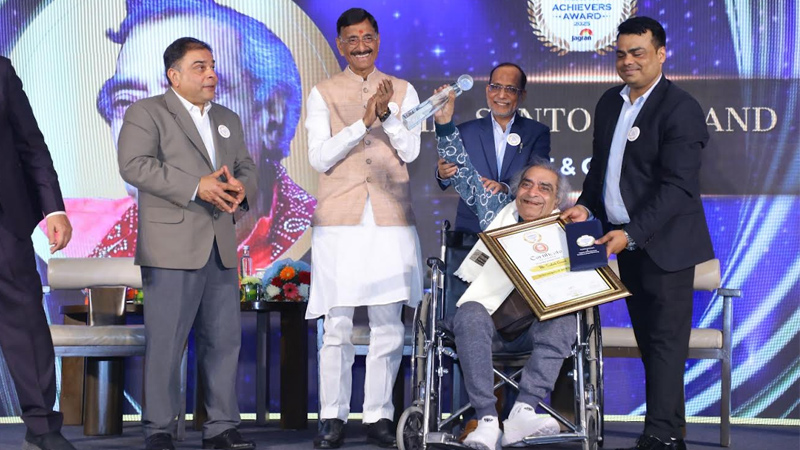
NEW DELHI: Hamdard Laboratories gathered a cross-section of India’s achievers in New Delhi on Friday, handing out the Hakeem Abdul Hameed Excellence Awards to figures who have left their mark across healthcare, education, sport, public service and the arts.
The ceremony, attended by minister of state for defence Sanjay Seth and senior officials from the ministry of Ayush, celebrated individuals whose work blends professional success with a sense of public purpose. It was as much a roll call of achievement as it was a reminder that influence is not measured only in profits or podiums, but in people reached and lives improved.
Among the headline awardees was Alakh Pandey, founder and chief executive of PhysicsWallah, recognised for turning affordable digital learning into a mass movement. On the sporting front, Arjuna Awardee and kabaddi player Sakshi Puniya was honoured for her contribution to the game and for pushing women’s participation onto bigger stages.
The cultural spotlight fell on veteran lyricist and poet Santosh Anand, whose songs have echoed across generations of Hindi cinema. At 97, Anand accepted the honour with characteristic humility, reflecting on a life shaped by perseverance and hope.
Healthcare honours spanned both modern and traditional systems. Manoj N. Nesari was recognised for strengthening Ayurveda’s place in national and global health frameworks. Padma shri Mohammed Abdul Waheed was honoured for his research-backed work in Unani medicine, while padma shri Mohsin Wali received recognition for his long-standing contribution to patient-centred care.
Education and social development also featured prominently. Padma shri Zahir Ishaq Kazi was honoured for decades of work in education, while former Meghalaya superintendent of Police T. C. Chacko was recognised for public service. Goonj founder Anshu Gupta received an award for his dignity-centred rural development initiatives, and the Hunar Shakti Foundation was honoured for empowering women and young girls through skill development.
The Lifetime Achievement Award went to former IAS officer Shailaja Chandra for her long career in public healthcare and governance, particularly in the traditional systems under Ayush.
Speaking at the event, Hamdard chairman Abdul Majeed said the awards were a tribute to those who combine excellence with empathy. “These awardees reflect Hakeem Sahib’s belief that healthcare, education and public service must ultimately serve humanity,” he said.
Minister Seth struck a forward-looking note, saying India’s young population gives the country a unique opportunity to become a global destination for learning, health and wellness by 2047.
The ceremony also featured the trailer launch of Unani Ki Kahaani, an upcoming documentary starring actor Jim Sarbh, set to premiere on Discovery on 11 February.
Instituted in memory of Unani scholar and educationist Hakeem Abdul Hameed, the awards have grown into a national platform that celebrates those building a more inclusive and resilient India. For one evening at least, the spotlight was not just on success, but on service with substance.