News Headline
TRAI seeks conclusive views on ease of doing broadcast biz

NEW DELHI: Noting that a business-friendly environment is a pre-requisite for the growth of a nation and makes a country a favorite business destination particularly with the fast changing regulatory framework for the media and entertainment sector,the Telecom Regulatory Authority has issued a consultation paper on the ease of doing business in broadcasting based on views received by it on a pre-consultation paper issued on 19 April this year.
Responses to the paper, which poses around 18 questions to stakeholders, have to be sent by 28 August with counter-comments if any by 11 September 2017.
Noting that the M and E sector in India is one of the fastest growing sectors, TRAI has noted that It not only leads to employment generation but also helps in the growth and development of an economy.

The economic liberalisation measures initiated in the early 1990s had focused on reduction of regulatory burden on enterprises as an underlying objective of the reform process. The Government has launched an ambitious programme of regulatory reforms aimed at making it easier to do business in India. The programme aims to pinpoint the bottlenecks and ease them to create a more business-friendly environment. The efforts have yielded some results with India ranked at 130 according to the World Banks’ Doing Business report. But, there is still huge scope for further improvements.
TRAI notes that the IMF has branded India as the brightest spot in the Global Economy. Several Global Institutions have projected India as the leading destination for FDI in the World and a number of recent global reports and assessments, show that India has considerably improved its policies, practices and economic profile. It is expected that enabling policies and determination to continue with economic reforms, various initiatives taken by the Government such as Make in India, Smart City Mission, Skill India Mission, Digital India, etc. would further spur the growth of the economy.
The pre-consultation paper on the ease of doing business in broadcasting which covered all media came just a few months after a similar paper on telecom. In the new era of convergence, the two sectors are expected to complement each other.
The aim is also to remove entry barriers by laying down well defined and transparent procedures and processes thereby creating level playing field and competition in the sector and to facilitate innovation and technology adoption for providing better quality of services to the consumers to steer further growth of the sector by attracting investment through investor friendly policies
Subjects to be covered are related to processes and procedures for obtaining permission/license/registration for the following broadcasting services and subsequent compliance connected with these
permissions.
The fields include:
(a)Uplinking of TV channels
(b) Downlinking of TV channels
(c) Teleport services
(d) Direct-to-home services
(e) Private FM services
(f) Headend-in-the sky services
(g) Local Cable Operators
(h) Multi System Operators
(i) Community Radio Stations
The questions raised are:
1. Is there a need for simplification of policy framework to boost growth of satellite TV industry? If yes, what changes do you suggest in present policy framework relating to satellite TV channels and why?
2. Is there a need in present policy framework relating to seeking permission for making changes in the name, logo, language, format, etc. related to an operational satellite TV channel? If so, what changes do you suggest and why? Is there a need for simplification of policy framework to boost growth of satellite TV industry? If yes, what changes do you suggest in present policy framework relating to satellite TV channels and why?
3. Do you agree witb some of the stakeholders comments at the pre-consultation stage that Annual Renewal Process of TV channels needs simplification?
4. Do you agree with stakeholders’ comments that coordination with multiple agencies/ Government departments related to starting and operating of a TV channel can be simplified? If so, what should be the mechanism and framework for such single window system?
5. Is present framework of seeking permission for temporary uplinking of live coverage of events of national importance including sports events is complicated and restrictive? If yes, what changes do you suggest and why?
6. Do you feel the need to simplify policy framework for seeking permission/license for starting and running of following services:
(iii) Teleport services
(iv) DTH service
7. As per your understanding, why open sky policy for Ku band has not been adopted when it is permitted for ‘C’ band? What changes do you suggest to simplify hiring of Ku band transponders for provision of DTH/HITS services?
8. What are the operational issues and bottlenecks in the current policy framework related to:
(iii) Teleport services
(iv) DTH service
How these issues can be simplified and expedited?
9. What are the specific issues affecting ease of doing business in cable TV sector? What modifications are required to be made in the extant framework to address these issues?
10. Is there a need to increase validity of LCO registration from one year? In your view, what should be the validity of LCO registration?
11. What are the issues in the extant policy guidelines that are affecting the ease of doing business in FM sector? What changes and modifications are required to address these issues?
12. Is there a need to streamline the process of assignment of frequency by WPC and clearances from NOCC to enhance ease of doing business? What changes do you suggest and why?
13. What are the reasons for delay for allocation of frequencies by WPC? What changes do you suggest to streamline the process?
14. What are the key issues affecting the indigenous manufacturing of various broadcasting equipment and systems. How these issues can be addressed?
15. Is there any other issue which will be relevant to ease of doing business in broadcasting sector? .
16. Are there any issues in conducting trial projects to assess suitability of a new technology in broadcasting sector?
17. What should the policy framework and process for consideration and approval of such trial projects?
ALSO READ :
Ease of doing b’cast biz date extended to 19 May
TRAI seeks ideas on ease of doing b’cast business
New portal to help ease of broadcast business






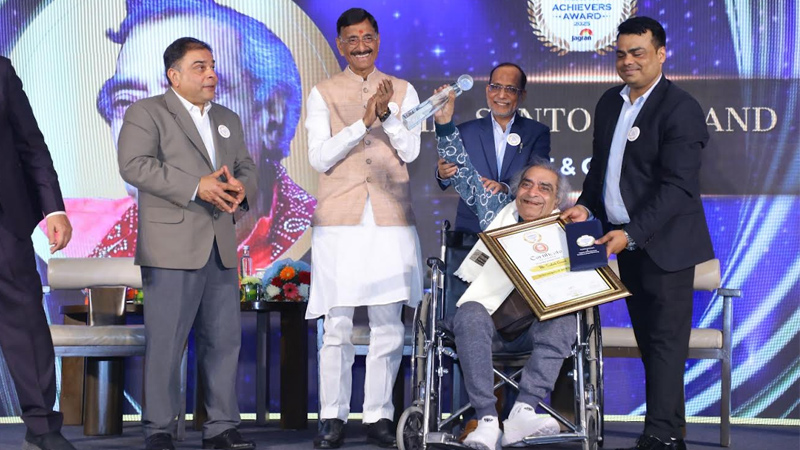
NEW DELHI: Hamdard Laboratories gathered a cross-section of India’s achievers in New Delhi on Friday, handing out the Hakeem Abdul Hameed Excellence Awards to figures who have left their mark across healthcare, education, sport, public service and the arts.
The ceremony, attended by minister of state for defence Sanjay Seth and senior officials from the ministry of Ayush, celebrated individuals whose work blends professional success with a sense of public purpose. It was as much a roll call of achievement as it was a reminder that influence is not measured only in profits or podiums, but in people reached and lives improved.
Among the headline awardees was Alakh Pandey, founder and chief executive of PhysicsWallah, recognised for turning affordable digital learning into a mass movement. On the sporting front, Arjuna Awardee and kabaddi player Sakshi Puniya was honoured for her contribution to the game and for pushing women’s participation onto bigger stages.
The cultural spotlight fell on veteran lyricist and poet Santosh Anand, whose songs have echoed across generations of Hindi cinema. At 97, Anand accepted the honour with characteristic humility, reflecting on a life shaped by perseverance and hope.
Healthcare honours spanned both modern and traditional systems. Manoj N. Nesari was recognised for strengthening Ayurveda’s place in national and global health frameworks. Padma shri Mohammed Abdul Waheed was honoured for his research-backed work in Unani medicine, while padma shri Mohsin Wali received recognition for his long-standing contribution to patient-centred care.
Education and social development also featured prominently. Padma shri Zahir Ishaq Kazi was honoured for decades of work in education, while former Meghalaya superintendent of Police T. C. Chacko was recognised for public service. Goonj founder Anshu Gupta received an award for his dignity-centred rural development initiatives, and the Hunar Shakti Foundation was honoured for empowering women and young girls through skill development.
The Lifetime Achievement Award went to former IAS officer Shailaja Chandra for her long career in public healthcare and governance, particularly in the traditional systems under Ayush.
Speaking at the event, Hamdard chairman Abdul Majeed said the awards were a tribute to those who combine excellence with empathy. “These awardees reflect Hakeem Sahib’s belief that healthcare, education and public service must ultimately serve humanity,” he said.
Minister Seth struck a forward-looking note, saying India’s young population gives the country a unique opportunity to become a global destination for learning, health and wellness by 2047.
The ceremony also featured the trailer launch of Unani Ki Kahaani, an upcoming documentary starring actor Jim Sarbh, set to premiere on Discovery on 11 February.
Instituted in memory of Unani scholar and educationist Hakeem Abdul Hameed, the awards have grown into a national platform that celebrates those building a more inclusive and resilient India. For one evening at least, the spotlight was not just on success, but on service with substance.






